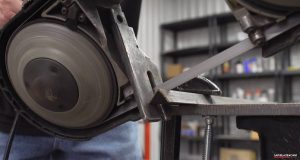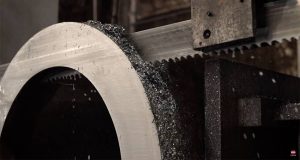
Cold working is the process of deforming metals at room temperature to change their shape and mechanical properties. Unlike thermal forming methods, cold working alters the internal structure of a material without heating it beyond its recrystallization temperature. This approach is widely used in manufacturing because it improves strength, hardness, and surface quality while preserving dimensional precision.
Cold Working Explained
Cold working refers to the plastic deformation of metals performed below their recrystallization temperature. During this process, mechanical stress is applied to permanently reshape the material, resulting in changes to its internal structure. As deformation increases, resistance to atomic movement within the metal also increases, leading to work hardening and higher material strength.
Main Benefits of Cold Working
- Increased yield strength and tensile strength
- Higher hardness and improved wear resistance
- Enhanced surface finish and dimensional accuracy
- Reduced need for secondary finishing operations
Why Cold Working Changes Material Strength
Cold worked materials become stronger because plastic deformation introduces a high number of dislocations within the crystal lattice. These dislocations restrict further atomic movement when additional force is applied. As a result, the material offers greater resistance to deformation, which leads to increased yield strength and improved mechanical performance.
Grain Structure After Cold Working
Cold working modifies the grain structure of metals by elongating grains in the direction of deformation. This change reduces internal mobility and contributes to higher strength and improved fatigue resistance. While these structural changes enhance performance under load, they also reduce the material’s ability to deform without fracturing.
Cold Working vs Hot Working
| Property | Cold Working | Hot Working |
|---|---|---|
| Processing temperature | Below recrystallization | Above recrystallization |
| Material strength | Increased | Lower |
| Ductility | Reduced | Higher |
| Surface finish | Smooth and uniform | Rougher |
| Energy consumption | Lower | Higher |
Common Cold Working Processes
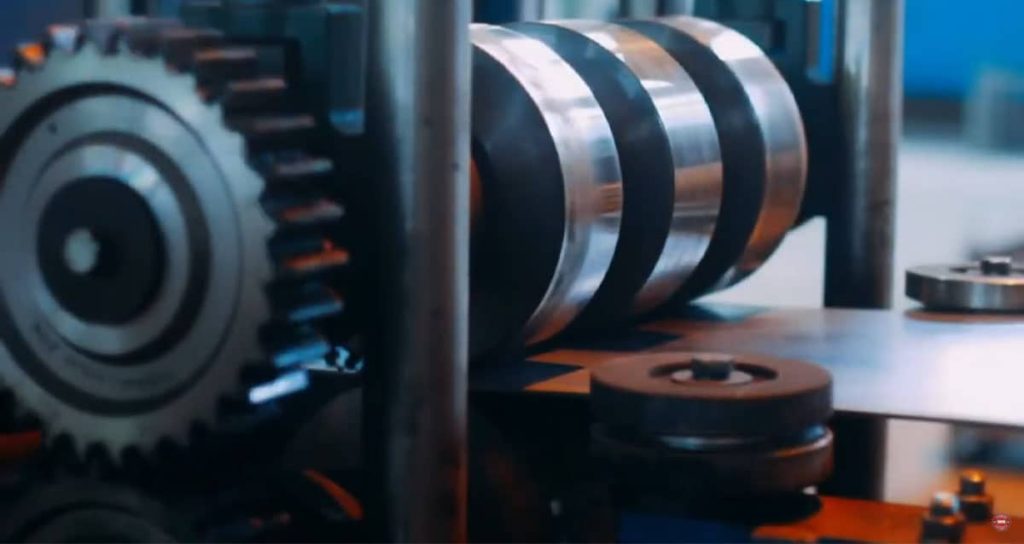
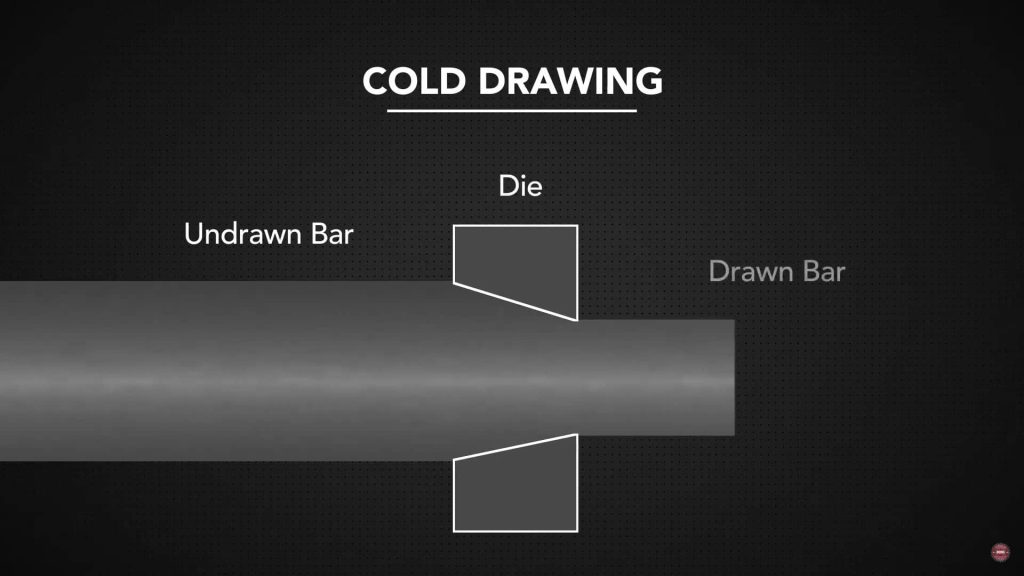
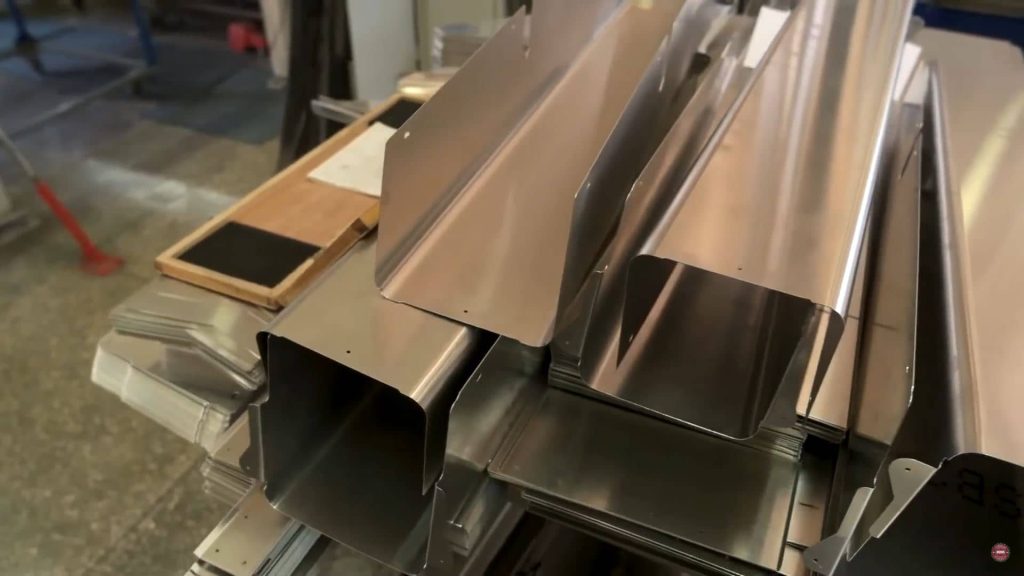
Cold working is used in several manufacturing processes to shape metal components. Cold rolling reduces material thickness and improves surface quality, while cold drawing refines dimensions by pulling metal through a die. Cold bending reshapes metal without the use of heat, and cold forging forms high-strength parts through compressive force. Each method improves material properties through controlled deformation.
Test Your Knowledge on Cold Working
To reinforce what you’ve learned, we invite you to take our short quiz on What Is Cold Working? available on sawbladeuniversity.com. This quiz helps you review key concepts such as material deformation, changes in mechanical properties, and the effects of cold working on strength and ductility. It’s a practical way to check your understanding and confirm how these principles apply to real machining and fabrication scenarios.
Industrial Uses of Cold Worked Materials
- Automotive components such as shafts and fasteners
- Aerospace parts requiring high strength and consistency
- Construction materials including beams and reinforcing bars
- Precision components used in mechanical assemblies
Limitations of Cold Working
While cold working increases strength and hardness, it also reduces ductility. Excessive deformation can raise residual stress within the material, increasing the risk of cracking during forming or later use. In some cases, stress relief or annealing is required to restore partial ductility and support long-term performance.
Safety Considerations When Working With Cold Worked Materials
- Use cutting tools designed for increased material hardness
- Apply controlled feed rates to limit excessive force
- Inspect tools regularly for signs of wear or damage
- Follow standard safety guidelines during machining and forming
How Cold Working Affects Machining
Machining cold worked materials generally requires higher cutting forces due to increased hardness and strength. Tool wear occurs more quickly, making tool material selection and geometry important considerations. Proper cutting parameters help maintain surface quality while extending tool service life.
Continue Learning With Bandsaw Basics
If your work involves cutting metal or shaping materials affected by cold working, understanding bandsaw operation is a logical next step. Our related article, “Bandsaw Basics: Practical Guide, Key Terms, and Next Steps,” explains how bandsaws function, clarifies essential terminology, and outlines practical considerations for selecting blades and settings. It provides useful context for improving cut quality, managing tool wear, and achieving consistent results when working with stronger, cold worked materials.
Best Practices for Handling Cold Worked Metals
- Select tooling suitable for higher material strength
- Maintain stable machining conditions and consistent feed rates
- Store materials in controlled environments to limit stress buildup
Cold working is a widely used metal forming process that improves strength, hardness, and surface quality through plastic deformation at room temperature. Although it enhances material performance in many industrial applications, it also introduces reduced ductility and residual stress that must be managed carefully. Understanding how cold working affects material properties allows manufacturers and machinists to balance durability, performance, and process efficiency.