What a Bandsaw Is and How It’s Commonly Used
A bandsaw is a cutting machine designed to process materials such as metal, wood, and plastics using a continuous loop blade that runs over two or more wheels. Portable bandsaws are widely used in maintenance, fabrication, and jobsite environments because they allow controlled cutting without sparks, excessive heat, or material deformation. Their steady cutting action supports accurate results across many applications.
Core Advantages of Portable Bandsaws
- Continuous blade motion supports controlled, straight cuts
- Reduced heat buildup compared to abrasive cutting methods
- Suitable for pipes, conduit, strut, and metal profiles
- Cordless designs improve mobility in confined or elevated areas
- Compatible with multiple blade sizes and tooth patterns
Understanding Blade Motion and Cutting Action
Unlike tools that rely on high-speed spinning, a bandsaw blade travels in one direction at a controlled speed. This motion limits vibration and keeps the blade teeth engaged with the material more consistently. The result is smoother cutting behavior and improved control, especially when working with metal stock.
Key Components Found on Portable Bandsaws
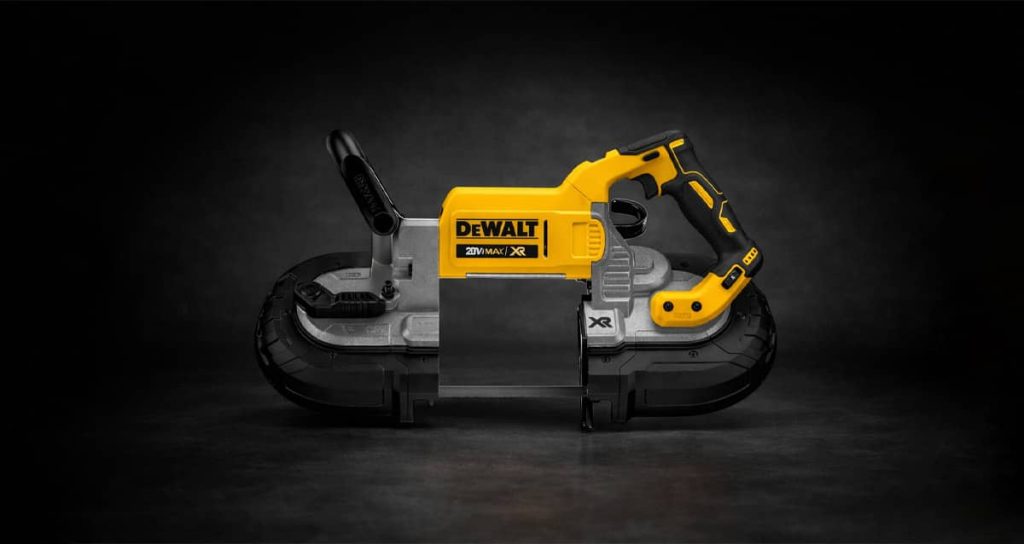
Most portable bandsaws share the same core components regardless of brand or capacity. These include the blade loop, drive wheel, idler wheel, blade guides, tension system, and motor housing. Together, these parts keep the blade aligned, properly tensioned, and stable during cutting operations.
Portable Bandsaw Examples and Specifications
| Model | Cutting Capacity | Blade Size | Power Source | Typical Use |
|---|---|---|---|---|
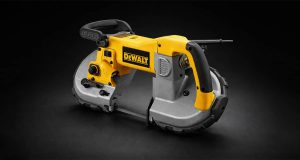
| DeWalt DCS374B | 5″ | 44-7/8″ × 1/2″ × .020″ | 20V Battery | Deep cut metal work |
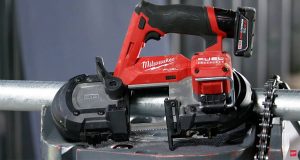
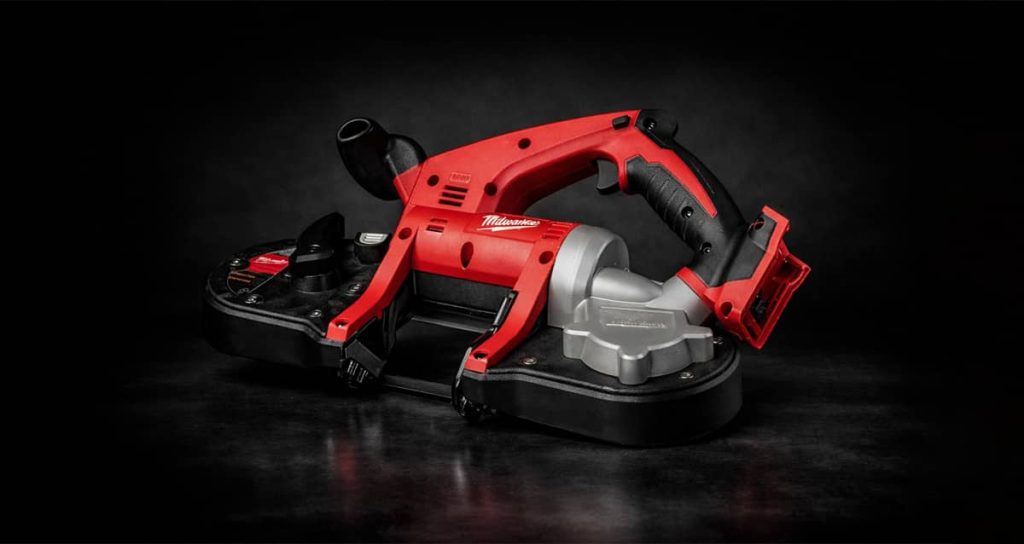
| Milwaukee 2629-20 | 3-1/4″ | 35-3/8″ × 1/2″ × .020″ | 18V Battery | Compact cutting tasks |
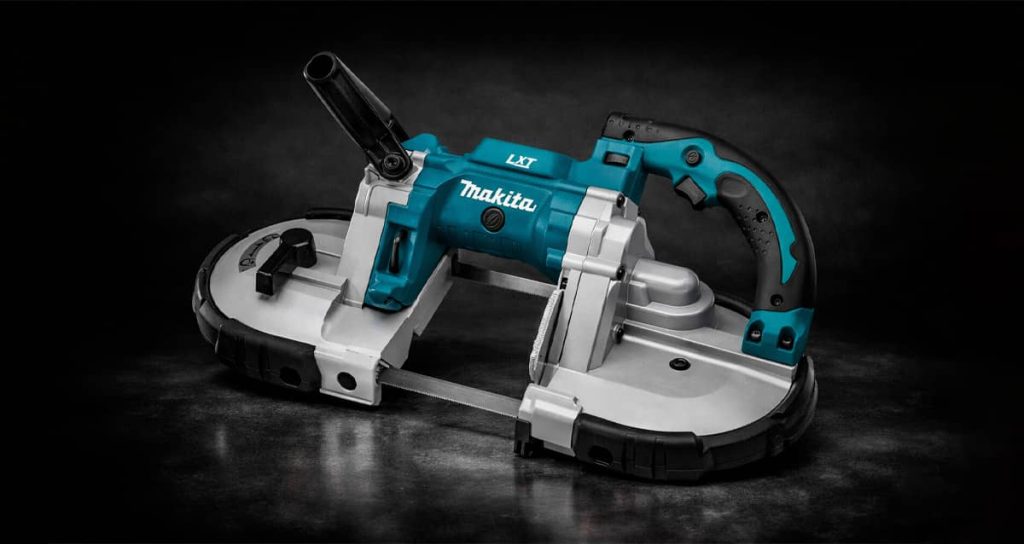
| Makita XBP02Z | 4-3/4″ | 44-7/8″ | 18V Battery | General metal cutting |
These models represent common portable bandsaw formats used in fabrication and field work.
Basic Bandsaw Terminology to Know
Understanding common terms makes blade selection and setup more straightforward. Blade length refers to the total loop size required by the saw. Blade width affects stability during straight cuts. Tooth count, often listed as TPI, indicates how many teeth contact the material and directly influences cutting speed and surface finish.
Expand Your Knowledge with SawbladeUniversity.com
For those looking to build technical skills and gain a deeper understanding of cutting tools and blade performance, visit SawbladeUniversity. The site offers a wide range of structured lessons and classes focused on bandsaws, blades, and cutting fundamentals, helping users strengthen their knowledge through clear, practical instruction.
Blade Selection Considerations
- Match blade length exactly to the saw model
- Choose tooth count based on material thickness
- Use bi-metal blades for most metal cutting tasks
- Avoid coarse tooth blades on thin materials
- Replace blades when cutting effort increases
Proper blade selection supports steady cutting and helps reduce wear on both the blade and the saw.
Material Types Commonly Cut with Bandsaws
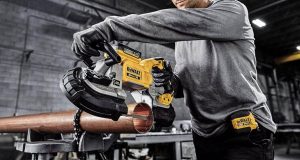
Portable bandsaws are commonly used to cut steel pipe, conduit, strut, angle iron, aluminum profiles, and threaded rod. Because the blade removes material gradually, cut edges remain cleaner and easier to manage compared to abrasive cutting methods.
Operating Practices That Support Consistent Results
Maintaining steady feed pressure and allowing the blade to cut at its intended speed helps limit tooth damage and heat buildup. Keeping the blade correctly tensioned and aligned also improves tracking and supports straight, repeatable cuts during extended use.
Learn More About Cutting Stainless Steel
If you work with stainless materials, understanding proper cutting methods can make a noticeable difference in results. Take a moment to read “Cutting Stainless Steel: Practical Guide, Key Terms, and Next Steps” to learn how material composition, tool selection, and cutting practices work together to support clean and controlled cuts.
Basic Maintenance Habits
- Inspect blade condition on a regular basis
- Remove metal chips from blade guides
- Verify blade tracking before longer cutting sessions
- Store blades in a dry location
- Replace worn blades before performance drops
Routine checks help maintain predictable cutting behavior.
Learning how a bandsaw functions, understanding key terminology, and selecting the correct blade are essential for effective cutting. Portable bandsaws provide controlled performance across many materials when used with proper setup and routine care. With a solid understanding of these basics, users are better prepared to select equipment, choose blades, and plan their next steps with confidence.