What Surface Hardening Treatments Are Designed to Do
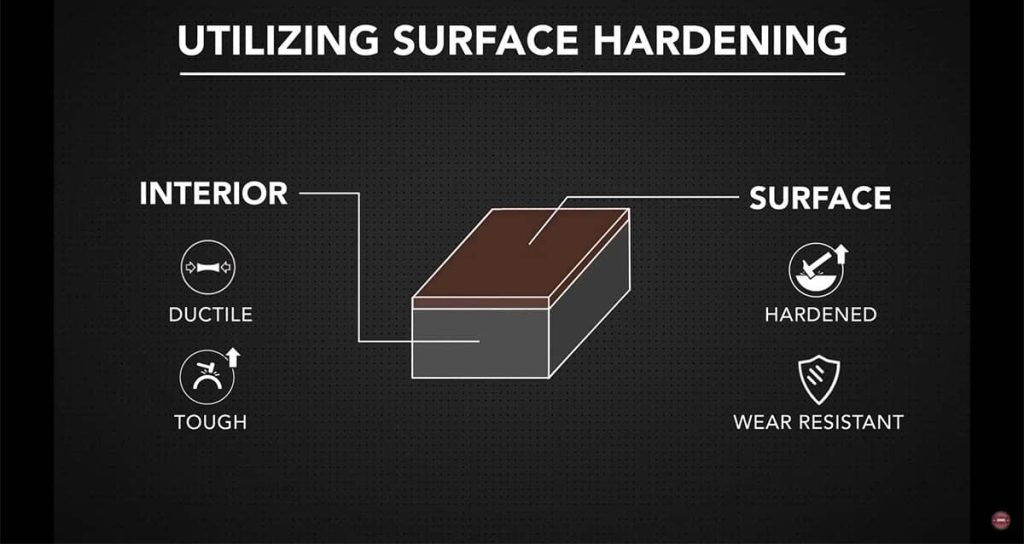
Surface hardening treatments are applied to improve wear resistance while preserving the toughness and ductility of a metal’s core. By modifying only the outer layer, these processes allow components to handle friction, contact stress, and repeated loading without becoming brittle throughout. This balance is especially useful for gears, shafts, and mechanical parts that must remain strong while resisting surface wear.
Common Goals of Surface Hardening Processes
- Increase surface hardness and resistance to wear
- Preserve a tough, impact-resistant core
- Reduce surface deformation under load
- Improve resistance to abrasion and contact fatigue
- Extend service time of mechanical components
- Support consistent performance in demanding conditions
How Carburizing Alters Surface Properties
Carburizing changes surface chemistry by heating low-carbon steel in a carbon-rich environment. During heating, carbon diffuses into the outer layer of the metal. Afterward, the part is typically quenched, creating a hardened, high-carbon surface while the interior remains softer and more ductile. This combination makes carburizing suitable for components exposed to repeated contact stress.
How Nitriding Strengthens the Outer Layer
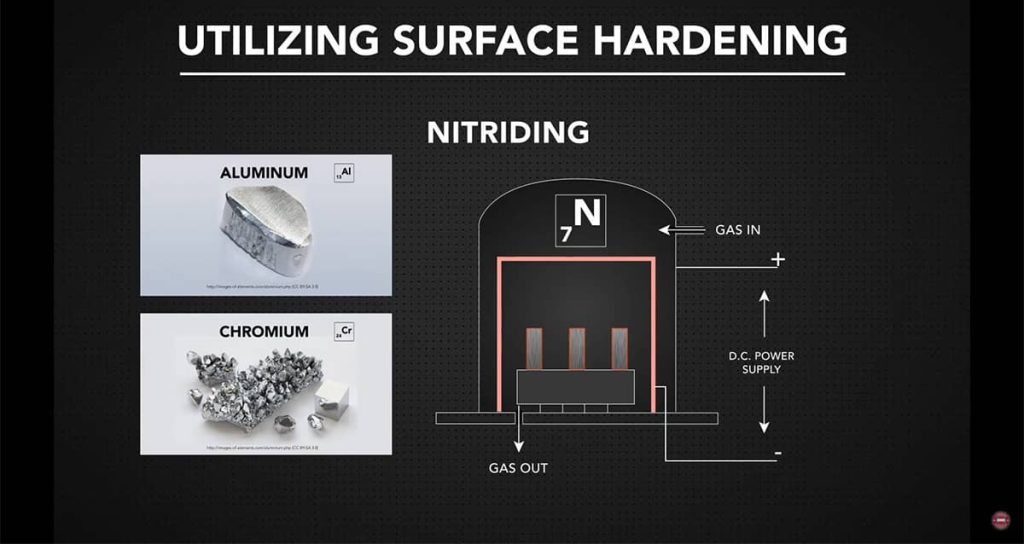
Nitriding introduces nitrogen into the surface of alloy steels that contain elements such as chromium or aluminum. This process occurs at lower temperatures than carburizing and does not require quenching. Nitrogen reacts at the surface to form hard nitrides, producing strong wear resistance, stable dimensions, and minimal distortion during treatment.
Comparison of Major Surface Hardening Methods
| Treatment Method | Primary Element Used | Quenching Required | Typical Surface Depth | Key Benefit |
|---|---|---|---|---|
| Carburizing | Carbon | Yes | Moderate to deep | Hard surface with tough interior |
| Nitriding | Nitrogen | No | Shallow | Low distortion and strong wear resistance |
| Flame Hardening | None (heat only) | Yes | Shallow to moderate | Selective hardening on large parts |
How Flame Hardening Works
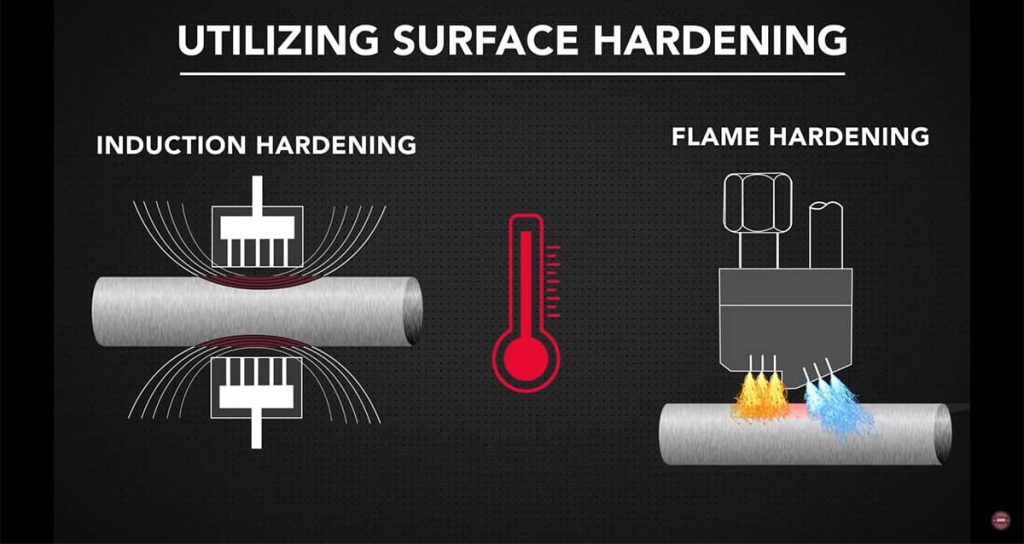
Flame hardening heats selected surface areas of steel using an intense flame, followed by rapid quenching. Unlike chemical treatments, this method relies solely on temperature changes to achieve hardness. It is commonly used for large components or localized areas such as gear teeth, rails, and wear zones where targeted hardening is required.
When Chemical Surface Treatments Are Preferred
- When high surface wear resistance is needed
- When uniform hardness depth is required
- When surface chemistry must be modified
- When dimensional stability is important
- When fatigue resistance is a concern
Choosing Between Chemical and Thermal Hardening
Chemical methods like carburizing and nitriding modify surface composition, producing different properties at the surface and core. Thermal methods such as flame hardening rely only on controlled heating and quenching. The best choice depends on part size, material composition, desired hardness depth, and tolerance for distortion.
Typical Applications of Each Method
- Carburizing: gears, camshafts, bushings
- Nitriding: precision shafts, molds, tooling
- Flame hardening: rails, large gears, wear surfaces
Key Factors That Influence Process Selection
Material composition, part geometry, required surface depth, production volume, and post-treatment machining all influence the selection of a surface hardening process. Understanding how each method affects hardness, distortion, and internal toughness helps ensure reliable performance during service.
Learn How Metals Are Evaluated for Cutting Performance
If you’re interested in how different metals behave during machining, the article “Machinability Ratings: How Metals Are Ranked for Cutting Ease” provides a helpful breakdown. It explains how machinability scores are determined, what factors influence cutting efficiency, and why these ratings matter when selecting materials for manufacturing or shop work. It’s a useful follow-up for readers looking to better understand material behavior during cutting operations.
Final Thoughts on Surface Hardening Choices
Carburizing, nitriding, and flame hardening each serve specific roles in surface hardening treatments. Matching the method to material characteristics and application requirements allows manufacturers to improve wear resistance, control hardness levels, and maintain dependable mechanical behavior while preserving core strength.