Thermal Conductivity in Metal Cutting Operations
Thermal conductivity directly affects how heat generated during metal cutting moves through both the workpiece and the cutting tool. Friction and material deformation at the cutting zone produce heat as material is removed. The rate at which this heat transfers away from the cut depends on the metal’s thermal conductivity, influencing cutting temperature, surface condition, and tool behavior during machining.
Why Thermal Conductivity Matters During Cutting
- Determines how quickly heat exits the cutting zone
- Influences temperature at the cutting edge
- Affects tool wear rates and edge condition
- Impacts chip formation behavior
- Contributes to surface finish consistency
These factors help operators select tooling, cutting speeds, and cooling strategies that align with material properties.
How Heat Moves Through Metal During Machining
Localized heating during cutting causes atoms within the metal to vibrate. This energy transfers from one atom to the next, allowing heat to move through the material. Metals with higher thermal conductivity pass this energy more efficiently, dispersing heat away from the cutting area. Lower conductivity metals tend to retain heat near the tool edge, increasing localized temperatures.
Differences in Thermal Conductivity Between Metals
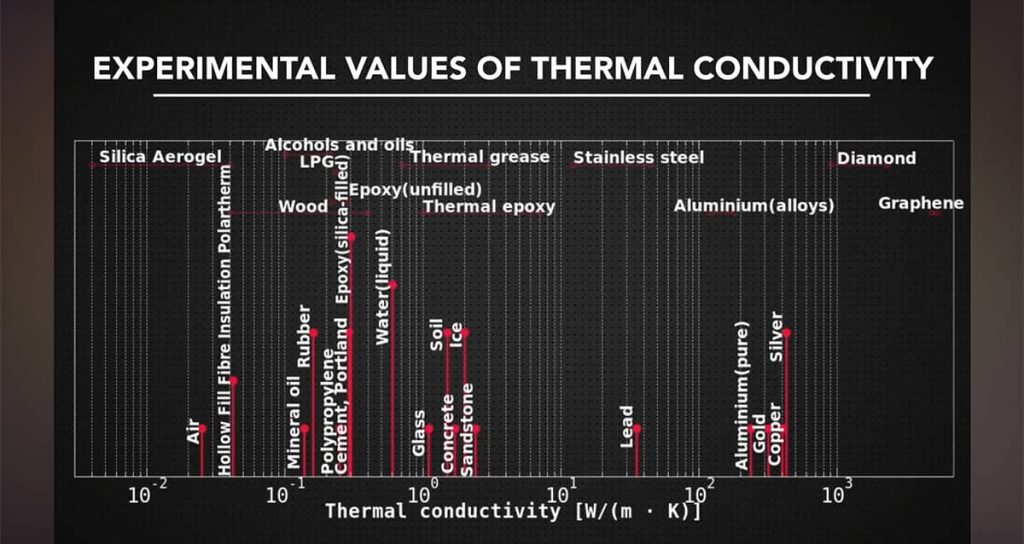
Metals vary widely in how they transfer heat. Aluminum and copper allow heat to move rapidly through their structure, while stainless steel and titanium transfer heat more slowly. These differences explain why cutting conditions, tool selection, and cooling methods often vary depending on the metal being machined.
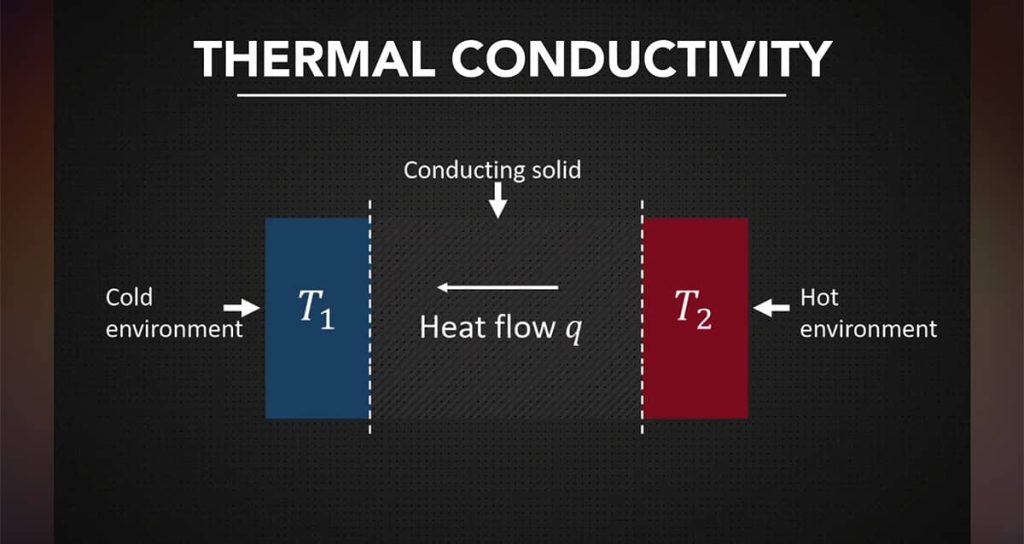
Thermal Conductivity Comparison of Common Metals
| Metal Type | Relative Thermal Conductivity | Heat Behavior During Cutting |
|---|---|---|
| Aluminum | High | Heat spreads quickly |
| Copper | Very high | Rapid heat transfer |
| Mild steel | Moderate | Balanced heat movement |
| Stainless steel | Low | Heat remains near cut zone |
| Titanium alloys | Very low | Localized heat buildup |
Understanding these characteristics supports more consistent machining outcomes.
Impact on Cutting Tools and Tool Wear
When heat stays concentrated near the cutting edge, cutting tools experience higher thermal stress. Metals with lower thermal conductivity often lead to faster edge degradation because heat is not efficiently carried away by the workpiece or chips. Metals with higher conductivity reduce localized heat buildup, supporting steadier tool temperatures during operation.
Test Your Knowledge on Thermal Conductivity
Understanding how heat moves through metal plays an important role in cutting performance and tool management. To reinforce these concepts, visit sawbladeuniversity.com and take our quiz on Understanding Thermal Conductivity. The quiz reviews heat flow, material behavior, and machining considerations to help confirm practical understanding of thermal effects in metal cutting operations.
Adjusting Cutting Parameters Based on Conductivity
- Reduced cutting speeds for low-conductivity metals
- Increased coolant flow when heat remains localized
- Selection of tool materials designed for heat resistance
- Adjusted feed rates to manage chip temperature
Aligning cutting parameters with thermal behavior supports controlled machining conditions.
Role of Coolants and Chip Removal
Coolants assist with temperature control by reducing friction and removing heat from the cutting zone. Chip formation also plays a role, as chips can transport heat away from the tool edge. In metals with lower thermal conductivity, effective coolant placement becomes more important to manage temperature buildup.
Thermal Conductivity and Surface Quality
Surface quality may be affected when excess heat causes material smearing, work hardening, or structural changes near the cut. Managing thermal flow through appropriate tooling, cooling, and cutting parameters helps maintain dimensional accuracy and uniform surface results.
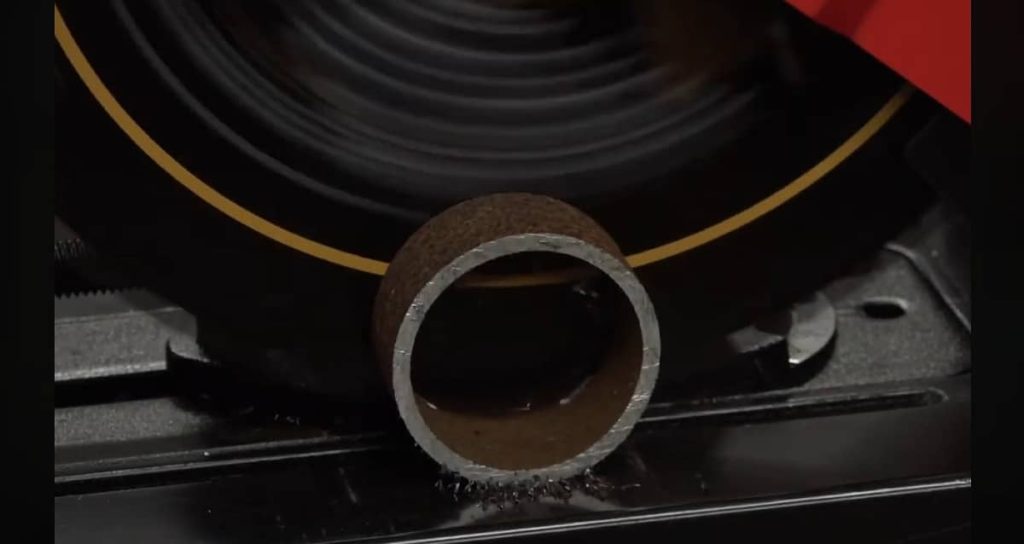
Machine Safeguarding and Heat Control in the Workshop
Safe machining goes beyond cutting performance it also involves understanding how equipment behavior and process conditions affect operator exposure. In our article Machine Safeguarding Basics: OSHA Compliance for Workshops, we review how guarding, task planning, and equipment awareness help reduce risk during cutting, setup, and maintenance activities. When combined with proper control of heat and cutting conditions, effective safeguarding supports safer, more predictable workshop operations.
Practical Considerations for Shop Environments
- Identify the metal’s thermal conductivity before machining
- Monitor cutting temperature during extended operations
- Adjust tooling strategies for heat-sensitive materials
- Inspect cutting tools regularly when machining low-conductivity metals
These practices help maintain stable performance across different machining applications.
Closing Notes
Thermal conductivity influences how heat behaves during metal cutting, affecting cutting temperature, tool condition, and surface results. Metals that transfer heat efficiently behave differently than those that retain heat near the cutting zone. By understanding these differences and adjusting cutting parameters accordingly, machining operations can achieve consistent performance and controlled temperature behavior across a wide range of materials.