Understanding the Real Relationship Between Horsepower and Sawmill Results
When shopping for a bandsaw mill, it is tempting to assume that a higher horsepower rating automatically translates to better cutting performance. After all, more power should mean faster cuts and the ability to handle larger logs, right? The reality is far more nuanced than that simple equation suggests. Experienced sawyers understand that bandsaw mill performance depends on a complex interaction between engine power, blade selection, feed rate, wood species, and operator technique. A mill with modest power can outperform a high-horsepower machine when other factors are properly optimized. This article examines what actually determines cutting quality and efficiency, helping you make informed decisions about your sawmill setup without falling for marketing hype about raw horsepower numbers.
Factors That Influence Bandsaw Mill Performance Beyond Horsepower
- Blade width, tooth pattern, and overall blade quality directly affect how cleanly the mill cuts through various wood species
- Feed rate control determines whether the blade can efficiently remove material without bogging down or overheating
- Wood moisture content and density create varying levels of resistance that affect cutting speed regardless of available power
- Blade tension and tracking alignment influence cut accuracy and reduce wandering during operation
- Log diameter and the width of each pass determine how much work the blade must accomplish per cut
- Operator experience in reading the wood and adjusting speed prevents unnecessary strain on the entire system
- Wheel diameter and overall mill rigidity play significant roles in maintaining consistent blade behavior
Why Torque Often Matters More Than Peak Horsepower
Many first-time bandsaw mill buyers focus exclusively on horsepower ratings without understanding that torque is what actually pushes the blade through wood resistance. A gasoline engine rated at 10 HP might deliver less usable cutting force than a well-designed 8 HP electric motor with superior torque characteristics at low RPM ranges. This distinction becomes especially apparent when cutting dense hardwoods like oak or hickory, where the blade encounters significant resistance throughout each pass. Mills designed with proper mechanical advantage can extract more cutting power from modest engines, while poorly engineered systems waste energy through friction and inefficient power transfer. The practical takeaway is that you should evaluate how a mill handles challenging cuts rather than simply comparing specification sheets.
Quick Check
Why does using extra pulleys to multiply a small motor’s power fail on wider cuts?
Real-World Limits of Underpowered Sawmill Setups
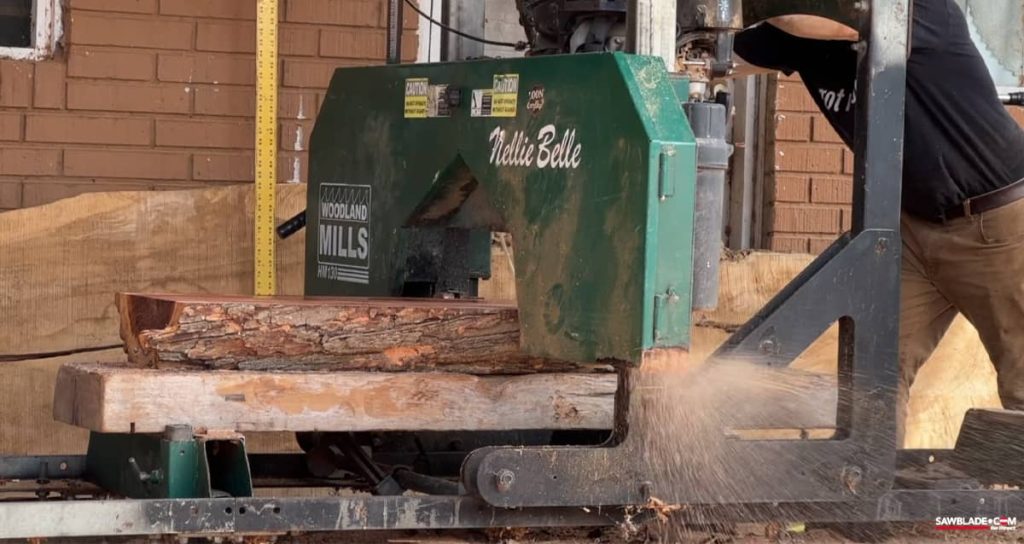
Forum discussions among experienced sawyers reveal just how demanding bandsaw mill operation can be on equipment. One operator with a factory-built 8 HP mill reported struggling with 20-inch oak timbers, noting that the blade slowed noticeably and required careful feed rate management to avoid stalling. This practical observation underscores why attempts to power homemade bandsaw mills with small motors or repurposed power tools consistently fail. The resistance created by a blade moving through dense wood fiber requires sustained torque delivery, not just momentary bursts of power. Scaling up to larger log diameters compounds this challenge exponentially, which explains why commercial sawmill operations often run engines in the 20 to 60 HP range for production cutting.
Typical Horsepower Requirements by Log Diameter and Wood Type
| Log Diameter | Softwood (Pine, Spruce) | Medium Hardwood (Cherry, Walnut) | Dense Hardwood (Oak, Hickory) |
| Up to 12 inches | 5 to 7 HP | 7 to 10 HP | 10 to 13 HP |
| 12 to 20 inches | 7 to 10 HP | 10 to 15 HP | 15 to 20 HP |
| 20 to 30 inches | 10 to 15 HP | 15 to 25 HP | 25 to 35 HP |
| 30 to 40 inches | 15 to 25 HP | 25 to 40 HP | 40 to 55 HP |
| Over 40 inches | 25 to 35 HP | 40 to 55 HP | 55 to 65 HP |
How Blade Selection Affects Cutting Efficiency at Any Power Level
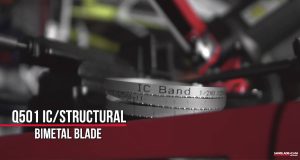
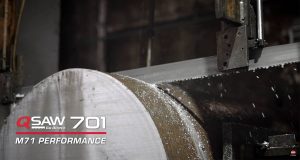
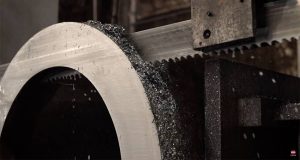
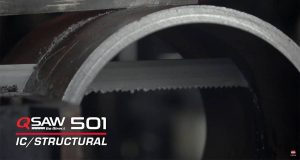
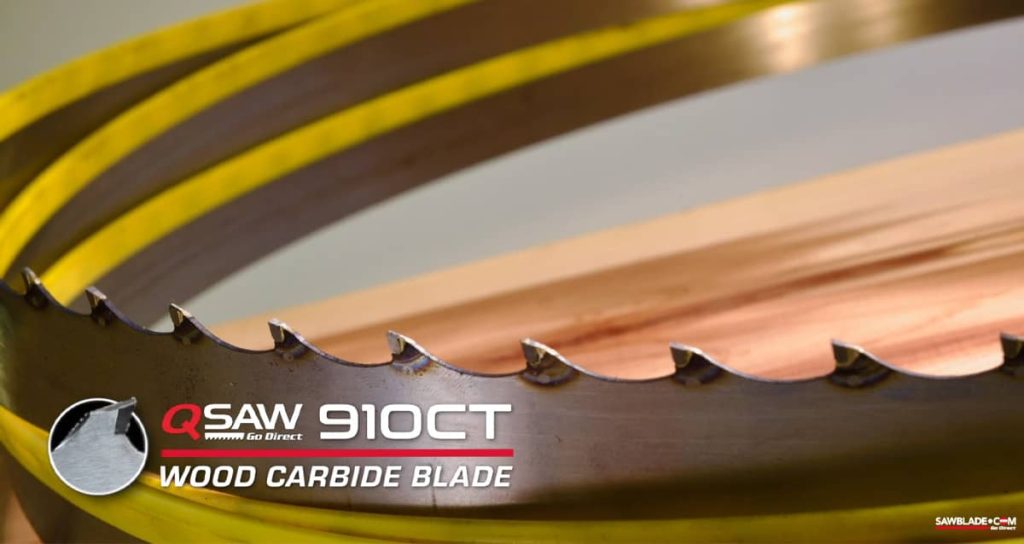
The blade spinning on your bandsaw mill determines cutting performance as much as the engine driving it. A dull or poorly matched blade forces even powerful mills to work harder, generating excess heat and producing rough lumber surfaces. Choosing the right bandsaw blade for your specific application means matching tooth geometry to the wood species you cut most frequently. Carbon steel blades like the Qsaw 905 series perform well for general resaw and rip operations, while carbide-tipped options extend blade life when processing abrasive or dirty logs. The tooth pitch must also match your typical cutting conditions, with coarser teeth clearing sawdust better in thick cuts and finer teeth producing smoother surfaces on thinner stock.
Quick Check
The article recommends sizing your mill for rare, oversized outlier logs rather than your typical workload.
Signs Your Bandsaw Mill Lacks Adequate Power for Your Cutting Needs
- The blade visibly slows or the engine pitch drops noticeably when entering dense sections of wood
- You must reduce feed rate to an impractical crawl to complete cuts without stalling
- The engine runs at maximum throttle continuously during normal cutting operations
- Blade overheating becomes a recurring problem even with proper lubrication and coolant
- Cut surfaces show burn marks or excessive roughness from blade friction
- Recovery time between cuts lengthens as the engine struggles to return to operating speed
- Sawdust production decreases while fine powder increases, indicating the blade is rubbing rather than cutting
The Blade Wander Problem in Wide Cuts
One often overlooked limitation in bandsaw mill performance involves blade rigidity during wide cuts. Experienced sawyers have documented blade deflection of up to three-quarters of an inch when attempting cuts beyond the comfortable capacity of standard mill designs. This wandering creates lumber with inconsistent thickness, which becomes a serious quality issue for anyone selling or using the finished boards. Industrial sawmills addressing cuts beyond 48 inches typically use blades approximately one foot wide to maintain rigidity, paired with substantially more powerful drive systems. For hobby and small commercial operators, understanding your mill’s practical width limit prevents frustration and wasted material from uneven cuts.
ALSO WORTH READING
Want to Expand Your Bandsaw’s Cutting Capacity?
If you’re finding that your current bandsaw limits the size of projects you can take on, adding a riser block might be the perfect solution. Our guide on installing a bandsaw riser walks you through the entire process, from choosing the right kit to making the final adjustments. It’s a straightforward upgrade that can make a real difference in your shop’s versatility.
Alternatives When Your Power Budget Does Not Match Your Log Size
- Chainsaw mill attachments like the Granberg Alaskan model handle cuts up to 84 inches wide, though at slower speeds
- Breaking large logs into halves or quarters with a chainsaw before milling reduces the demand on your bandsaw
- Focusing on softwood species when processing oversized logs keeps cutting resistance manageable
- Accepting slower feed rates during challenging cuts protects both blade and engine from damage
- Upgrading to a wider blade within your mill’s capacity improves rigidity without requiring more horsepower
- Scheduling heavy-duty cuts during cooler weather reduces heat buildup and engine strain
Quick Check
Up to what log diameter do 8 HP mills typically perform satisfactorily? Drag to answer (inches).
Matching Mill Power to Realistic Production Goals
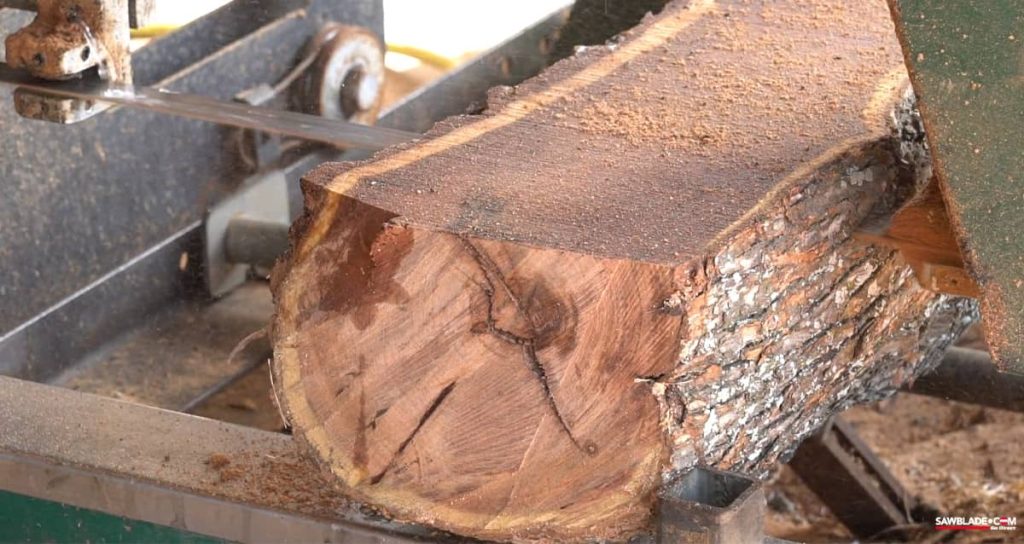
The question of whether more power means better cutting ultimately depends on what you actually intend to cut and how often. A homesteader processing a few dozen softwood logs annually for personal projects will find an 8 to 10 HP mill perfectly adequate. Someone running a small lumber business cutting mixed hardwoods daily needs significantly more capability to maintain production schedules without constantly fighting equipment limitations. Consider your typical log diameter, the species you encounter most frequently, and your desired daily output when evaluating sawmill blade options and equipment specifications. Matching your power requirements to realistic goals prevents both underspending on inadequate equipment and overspending on capacity you will never use.
Maintenance Practices That Maximize Available Cutting Power
- Keep blades sharp and replace them before dulling compromises cutting efficiency
- Maintain proper blade tension according to manufacturer specifications for your blade width
- Clean sawdust buildup from guides, wheels, and the blade path after each session
- Check and adjust blade tracking regularly to prevent edge wear and wandering
- Lubricate all moving components and maintain the coolant system for blade temperature control
- Monitor engine oil, filters, and spark plugs to ensure full power delivery
- Inspect belts and pulleys for wear that could reduce power transfer to the blade
Finding Your Optimal Balance of Power and Practicality
After considering all the variables that affect bandsaw mill performance, the answer to whether more power means better cutting is a qualified maybe. Additional horsepower certainly expands your capabilities and provides a margin of comfort when facing demanding cuts. However, power alone cannot compensate for dull blades, poor technique, or mismatched equipment specifications. The most productive sawyers develop an intuitive sense of how their specific mill performs and work within those parameters while maintaining their equipment with quality replacement parts designed for the job. Rather than chasing maximum horsepower numbers, focus on building a complete system where power, blade selection, feed rate, and maintenance work together to produce the results you need efficiently and reliably.