Why Case Hardened Steel Destroys Ordinary Bandsaw Blades
Case hardened steel presents a unique challenge that sends most bandsaw blades to an early grave. The material features a hard outer shell, typically exceeding HRC 60, wrapped around a softer interior core. This means your blade encounters its most demanding conditions during the first fraction of an inch of every cut, then suddenly transitions into completely different material properties. Standard carbon blades fail almost immediately when they contact that hardened surface, while even conventional M42 bimetal options dull rapidly on the case layer. The abrupt shift between hard and soft zones creates shock loading that invites tooth chipping and accelerated wear. Understanding this dual-nature material is the first step toward selecting a bandsaw blade for case hardened steel that actually performs.
Key Blade Characteristics That Handle Hardened Surfaces
- Tooth material harder than HRC 62 to penetrate the case without immediate dulling
- Positive rake angles between 0 and 6 degrees to maintain aggressive cutting action
- Variable tooth pitch to reduce harmonic vibration when transitioning between hardness zones
- Carbide-tipped or ceramic-enhanced edges for extended service life on abrasive surfaces
- Flexible backing material that absorbs shock without cracking
- Set patterns designed to clear chips efficiently from deep cuts
- Heat-resistant coatings that prevent thermal softening during prolonged contact
Understanding Tooth Material Options for Extreme Hardness
The tooth composition determines whether your blade cuts through case hardened steel or simply rubs against it until failure. Carbide-tipped teeth represent the gold standard for this application because tungsten carbide maintains its edge hardness even when friction generates significant heat. These blades cost three to five times more than standard bimetal options, but they typically last eight to fifteen times longer on hardened materials. Matrix II high-speed steel offers a middle ground, delivering better performance than M42 while costing less than full carbide. For parts with case depths exceeding 0.030 inches and hardness above HRC 58, carbide remains the only practical choice that delivers predictable results.
Quick Check
Why does easing off the feed pressure backfire on case hardened steel?
Why Tooth Pitch Matters More Than You Think
Tooth pitch, measured as teeth per inch, directly affects how well your blade handles the stress of cutting through variable hardness zones. Coarser pitches with 2 to 4 TPI create larger gullets that clear chips more effectively, preventing the packing that causes blade binding and premature failure. However, too few teeth in contact with thin-walled case hardened tubing leads to stripping and erratic cutting. The sweet spot for most case hardened round stock between 1 and 4 inches diameter falls in the 4 to 6 TPI range. Variable pitch blades, such as 3/4 or 4/6 configurations, reduce the harmonic resonance that develops when cutting through alternating hard and soft layers, extending blade life significantly.
Blade Selection Reference by Material Diameter
| Material Diameter | Recommended TPI | Preferred Tooth Material | Blade Width | Expected Cuts Per Blade |
| Under 1 inch | 8 to 12 | Carbide | 0.5 inch | 150 to 300 |
| 1 to 2 inches | 5 to 8 | Carbide | 0.75 inch | 100 to 200 |
| 2 to 4 inches | 4 to 6 | Carbide | 1 inch | 75 to 150 |
| 4 to 6 inches | 3 to 4 | Carbide | 1.25 inch | 50 to 100 |
| Over 6 inches | 2 to 3 | Carbide | 1.5 inch | 30 to 75 |
The Role of Blade Speed in Preventing Premature Failure
Running your bandsaw at the correct speed makes the difference between productive cutting and rapid blade destruction on case hardened steel. Most operators run too fast, generating excessive heat that softens the tooth edge and accelerates wear. For carbide-tipped blades on material above HRC 55, surface speeds between 100 and 200 feet per minute produce optimal results. This feels slow compared to cutting mild steel, but patience pays off in extended blade life and cleaner cuts. Reducing speed by 25 percent when starting a new cut helps teeth establish their path through the hardened case before encountering the softer core material.
Quick Check
Carbide tipped blades are always the best choice for case hardened steel because they are the hardest option.
Common Mistakes That Shorten Blade Life on Hardened Materials
- Using excessive feed pressure that overloads teeth during initial case penetration
- Skipping the break-in period that conditions new blade edges
- Running without adequate coolant flow to the cut zone
- Selecting blades designed for general purpose cutting rather than hardened applications
- Ignoring blade tension specifications that prevent tracking problems
- Continuing to cut after hearing the pitch change that indicates dulling
- Storing blades in conditions that promote rust on the flexible backing
How Proper Coolant Application Extends Your Investment
Coolant does more than just lubricate the cut when working with case hardened steel. The right fluid at the correct concentration carries heat away from the tooth edge, preventing the thermal cycling that causes micro-cracks in carbide tips. Synthetic or semi-synthetic coolants with extreme pressure additives outperform straight oils for this application. Flood coolant delivery works better than mist systems because the volume of fluid physically flushes chips from the kerf. Maintaining coolant concentration between 8 and 12 percent provides the balance of lubricity and cooling these demanding cuts require. Neglecting coolant maintenance accounts for roughly 30 percent of premature blade failures on hardened materials.
ALSO WORTH READING
Learn More About Bandsaw Guide Options
If you’re looking to get the most out of your bandsaw, the type of guides you use can make a real difference in cut quality and blade life. We put together a detailed comparison of ceramic and roller guides to help you understand the pros and cons of each style. Whether you’re upgrading your current setup or buying new, it’s worth a quick read before you decide.
Signs Your Current Blade Selection Is Wrong for the Job
- Teeth stripping within the first few cuts despite correct speed and feed
- Excessive smoke or discoloration even with proper coolant application
- Curved or wandering cuts that indicate blade deflection under load
- Loud squealing or chattering during the initial case penetration phase
- Visible chips or cracks on tooth tips after minimal use
- Surface finish deteriorating rapidly after just a few inches of cutting
- Blade tracking problems that worsen as cutting progresses
Quick Check
What edge hardness does a premium M71 bi-metal blade reach? Drag to answer.
Matching Blade Width to Your Machine and Material
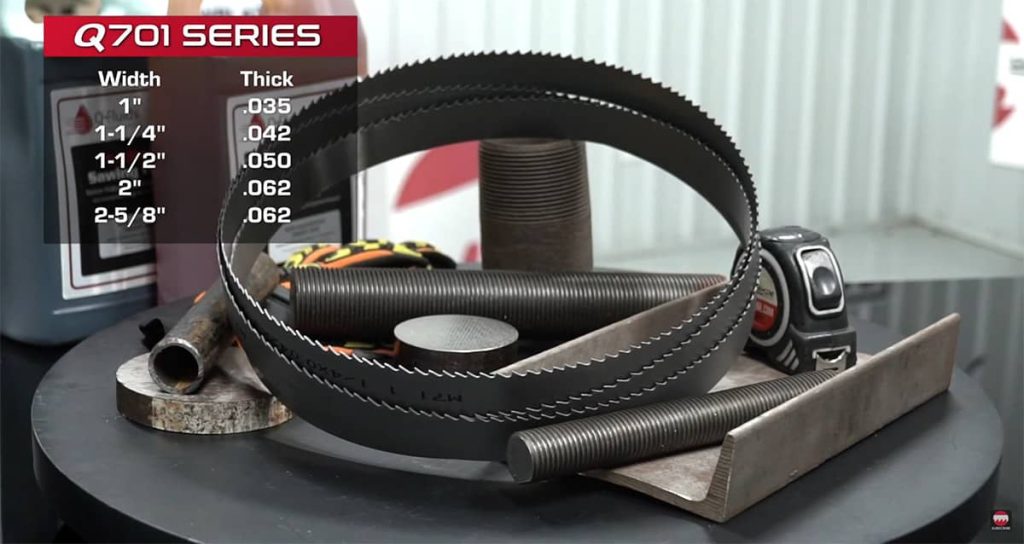
Blade width affects both cutting accuracy and blade longevity when processing case hardened steel. Wider blades resist the deflection forces that push narrower options off track during demanding cuts. However, your bandsaw’s wheel diameter limits the maximum practical width. As a general rule, blade width should not exceed one-eighth of the wheel diameter to prevent stress cracking from excessive bending. For a machine with 20-inch wheels, blades up to 2.5 inches wide work well. When cutting case hardened parts that require straight, accurate surfaces, always select the widest blade your machine accommodates. The additional beam strength keeps teeth aligned through the hardness transition zone where narrower blades tend to wander.
Recommended Practices for Breaking In New Blades
- Reduce feed rate to 50 percent of normal for the first 50 to 100 square inches of cutting
- Start with softer materials if possible before moving to full hardness stock
- Monitor cutting sound and adjust pressure immediately if squealing develops
- Allow the blade to establish a cutting rhythm before increasing production speed
- Inspect teeth under magnification after break-in to confirm proper conditioning
- Document initial performance as a baseline for tracking wear progression
Making the Right Choice for Your Specific Application
Selecting the best bandsaw blade for case hardened steel comes down to matching tooth material, geometry, and pitch to your specific parts and production requirements. Carbide-tipped options with variable pitch patterns handle the widest range of applications, though they require proper speeds, feeds, and coolant to deliver their full potential. Track your costs per cut rather than focusing on initial blade price, and you will likely find that premium blades designed for hardened materials pay for themselves within the first week of production cutting. When you need reliable performance cutting through that punishing outer case and into the softer core beneath, the right blade selection eliminates guesswork and keeps your operation running smoothly. Investing time in proper blade selection for demanding metalworking applications prevents the frustration of constant blade changes and inconsistent results.