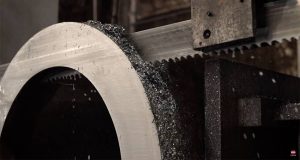
Why Stainless Steel Demands More From Your Bandsaw Blade
Cutting stainless steel is not the same as running through mild carbon steel, and anyone who has tried knows the difference immediately. Stainless steel contains chromium, nickel, and other alloying elements that make it harder, more abrasive, and significantly more resistant to heat transfer during cutting operations. This means your blade works harder, heats up faster, and dulls more quickly unless it is specifically designed to handle these demands. M42 bandsaw blades have become a go-to option for fabricators and machine shops dealing with stainless because the cobalt content in the cutting edge provides superior heat resistance and hardness retention. However, understanding how to maximize performance and recognize the limits of these blades when cutting stainless steel can mean the difference between consistent, clean cuts and premature blade failure.
Key Properties That Make M42 Effective on Stainless
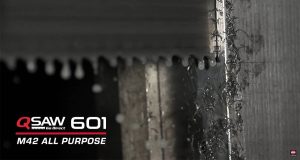
- The M42 high-speed steel edge contains approximately 8% cobalt, which allows it to maintain hardness at temperatures exceeding 1000°F
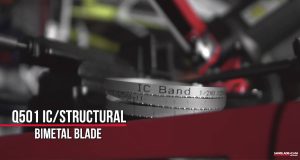
- Bi-metal construction combines a fatigue-resistant spring steel backer with the hardened cutting edge, preventing tooth strippage during demanding cuts
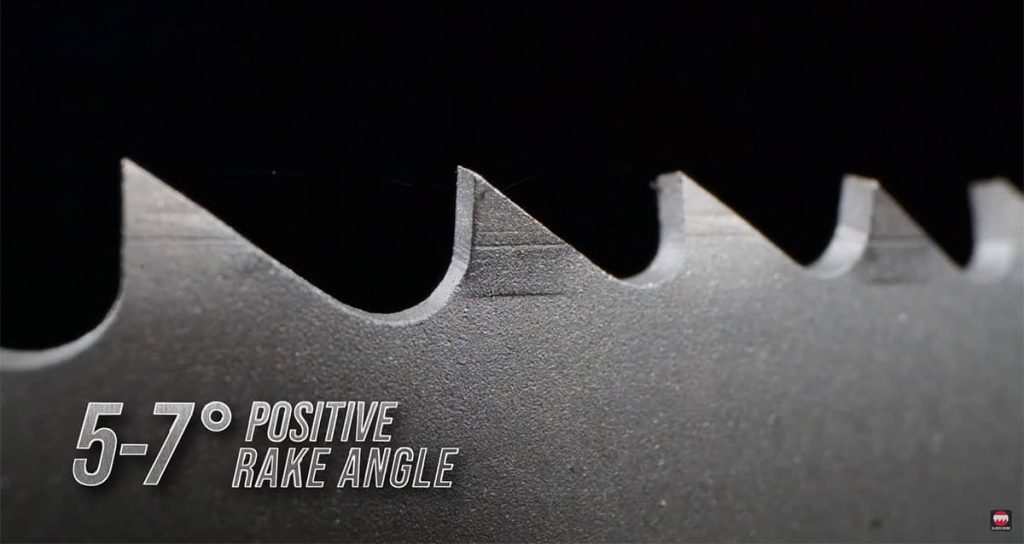
- Positive rake tooth geometry, typically between 5 and 7 degrees, helps the blade bite into work-hardened stainless rather than skating across the surface
- The alternating tooth set pattern distributes cutting forces evenly, reducing vibration and minimizing the risk of micro-cracking in the blade
- Heat and abrasion resistance built into the M42 edge compound extends usable blade life compared to standard bi-metal options
Understanding Work Hardening and What It Means for Your Blade
Austenitic stainless steels like 304 and 316 are notorious for work hardening, a phenomenon where the material actually becomes harder as it is cut or machined. When a bandsaw blade moves too slowly through stainless or when insufficient feed pressure is applied, the teeth rub against the surface instead of shearing through it. This friction generates heat and causes the stainless to harden in the cut zone, which in turn accelerates tooth wear and can lead to blade breakage. M42 blades handle this better than standard options because their elevated red hardness allows them to keep cutting through moderately work-hardened material, but the operator still needs to maintain proper feed rates and speeds to avoid creating conditions that work against the blade.
Quick Check
What rake angle does the Qsaw 601’s tooth form use to actively shear stainless steel?
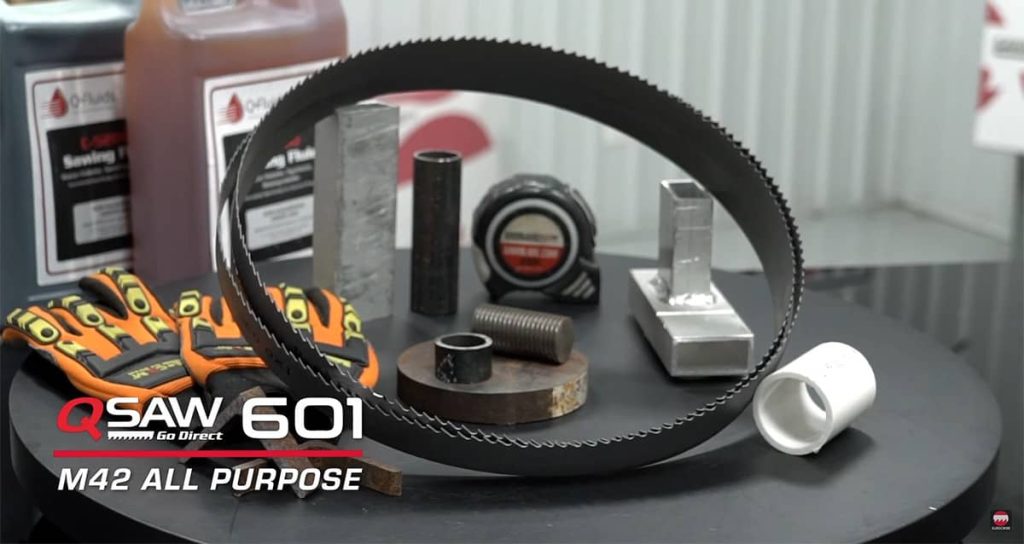
How M42 Compares to M51 and Carbide When Cutting Stainless
For general shop use where stainless steel is one of several materials being processed, M42 bandsaw blades offer an excellent balance of performance and value. M51 blades, which contain even higher cobalt levels and additional vanadium, provide better wear resistance on extremely tough stainless alloys like 17-4 PH or duplex grades, but they cost more and may be overkill for shops primarily cutting 304 or 316. Carbide-tipped bandsaw blades represent the premium tier, capable of handling the most abrasive stainless applications and lasting significantly longer under continuous production conditions. However, carbide requires more rigid machines and cannot tolerate the deflection or vibration that bi-metal blades can absorb. For most operations where bandsaw blades are used for general metal cutting across multiple materials, M42 remains the practical choice for stainless steel work.
Recommended Speeds and Feeds for Common Stainless Grades
| Stainless Grade | Blade Speed (SFM) | Feed Rate | Coolant | Notes |
| 304 | 150 to 200 | Moderate to firm | Required | Most common grade, responds well to steady pressure |
| 316 | 140 to 180 | Moderate | Required | Slightly tougher than 304, reduce speed for heavy sections |
| 410 | 180 to 220 | Moderate | Recommended | Martensitic grade, easier to cut than austenitic types |
| 17-4 PH | 100 to 140 | Light to moderate | Required | Precipitation hardened, consider M51 for production work |
| Duplex 2205 | 80 to 120 | Light | Required | Very tough, expect reduced blade life compared to 304 |
The Role of Coolant in Preserving Blade Life
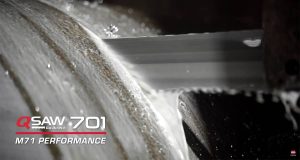
When cutting stainless steel with an M42 bandsaw blade, coolant is not optional. Stainless generates significant heat at the cut zone due to its poor thermal conductivity, and without adequate lubrication and cooling, that heat destroys the blade edge rapidly. A quality semi-synthetic or synthetic coolant applied in sufficient volume will carry heat away from the teeth, lubricate the cut to reduce friction, and flush chips from the kerf to prevent re-cutting. Many blade failures blamed on material difficulty or blade quality actually trace back to inadequate coolant concentration or flow rate. Aim for at least 8 to 10 percent concentration for stainless work, and make sure the coolant stream hits the blade at the point of entry into the material rather than somewhere downstream.
Quick Check
303 stainless steel is generally more difficult to cut than 304.
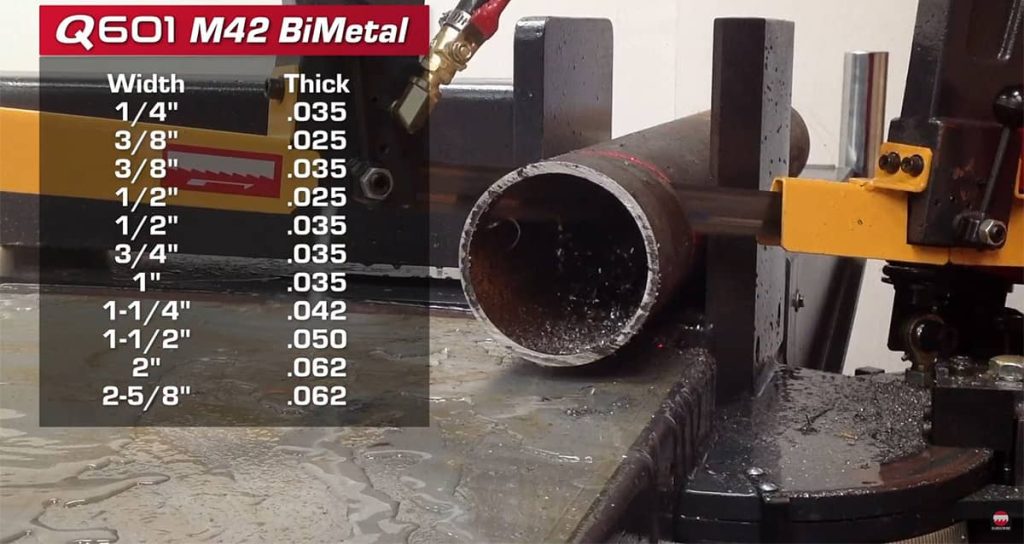
Common Mistakes That Shorten Blade Life on Stainless
- Running blade speed too fast, which generates excessive heat and softens the cutting edge
- Using insufficient feed pressure, allowing the blade to rub and work-harden the material
- Neglecting coolant maintenance, resulting in bacterial growth, reduced lubricity, and poor heat transfer
- Choosing the wrong tooth pitch for the material thickness, leading to tooth strippage or inefficient chip removal
- Failing to break in new blades properly, causing premature tooth damage during the first few cuts
- Continuing to cut after the blade shows signs of dulling, which accelerates damage and produces poor cut quality
Breaking In Your M42 Blade Before Full Production
A new M42 bandsaw blade arrives with extremely sharp tooth tips that are also somewhat fragile until they develop a slight honing at the cutting edge. Running a fresh blade at full speed and pressure on stainless steel can chip or fracture those delicate tips, reducing the blade’s overall lifespan significantly. The proper approach involves running the first 50 to 100 square inches of cutting at reduced feed pressure, perhaps 50 percent of normal, while maintaining standard blade speed. This allows the teeth to develop a micro-radius at the edge that actually improves durability without sacrificing sharpness. Many experienced operators start with mild steel for break-in before switching to stainless, giving the blade the gentlest possible introduction to cutting duty.
ALSO WORTH READING
Cutting Structural Steel? Your Blade Choice Matters
Selecting the right band saw blade can make all the difference when working with structural steel. If you want cleaner cuts, longer blade life, and less downtime, it helps to understand which tooth patterns and blade materials work best for different profiles. Our guide on “How to Choose the Best Band Saw Blade for Structural Steel” walks you through the key factors to consider before your next purchase.
Signs Your M42 Blade Is Reaching Its Limit on Stainless
- Cutting rate slows noticeably even with proper feed pressure applied
- The blade begins to wander or drift off the cut line
- Surface finish on the cut face becomes rougher with visible scoring or tearing
- Unusual noise or increased vibration during operation
- Teeth show visible wear, rounding, or chipping when inspected
- Coolant turns milky or discolored with excessive metal fines
- The blade tracks poorly despite proper tension and guide adjustments
Quick Check
What hardness rating (HRC) does the M42 cobalt edge maintain even at elevated temperatures? Drag to answer.
Selecting the Right Tooth Pitch for Stainless Applications
Tooth pitch selection directly affects cut quality, blade life, and cutting efficiency when processing stainless steel. The general rule requires at least three teeth in the material at all times to prevent tooth strippage and maintain smooth cutting action. For solid rounds and heavy sections of stainless, a coarser pitch like 3/4 or 4/6 variable provides adequate chip clearance and keeps individual tooth loading manageable. Thinner wall tubing and structural shapes require finer pitches in the 6/10 or 8/12 range to keep multiple teeth engaged. Variable pitch patterns, where tooth spacing alternates between two values, help reduce harmonic vibration and chatter that can be especially problematic on work-hardening stainless alloys. Choosing the right bandsaw blade configuration for your specific application eliminates many cutting problems before they start.
Getting Consistent Results Across Different Stainless Types
- Start with the recommended speed and feed settings from the table above, then adjust based on observed performance
- Keep detailed logs of blade life and cutting parameters for each stainless grade you process regularly
- Inspect the first few cuts of each production run to catch problems early before they affect the entire job
- Replace blades proactively when you notice gradual performance decline rather than waiting for failure
- Clean and maintain your bandsaw regularly, as guide wear and tension problems magnify cutting difficulties on stainless
- Consider upgrading to M51 or carbide options if you find M42 blade life unacceptable on specific tough grades
Practical Takeaways for Shop Floor Performance
M42 bandsaw blades remain one of the most versatile and cost-effective choices for cutting stainless steel in fabrication shops, service centers, and production environments. Their combination of heat resistance, edge hardness, and fatigue-resistant construction handles the demands of austenitic stainless grades that challenge lesser blades. Success comes down to respecting the material’s tendency to work-harden, using proper coolant in adequate concentration, selecting appropriate speeds and feeds for each grade, and replacing worn bandsaw blades before they cause scrap or safety issues. With attention to these fundamentals, M42 blades deliver reliable performance on stainless steel day after day, making them a sensible investment for any operation that processes this demanding material category.