Understanding Set Width and Its Role in Structural Cutting
When fabricators talk about bandsaw blade performance on structural steel, the conversation almost always circles back to one often overlooked specification: tooth set. Set refers to how far the teeth are bent alternately to the left and right of the blade body, and this measurement directly determines kerf width, which is the slot the blade cuts through the material. A wider set creates a wider kerf, which gives the blade body more clearance as it moves through the cut. This clearance is not just about preventing binding. It allows chips to evacuate freely, reduces friction against the cut walls, lowers heat generation, and lets the blade feed smoothly without pinching or stalling. While set matters on every bandsaw application, it becomes especially significant when cutting structural shapes because these profiles present challenges that flat plate and solid bar simply do not. The constantly changing cross sections of beams, channel, angle iron, and thick wall tubing mean the blade repeatedly enters and exits material within a single stroke, creating conditions where a standard set blade struggles to perform.
The Unique Challenges Structural Steel Presents
- Structural shapes feature varying wall thicknesses that change the tooth count engaged in the cut from one instant to the next
- Beams and channels create interrupted cuts where the blade alternates between cutting and air, generating shock with each re-entry
- Wide flanges and deep webs produce long cuts where heat accumulation becomes a serious concern without adequate chip clearance
- The angular surfaces of angle iron and uneven profiles of tubing cause vibration that accelerates tooth wear
- Multiple surfaces at different angles within a single cut increase the likelihood of blade pinching and binding
- Heavy wall sections combined with thin flanges in the same piece require a blade that can handle dramatic changes in material engagement
Why Structural Cutting Differs from Heavy Cutting
Many operators make the mistake of treating structural steel as simply another heavy cutting application, reaching for aggressive tooth patterns or high feed rates to power through thick material. However, structural cutting is fundamentally different because it is intermittent cutting rather than continuous cutting. When a blade moves through an I-beam, it first cuts through the top flange, then passes through air before entering the web, cuts through the web, passes through more air, and finally cuts through the bottom flange. Each transition from material to air and back creates an impact event that stresses the teeth. A blade optimized purely for heavy continuous cuts, such as solid rounds or thick plate, lacks the resilience needed to handle thousands of these micro-impacts per cut. The ideal structural blade needs to balance cutting aggression with shock resistance, and that balance starts with proper set geometry that keeps the blade running freely even as conditions change constantly throughout the stroke.
Quick Check
What does "set" on a bandsaw blade actually control?
How Wide Set Prevents Heat Buildup and Binding
Heat is the primary enemy of bandsaw blade longevity, and binding is its close companion. When a blade with insufficient set enters a long cut through a beam web or channel leg, the kerf begins to close around the blade body as the material heats and expands slightly. This contact creates friction, which generates more heat, which causes more expansion and tighter contact in a cycle that rapidly degrades the blade. A wide set blade opens a kerf that maintains clearance even as the material warms, breaking this destructive cycle before it starts. The additional space also allows cutting fluid to reach deeper into the cut, carrying heat away and lubricating the blade body. Chips have room to flow upward and out of the cut rather than packing into the kerf and welding themselves to the blade or workpiece. For structural shapes where cuts can run twelve inches or more through a web, this improved chip evacuation and thermal management directly translates to longer blade life and faster cycle times.
Comparing Standard Set vs Wide Set on Common Structural Shapes
| Structural Shape | Cut Length Through Web or Wall | Standard Set Performance | Wide Set Performance |
| W8x31 Beam | 8 inches | Frequent binding, heat discoloration | Smooth feed, minimal heat |
| C10x20 Channel | 10 inches | Chip packing, rough cut surface | Clean evacuation, accurate cut |
| 4x4x1/2 Angle | 5.6 inches diagonal | Vibration at corners, tooth chipping | Stable cut through transitions |
| 6x6x3/8 HSS Tube | 12 inches total | Blade wander, premature wear | Consistent tracking, extended life |
| W12x50 Beam | 12.2 inches | Overheating, stripped teeth | Maintains feed rate, cool running |
| L6x4x1/2 Angle | 7.2 inches diagonal | Noise, rough finish | Quiet operation, smooth edges |
The Role of Tooth Geometry in Interrupted Cut Applications
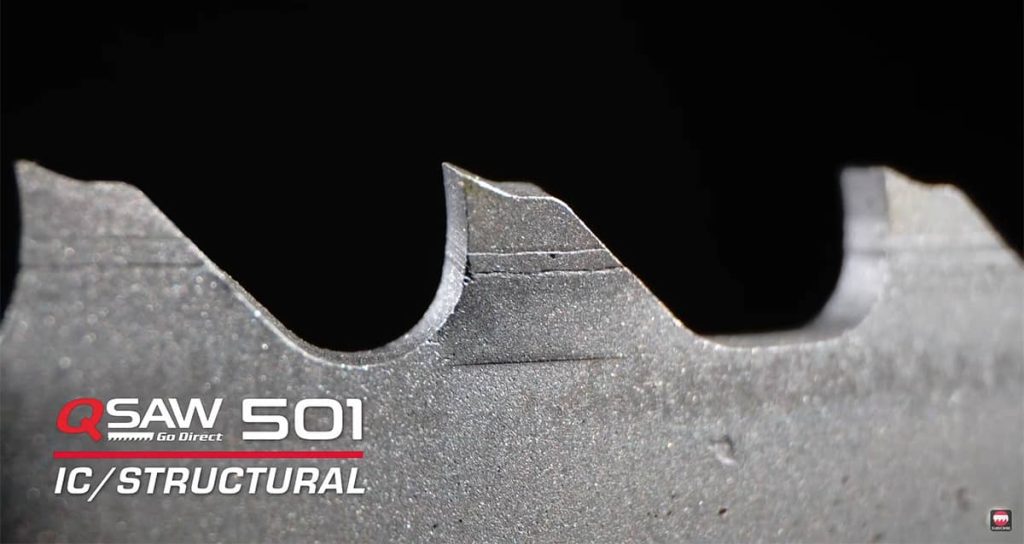
Beyond set width, tooth geometry plays an equally important role in structural steel performance. Standard tooth patterns designed for continuous cuts can over-feed when they suddenly encounter less material, such as when exiting a flange into open air. This over-feeding causes the teeth to grab too aggressively on re-entry, stripping them from the blade body or chipping the cutting edges. Interrupted cut tooth geometries solve this problem through modified tooth profiles that regulate how much material each tooth can bite regardless of how much material is actually present. This self-limiting behavior prevents the grab and strip pattern that destroys standard blades on structural work. When combined with wide set for clearance, interrupted cut geometry creates a blade specifically engineered for the stop-start nature of beam, channel, and angle cutting rather than one adapted from solid material applications.
Quick Check
On heavy structural shapes with walls over 1/2", the 8/11 pitch is the better pick over 5/7.
Key Features That Define a Quality Structural Steel Blade
- M-42 cobalt high speed steel tooth tips that maintain hardness at elevated cutting temperatures
- Fatigue resistant alloy backing material that flexes millions of times without cracking
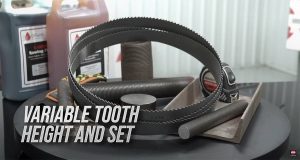
- Wide set tooth pattern that opens adequate kerf for chip clearance and blade body freedom
- Variable tooth pitch patterns like 5/7 or 8/11 that reduce harmonic vibration on interrupted cuts
- Tooth geometry designed specifically to handle repeated material entry and exit cycles
- Heat treatment that produces consistent hardness across all teeth without soft spots
- Weld joint strength that matches the blade body to prevent premature breakage
- Edge preparation that allows immediate production cutting without extended break-in periods
Matching TPI to Structural Shape Thickness
Selecting the right teeth per inch for structural work requires thinking differently than when cutting solid material. With solid rounds or squares, you choose TPI based on the full diameter or thickness. With structural shapes, you need to consider the wall thickness and flange thickness rather than the overall dimensions. A W10x49 beam might measure 10 inches tall, but the flange is only 0.56 inches thick and the web is 0.34 inches thick. Choosing TPI for 10-inch material would put far too few teeth in the actual cut. Variable pitch patterns like 5/7 or 8/11 TPI work well for most structural applications because they keep adequate teeth engaged on thinner sections while still handling the occasional thicker junction where flanges meet webs. This variable pitch also disrupts the harmonic vibrations that single-pitch blades develop when cutting shapes with repeating geometric features.
ALSO WORTH READING
Cutting Case Hardened Steel? You’ll Need the Right Blade
If you’re working with case hardened steel, selecting the proper bandsaw blade makes all the difference between clean cuts and frustrating results. The unique properties of this material demand specific tooth configurations and blade compositions that standard blades simply can’t provide. Our guide on How to Choose the Best Bandsaw Blade for Case Hardened Steel walks you through everything you need to know, from tooth pitch to blade speed recommendations.
Benefits of Eliminating Break-In Time on Production Floors
- New blades go directly to full production feed rates without the typical gradual ramp-up period
- Operators do not need to remember or monitor break-in procedures for each new blade
- Material waste from break-in cuts on scrap pieces is eliminated entirely
- Machine time previously spent on careful break-in cutting becomes productive cutting time
- Consistent performance from the first cut means predictable cycle times for scheduling
- Reduced operator involvement in blade changes allows attention to other tasks
- Lower risk of improper break-in technique causing premature blade failure
Real Cost Savings from Longer Blade Life
The economics of high quality bandsaw blades become clear when you calculate cost per cut rather than price per blade. A blade that costs 40 percent more but lasts twice as long actually reduces your blade expense by 30 percent. When that longer life comes with faster cutting speeds, the savings multiply because machine time has real value. Structural fabricators who track their blade performance often find that premium blades designed for interrupted cuts deliver three to five times the square inches per blade compared to general purpose bi-metal. Factor in reduced downtime for blade changes, fewer rejected cuts that need secondary grinding, and less operator fatigue from fighting a struggling blade, and the total cost advantage becomes substantial. For shops running multiple shifts on structural work, these differences can represent thousands of dollars annually in direct savings.
Quick Check
How many square inches of break-in does a conventional blade typically need? Drag to answer.
Signs Your Current Blade Is Wrong for Structural Applications
- Teeth stripping from the blade body, often in clusters rather than individually
- Visible heat discoloration on cut surfaces indicating excessive friction
- Blade body showing wear marks or scoring from contact with kerf walls
- Excessive noise that increases as the cut progresses deeper into the material
- Cut accuracy degrading with blade wander or drift through long web sections
- Premature tooth dulling that requires blade changes well before expected life
- Chips that appear burned, discolored, or welded together rather than clean curls
- Feed rate reductions necessary to prevent stalling or blade damage
Making the Right Choice for Your Structural Cutting Needs
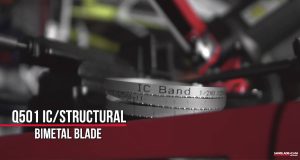
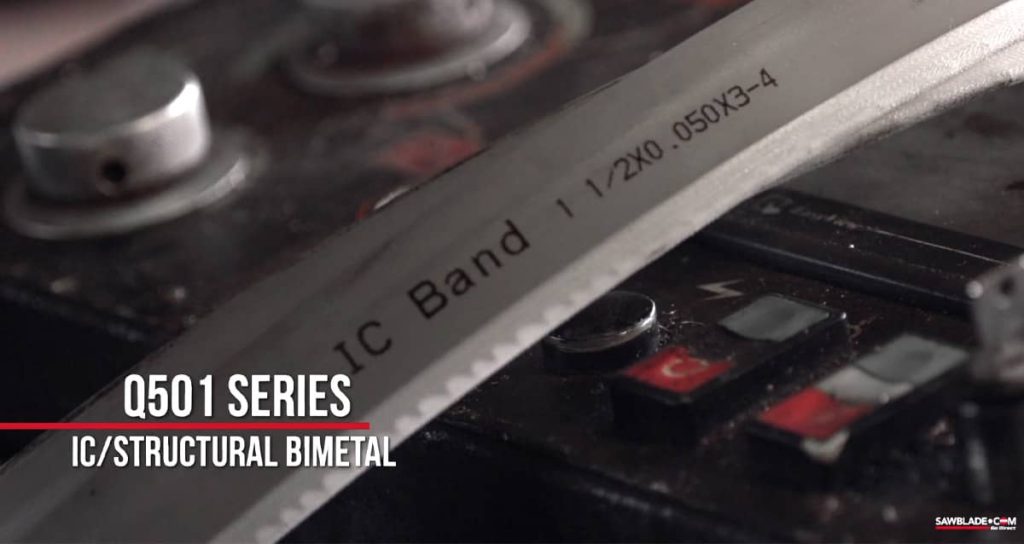
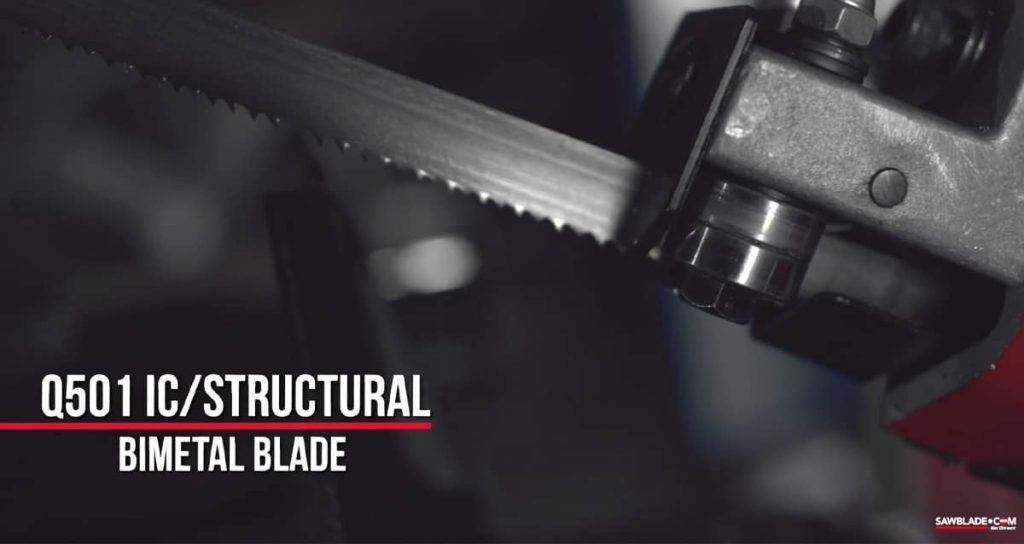
Choosing the right bandsaw blade for structural steel comes down to understanding that these applications demand specific design features, not just general heavy duty construction. Wide set provides the clearance and chip evacuation that keeps blades running cool and free. Interrupted cut tooth geometry prevents the over-feeding and tooth stripping that plague standard blades on beam and channel work. Quality materials and heat treatment deliver the durability to handle constant shock and vibration. When these elements come together in a blade like the Q501 IC M-42, structural fabricators gain a tool that genuinely matches the demands of their work rather than fighting against them.
Getting Started with the Right Blade for Your Operation
Finding the optimal blade for your specific structural cutting applications does not have to involve guesswork. Resources like blade selectors and speed and feed calculators help match blade specifications to your materials and machines. Custom welded lengths ensure you get exactly what your saw requires without compromise. Before placing an order, consider having your application reviewed by someone who understands the interaction between blade design, material properties, and machine capabilities. This consultation often identifies opportunities to improve both cut quality and blade life that might not be obvious from specifications alone. Whether you run a small fabrication shop handling occasional structural work or a large service center processing beams and channel daily, the right blade selection pays dividends in productivity, quality, and cost per cut that justify the time spent making an informed choice.