Understanding Why Your Bandsaw Blade Fails Before Its Time
Metal bandsaw blade problems rarely appear without warning. Almost every blade failure leaves behind a readable signature, and once you learn to interpret these signs, the fix becomes clear. Whether you are dealing with premature dulling, unexpected breakage, or cuts that wander off-line, the root cause typically traces back to one of a handful of common issues: incorrect blade selection, improper machine setup, or operating parameters that do not match the material being cut. This guide approaches blade troubleshooting as a diagnostic process, helping you identify the symptom, trace it to the most likely cause, and apply the right corrective action so your next blade delivers the performance and lifespan it should.
Ten Common Metal Bandsaw Blade Problems You Will Encounter
- Premature dulling where the blade loses its edge far sooner than expected
- Stripped or chipped teeth appearing along the cutting edge
- Crooked or barrelled cuts that deviate from the intended line
- Blade breakage occurring at the weld joint or somewhere in the body
- Tooth clogging and gullet packing with metal chips
- Work hardening and glazing on stainless and nickel alloys
- Excessive noise, vibration, and chatter during operation
- Blade slipping or wandering off the wheel
- Burning and discoloration visible on the cut face
- Short overall blade life as a cumulative result of multiple factors
Why Premature Dulling Happens and How to Stop It
When a metal bandsaw blade loses its cutting edge after only a few hours of work, the cause usually falls into one of three categories. Running the blade at excessive speed generates heat that softens the tooth tips, accelerating wear dramatically. Insufficient coolant flow or using the wrong coolant concentration fails to carry away heat and flush chips, compounding the problem. Perhaps most commonly, operators use a blade grade that does not match the alloy being cut. A standard bi-metal blade attempting to cut a high-alloy tool steel will dull rapidly because the tooth material simply is not hard enough to maintain its edge. Matching the blade grade to your material, verifying your speed settings against manufacturer recommendations, and ensuring flood coolant reaches the cutting zone will extend blade life significantly.
Quick Check
You find several adjacent teeth snapped off in a row. What does that pattern point to?
Stripped and Chipped Teeth: Recognizing the Damage Pattern
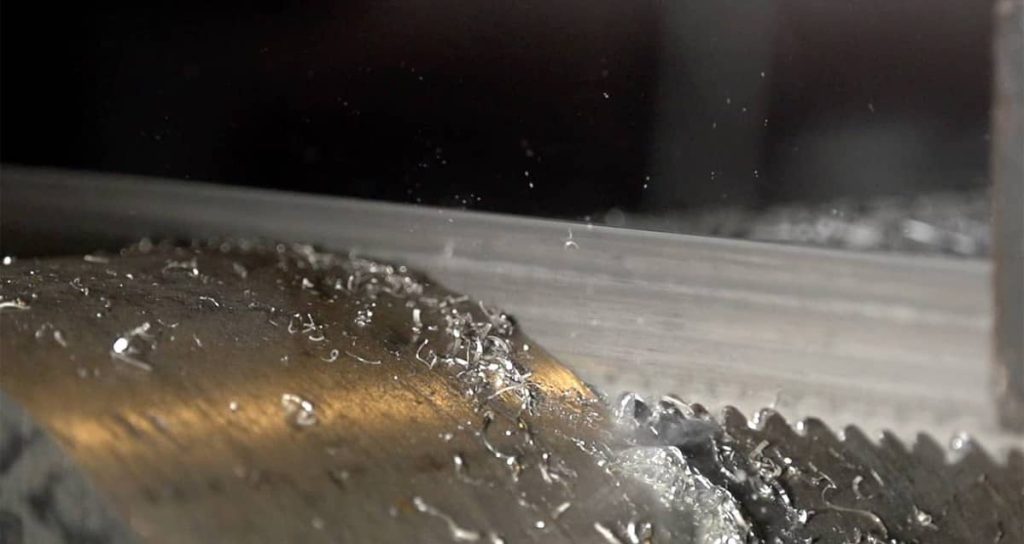
Teeth that are stripped clean off the blade body or show obvious chips along their edges point to mechanical stress problems rather than simple wear. Over-feeding pushes the blade harder than the teeth can handle, especially when cutting thick sections. Using a blade with too coarse a pitch for the material thickness means individual teeth take too much load. Loose workholding allows the material to shift or vibrate during the cut, shocking the teeth and causing fractures. Skipping the break-in procedure on a new blade is another frequent cause, since the sharp tooth corners need to be honed slightly before running at full production rates. Always secure your workpiece firmly, select a pitch that keeps at least three teeth engaged in the cut, and run new blades at reduced feed and speed for the first 50 to 100 square inches of cutting.
Quick Reference: Symptoms, Causes, and Fixes at a Glance
| Problem | Primary Cause | Corrective Action |
| Premature dulling | Excessive speed, poor coolant, wrong blade grade | Reduce speed, improve coolant delivery, upgrade blade material |
| Stripped or chipped teeth | Over-feeding, coarse pitch, loose workholding | Reduce feed rate, use finer pitch, secure workpiece |
| Crooked or barrelled cuts | Worn blade, low tension, misadjusted guides | Replace blade, increase tension, realign guides |
| Blade breakage | Over-tensioning, wheel misalignment, fatigue | Check tension specs, align wheels, inspect for cracks |
| Gullet packing | Too many teeth in cut, inadequate chip clearance | Use coarser pitch, increase chip brush effectiveness |
| Work hardening and glazing | Feed too light, rubbing instead of cutting | Increase feed pressure to maintain chip formation |
| Noise, vibration, chatter | Wrong pitch, weak clamping, unsuitable blade | Match pitch to application, improve clamping rigidity |
| Blade slipping off wheel | Tracking issues, low tension, worn tires | Adjust tracking, verify tension, replace worn tires |
| Burning and discoloration | Heat buildup, poor coolant delivery | Improve coolant flow, reduce speed, check concentration |
| Short overall blade life | Cumulative effect of multiple issues | Address all contributing factors systematically |
Crooked Cuts and Barrel-Shaped Profiles: Finding the Real Problem
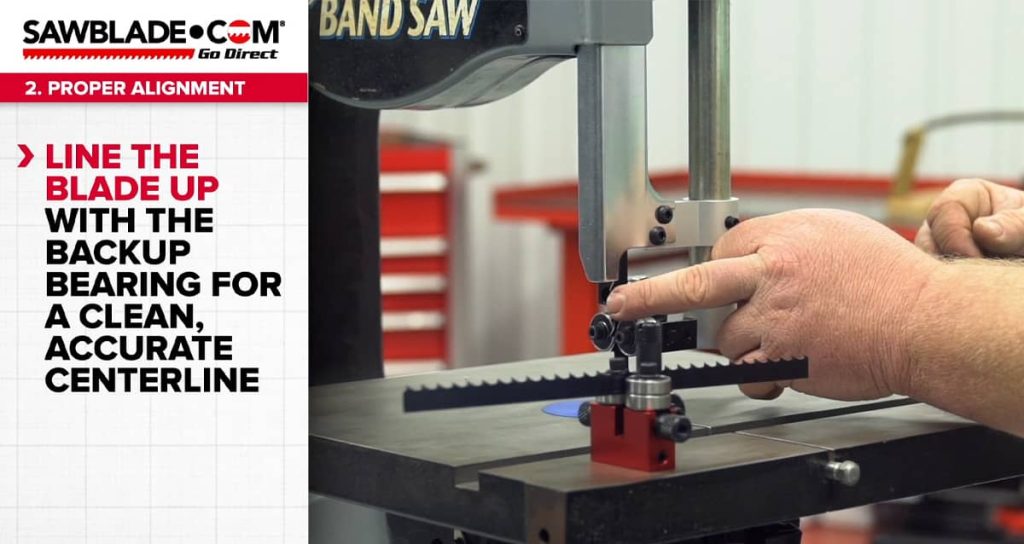
When your bandsaw produces cuts that drift to one side or leave a barrel-shaped profile on the cut face, the blade itself may be worn unevenly, but that is often a symptom rather than the root cause. Low blade tension allows the blade to flex under cutting pressure, pushing it off its intended path. Worn or misadjusted blade guides fail to support the blade properly, and worn guide bearings introduce play that compounds the problem. Before replacing the blade, check your tension setting against the manufacturer’s specification for your blade width, inspect and adjust both upper and lower guide assemblies, and verify the bearings roll smoothly without excessive play. Addressing these mechanical issues first prevents the same problem from appearing on your next blade.
Quick Check
If a sheet of copy paper slides between guide face and blade with no resistance, the guides are fine.
Blade Breakage: Where It Happens and What It Means
- Breakage at the weld joint typically indicates a poor quality weld, excessive tension, or both working together
- Cracks originating in the blade body away from the weld suggest fatigue from repeated flexing over wheels that are too small for the blade thickness
- Wheel misalignment places uneven stress across the blade width, concentrating strain at specific points
- Running the blade around too tight a radius for its thickness accelerates fatigue cracking
- Over-tensioning stretches the blade body beyond its elastic limit, creating stress risers that eventually fail
- Visible cracks along the gullet line before complete failure indicate the blade has exceeded its fatigue life
Tooth Clogging and Gullet Packing: A Pitch Problem
Chips that pack tightly into the gullet instead of clearing away create a cascade of problems. The packed material forces the teeth away from the workpiece, reduces cutting efficiency, and generates excessive heat. This condition almost always results from having too many teeth engaged in the cut relative to the gullet volume available to carry chips clear. When cutting solid bar stock or thick-walled tubing, you need a coarser pitch that provides larger gullets even though fewer teeth engage the material at any moment. The three-tooth rule applies as a minimum: at least three teeth should be in the cut, but not so many that the gullets cannot carry the chip load. A chip brush positioned to clear the blade before it re-enters the cut helps, but the fundamental fix is selecting the right pitch for your material section.
ALSO WORTH READING
Cutting Structural Steel? Blade Selection Matters
If you regularly work with structural steel, choosing the right bandsaw blade can make a real difference in your cuts and blade life. Wider set blades tend to handle the unique challenges of structural shapes more effectively than standard options. For a closer look at why this matters and how it affects your work, check out our article on why wide set bandsaw blades work better for structural steel.
Work Hardening and Glazing on Tough Alloys
- Stainless steels, nickel alloys, and other work-hardening materials require positive feed pressure throughout the cut
- A feed rate that is too light causes the teeth to rub rather than cut, generating heat without removing material
- The rubbed surface work hardens, becoming even more resistant to cutting on the next tooth pass
- Glazed surfaces appear shiny and smooth, indicating the blade is burnishing rather than cutting
- Increasing feed rate so each tooth takes a definite chip prevents the rubbing action
- Using a blade with a positive rake tooth geometry helps the teeth bite rather than slide
Addressing Excessive Noise, Vibration, and Chatter
The sounds your bandsaw makes during a cut tell you a great deal about what is happening at the blade edge. A smooth cutting sound indicates good blade-to-material engagement, while harsh vibration, rhythmic chatter, or screaming noise signals trouble. Wrong pitch selection is a frequent culprit, particularly when the spacing creates resonance with the material cross-section. Weak workholding allows the material to vibrate against the blade, and a blade design that is unsuited to interrupted cuts will chatter when entering and exiting holes or open sections in structural shapes. Progressive positive rake tooth patterns reduce these issues by controlling the cutting action and dampening vibration. Ensuring rigid clamping, matching pitch to the application, and selecting bandsaw blades designed for your specific cutting tasks will quiet the operation considerably.
When the Blade Slips or Wanders Off the Wheel
- Check the tracking adjustment first, as this controls where the blade rides on the wheel crown
- Verify blade tension meets the specification for your blade width since low tension allows the blade to wander
- Inspect the wheel tires for wear, glazing, or damage that prevents proper grip
- Clean any coolant, oil, or debris from the wheels that might cause slipping
- Confirm the wheels are parallel and properly aligned with each other
- Replace worn tires promptly, as they cannot be adjusted to compensate for lost grip
Quick Check
What is the maximum recommended blade speed for titanium? Drag to answer.
Burning and Heat Damage on the Cut Face
Discoloration on the cut surface ranging from straw yellow to blue or purple indicates excessive heat buildup during the cut. This heat damages both the workpiece and the blade, often dulling teeth rapidly in the affected area. Poor coolant delivery is the most common cause, whether from clogged nozzles, incorrect aim, insufficient flow, or coolant concentration that has drifted out of specification. Running too fast for the material also generates heat that even good coolant flow cannot remove quickly enough. Check that coolant reaches the cutting zone in adequate volume, clean or reposition nozzles as needed, and verify your speed setting matches the material being cut. On materials that are sensitive to heat-affected zones, slowing down and increasing coolant flow protects both the blade and the work quality.
Matching the Right Blade to Your Application
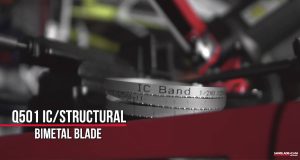
- Structural shapes and interrupted cuts benefit from blades designed to handle entry and exit shock without tooth damage
- General purpose cutting across carbon steel, alloy steel, stainless, and tool steels calls for a versatile M42 bi-metal blade
- Tougher materials respond better to M51 blade construction with higher edge hardness
- Exotic alloys including Inconel, Monel, titanium, and case-hardened steels demand premium M71 or carbide tipped blades
- High-volume production cutting justifies carbide blades for the lowest cost per cut despite higher initial investment
- Using a blade selector tool to match pitch, grade, and cutting parameters to your material and section eliminates guesswork
Getting Your Bandsaw Cutting Right the First Time
Most metal bandsaw blade problems trace back to a mismatch between the blade, the material, and the operating parameters. Once you understand that correct tension, a minimum of three teeth in the cut with adequate gullet space, flood coolant aimed properly at the cutting zone, rigid workholding, proper break-in, and blade grade matched to the material being cut form the foundation of good bandsaw practice, troubleshooting becomes straightforward. When problems persist despite correct technique, the blade itself may simply be wrong for the job. Speed and feed calculators take the guesswork out of setting parameters, and custom-welded blades in the exact length you need with same-day shipping mean you do not have to compromise on fit. If you are still struggling to identify the cause of recurring blade failures, having an expert review your setup and material specifications often reveals the issue in minutes.