If your shop cuts steel tubing at ten o’clock, aluminum extrusion at noon, and plastic composite by two, you already know that blade choice matters more than it does in single-material operations. The question is not which blade is “best” in some abstract sense but which blade characteristics let you move between materials without constant changeovers or premature failures. This article explains the cause-and-effect relationships behind mixed-material blade selection so you can evaluate any blade, from any supplier, against your actual material rotation.
Why Mixed-Material Cutting Stresses Blades Differently
Single-material runs let a blade reach thermal equilibrium. The teeth heat predictably, chips form consistently, and vibration patterns stabilize. Mixed-material cutting disrupts all three conditions in ways that accumulate rather than average out.
Consider thermal behavior first. Cutting mild steel generates substantial heat at the tooth tip, expanding the blade body. Switching immediately to aluminum, which conducts heat away faster, causes rapid cooling and contraction. This thermal cycling fatigues the weld zone between teeth and blade back, especially in lesser-quality blades. Operators who notice teeth snapping off after several material transitions, rather than wearing down gradually, are often seeing thermal fatigue rather than mechanical overload.
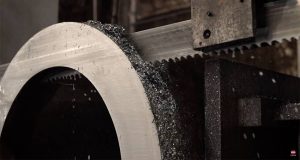
Chip formation adds another variable. Steel produces short, brittle chips that clear easily from gullets sized for them. Aluminum produces long, stringy chips that pack gullets and weld onto teeth if clearance is inadequate. Plastic composites may smear rather than chip at all. A blade optimized for one chip type becomes a liability when the material changes. For operators looking to understand how blade features address these challenges, Sawblade.com offers technical resources from manufacturers who document these specifications.
Tooth Pitch and Variable Spacing: The Vibration Problem
Every material has a density that, combined with your cutting speed and feed rate, creates a characteristic vibration frequency. Constant-pitch blades, where every tooth is spaced identically, can resonate with that frequency. In single-material work, you tune speed and feed to avoid resonance. In mixed-material work, you cannot tune the blade for every transition without stopping to recalculate.
Variable-pitch blades space teeth in repeating patterns of slightly different intervals, such as alternating between 8 and 12 teeth per inch rather than maintaining a constant 10. This irregular spacing breaks up harmonic buildup across material densities. The effect is not subtle: a blade chattering badly in aluminum may cut quietly when replaced with a variable-pitch version of similar average TPI.
Suppose you cut a piece of structural steel, then immediately move to an aluminum channel of similar cross-section. With constant pitch, you might reduce chatter in the steel by slowing the feed, then find the same setting causes the aluminum to grab and stall. Variable pitch dampens both resonance patterns, letting you maintain more consistent feed rates across the transition. This is not a guarantee of optimal cutting in either material, but it reduces the worst-case scenarios that destroy blades or workpieces.
Rake Angle Tradeoffs for Soft-Hard Material Sequences
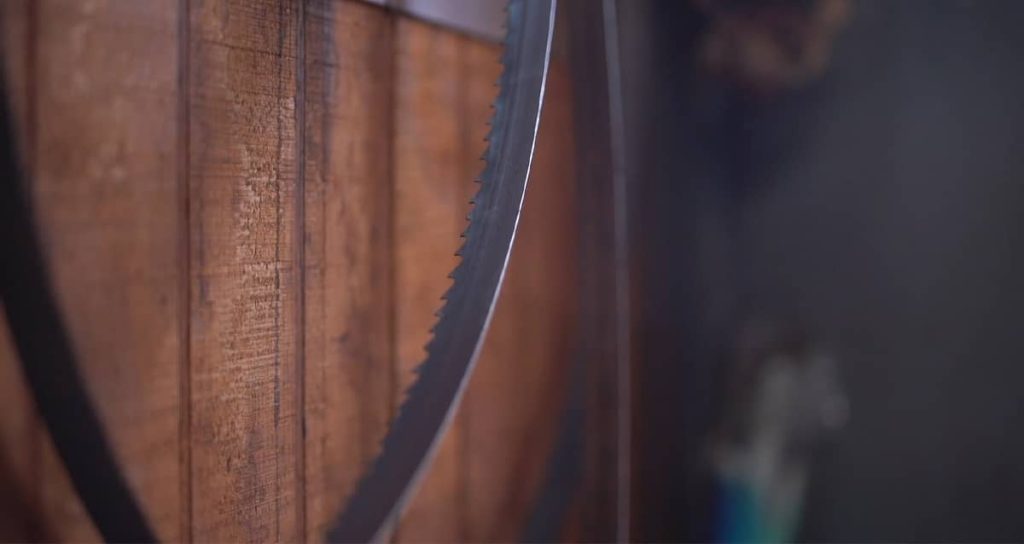
Rake angle describes the tilt of the tooth face relative to vertical. Positive rake angles tilt the tooth forward, creating an aggressive cutting action that scoops material. Zero rake presents a vertical face. Negative rake tilts the tooth backward, scraping rather than scooping.
Soft, gummy materials like aluminum and many plastics benefit from positive rake because the scooping action lifts chips free before they weld to the tooth. Hard, abrasive materials wear positive-rake teeth faster because the aggressive angle concentrates cutting forces on a thinner edge section.
For mixed-material work, moderate positive rake, typically in the range of 8 to 12 degrees, offers a workable compromise. You accept faster wear when cutting abrasive steels in exchange for adequate chip clearance in aluminum and plastics. If your material mix is heavily weighted toward hard steels with only occasional aluminum, zero rake may preserve edge life more effectively, but you will need to watch for chip welding during the softer cuts.
Tooth Material: Bi-Metal Construction and Its Limits
Bi-metal blades weld a strip of high-speed steel teeth onto a flexible alloy steel back. This construction handles thermal cycling better than all-carbon-steel blades, which harden and become brittle under repeated heating, or carbide-tipped blades, which resist wear but can crack under shock loads from material transitions.
The flexible back absorbs the expansion and contraction stresses that thermal cycling creates. The high-speed steel teeth retain their hardness across a wider temperature range than carbon steel. For most mixed-material shops, bi-metal is the practical starting point.
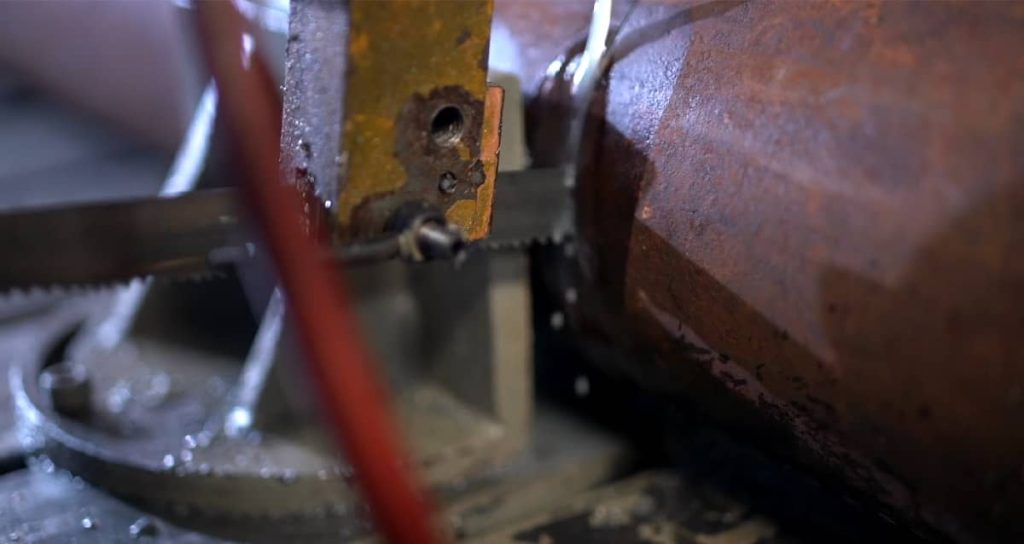
However, bi-metal has limits. If your material mix includes highly abrasive metals such as tool steel or work-hardened stainless, bi-metal teeth will dull faster than carbide. The tradeoff becomes whether you can afford the shock-loading risk of carbide given your transition frequency. Shops cutting abrasive materials only occasionally may tolerate the accelerated wear; shops cutting them constantly should consider dedicated carbide blades for those jobs.
Set Pattern and Chip Clearance Across Material Types
Tooth set, the alternating offset of teeth from the blade centerline, creates kerf width and chip clearance. Three common patterns serve different purposes in mixed-material applications.
Raker set alternates left-right teeth with an unset “raker” tooth in between. This pattern clears chips efficiently in ferrous metals but can leave visible tooth marks in softer materials.
Wavy set bends groups of teeth gradually from side to side rather than alternating individual teeth. It produces smoother cuts in thin materials and non-ferrous metals but may not clear stringy chips as effectively as raker.
Vari-set combines elements of both, varying the set angle within a repeating pattern. This disrupts chip packing in plastics and gummy metals while maintaining reasonable finish quality across material types. For busy shops with unpredictable material rotation, vari-set often provides the most consistent performance, though at the cost of slightly slower cutting in any single material.
| Set Pattern | Best For | Weakness |
| Raker | Ferrous metals, thick sections | Visible marks in soft materials |
| Wavy | Thin materials, non-ferrous, smooth finish | Chip packing in gummy materials |
| Vari-set | Mixed materials, unpredictable rotation | Not optimal for any single material |
When a Universal Blade Costs More Than Two Specialized Blades
The time savings from avoiding blade changes can be offset by edge wear if your compromise blade dulls significantly faster than material-matched alternatives. Consider a hypothetical calculation.
Suppose a blade change takes your operator fifteen minutes including adjustment and test cuts, and your shop labor cost is $60 per hour. Each change costs $15. If you make three material transitions per shift, avoiding changes saves $45 daily.
Now suppose a compromise blade lasts half as long as a dedicated steel blade when cutting steel, and half as long as a dedicated aluminum blade when cutting aluminum. If each blade costs $80, you are replacing two compromise blades per week at $160 instead of one steel and one aluminum blade at $160 total, but with additional change time. The math depends entirely on your transition frequency and material ratio.
This is not a general recommendation but a framework. Shops with five or more material transitions per shift nearly always benefit from compromise blades. Shops with one transition per day may find dedicated blades more economical. Calculate your own threshold based on actual labor rates, blade costs, and transition frequency. Manufacturer representatives at suppliers like Sawblade.com can often help with this analysis using their specific blade life data.
Why Blade Support Matters When Cutting Titanium and Superalloys
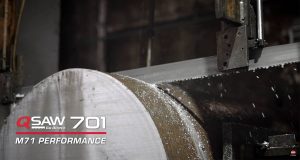
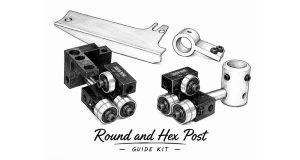
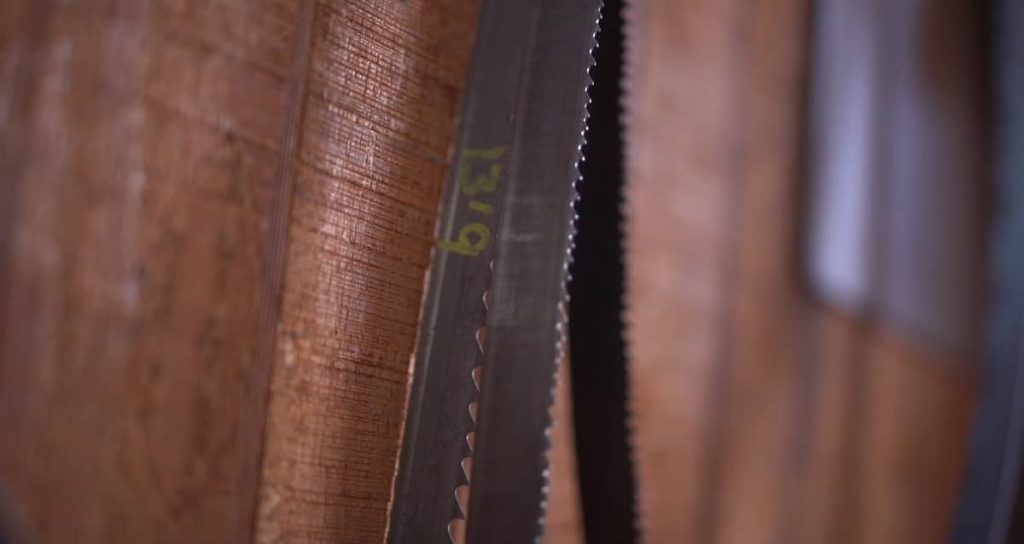
When cutting titanium and superalloys, blade performance depends on more than tooth material alone. Proper blade support helps control deflection, maintain straighter cuts, and reduce unnecessary stress during demanding applications. To understand why support becomes especially important when using M71 blades on difficult materials, read “M71 Blade Guide: Why Titanium and Superalloys Demand Better Blade Support.” The article explains how machine setup and blade guidance can directly influence cutting stability and overall blade performance.
Evaluating Blade Specifications Without Relying on Marketing Terms
Labels like “multi-purpose” or “universal” do not guarantee the characteristics that actually matter for mixed-material work. Ask suppliers specific questions and compare their answers to the principles above.
- Is the pitch constant or variable? If variable, what is the actual tooth spacing pattern?
- What is the rake angle in degrees?
- What is the tooth material: carbon steel, bi-metal, or carbide? If bi-metal, what high-speed steel grade?
- What set pattern is used: raker, wavy, or vari-set?
- What TPI range does the manufacturer recommend for the materials you cut most frequently?
Warning signs of vague specifications include blades marketed by application (“for metal and wood”) without stating pitch, rake, or set pattern. If a supplier cannot answer these questions from their documentation, consider whether their blade design was actually engineered for mixed-material work or simply marketed toward that segment.
Finally, match stated TPI ranges to your material mix. A blade rated for 1/4″ to 3″ cross-sections in steel may perform poorly on 1/8″ aluminum if the tooth spacing cannot engage thin material properly. Specify your actual material dimensions and hardnesses when requesting recommendations, and verify that the suggested TPI range covers your thinnest and thickest cuts. Additional blade selection guidance is available at Sawblade.com for operators seeking manufacturer documentation.