When you see M42 on a bandsaw blade package, you’re looking at a metallurgical designation, not a brand name or marketing tier. The decision to pay more for M42 instead of standard bi-metal blades hinges on one question: does your cut generate enough heat at the tooth tip to soften conventional high-speed steel? If it does, M42’s composition gives you an edge that holds its hardness longer. If it doesn’t, you’re paying for a capability you’ll never use. Understanding why requires looking at what cobalt actually does inside the steel and recognizing that premium metallurgy only matters when your application activates its advantage.
What M42 Actually Means: Composition and Its Purpose
M42 is a standardized high-speed steel grade defined by its alloying elements, primarily about 8% molybdenum and roughly 10% cobalt. The M designation indicates it belongs to the molybdenum high-speed steel family, while the number identifies the specific alloy recipe. This isn’t arbitrary marketing it’s a metallurgical specification recognized across manufacturers.
Cobalt’s function is often misunderstood. It doesn’t make M42 harder at room temperature compared to standard high-speed steels like M2. A freshly sharpened M42 tooth and an M2 tooth might measure nearly the same hardness on a Rockwell scale sitting on your workbench. The difference emerges when both blades start cutting and the tooth tips heat up from friction. Cobalt strengthens the steel’s matrix structure in a way that resists softening at elevated temperatures. Molybdenum contributes to this heat stability while also improving wear resistance. Together, they create an edge that maintains its cutting geometry longer when the cut runs hot.
Red Hardness: Why Heat Resistance Determines Edge Life
Red hardness describes a tool steel’s ability to retain its working hardness at temperatures high enough to make the metal glow dull red typically above 1000°F. During aggressive bandsaw cutting, friction at the tooth tip can push local temperatures into this range faster than coolant can extract the heat. When that happens, the steel’s hardness becomes the deciding factor in whether the edge survives or fails.
Standard high-speed steels begin losing hardness as temperatures climb past roughly 1000°F. The steel doesn’t melt, but its internal structure softens enough that cutting forces deform the edge rather than shearing the workpiece. Once this happens, the dulled edge generates even more friction, accelerating the damage. M42’s cobalt content shifts this softening threshold higher, giving the tooth more margin before heat degrades its cutting ability. The practical result is that M42 can maintain a sharp edge through cuts that would rapidly dull a conventional blade. When you browse bandsaw blade options at Sawblade.com, you’ll notice M42 positioned for demanding applications precisely because of this heat-resistance advantage.
Materials That Demand M42’s Heat Resistance
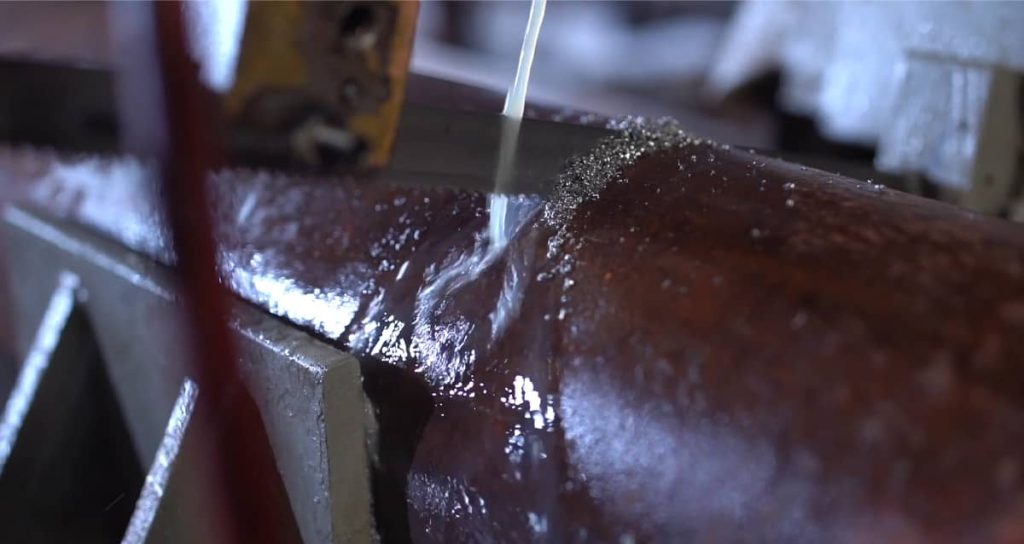
Certain materials punish bandsaw teeth by generating exceptional heat during cutting. Work-hardening stainless steels like 304 and 316 resist the shearing action of each tooth pass, creating more friction than mild steel at comparable parameters. Nickel-based alloys used in aerospace applications, tool steels intended for die work, and titanium alloys share this characteristic they don’t cut cleanly and easily, and the effort required translates directly into heat at the cutting edge.
Consider a hypothetical comparison: cutting a bar of mild steel versus a same-diameter bar of 304 stainless at identical feed rates and blade speeds. The mild steel shears with relatively low resistance, generating moderate friction. The stainless resists deformation, work-hardens as the blade passes, and converts more mechanical energy into heat concentrated at each tooth tip. A standard bi-metal blade might handle the mild steel for dozens of cuts before noticeable dulling, while the same blade on the stainless begins losing its edge partway through the first piece. M42’s higher heat threshold extends useful edge life in the stainless cut not because it’s universally superior, but because this specific cut generates the temperatures where cobalt’s metallurgical advantage becomes active.
When M42 Offers No Practical Benefit
On carbon steels, aluminum, brass, and mild structural shapes, tooth-tip temperatures during normal cutting often stay well below the range where standard high-speed steel begins softening. In these applications, M42’s elevated red hardness threshold never gets tested. The blade works fine, but a less expensive bi-metal blade with conventional HSS teeth would perform similarly because neither blade approaches its heat limit.
This is why treating M42 as a universal upgrade leads to wasted spending. If you’re running a fabrication shop cutting A36 structural steel day after day, the economics rarely favor M42. Standard bi-metal blades dull primarily from mechanical wear and occasional tooth damage, not heat-induced softening. Matching blade grade to material difficulty means reserving M42 for cuts where its heat resistance actually extends blade life. On softer materials, that premium buys nothing measurable.
Operating Parameters: Speeds, Feeds, and Coolant
M42’s heat resistance permits higher surface speeds than standard HSS on appropriate materials, but this doesn’t mean the blade tolerates neglect. Operators sometimes assume premium steel can handle inadequate coolant or aggressive feed rates without consequence. In practice, M42’s advantage disappears quickly if cutting parameters overwhelm its capability.
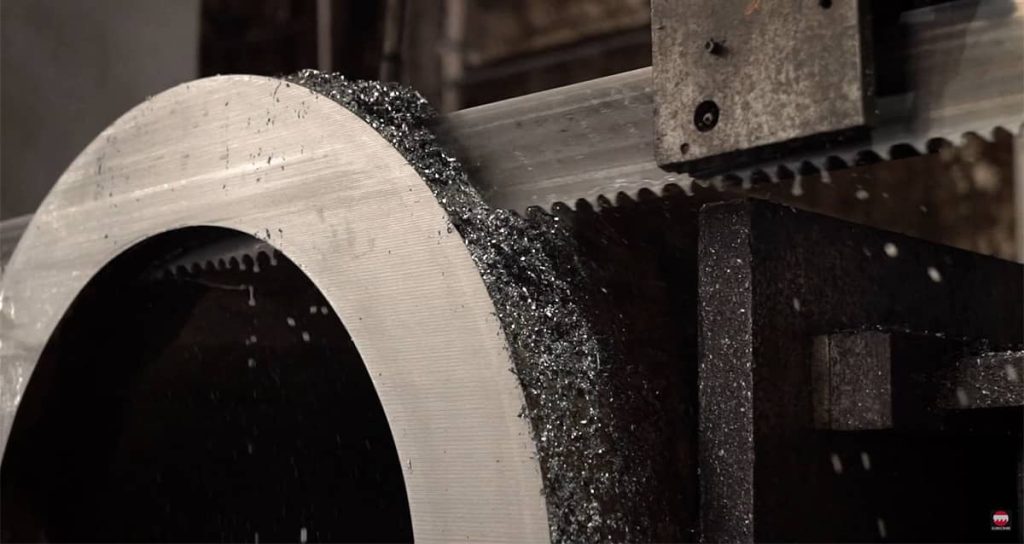
Coolant does two things: it removes heat from the cutting zone and lubricates the chip-tooth interface to reduce friction in the first place. Without adequate coolant flow on a demanding cut, even M42 can overheat. Feed rate matters because insufficient chip load causes the teeth to rub rather than cut, generating heat without removing material efficiently. Excessive feed rate overloads individual teeth and can cause micro-fractures. M42’s metallurgical advantage works within proper parameters, not despite ignoring them. Reviewing blade selection guidance at Sawblade.com can help match parameters to your specific material and machine setup.
Compare Blade Alloys Before Making Your Next Purchase
Not all bi-metal bandsaw blades deliver the same cutting performance, and understanding the differences between M42, M51, and M71 can help you avoid costly mistakes. Each edge alloy offers distinct characteristics in terms of wear resistance, heat tolerance, durability, and suitability for demanding materials. Whether you’re cutting everyday structural steel, stainless steel, or challenging high-performance alloys, choosing the right blade grade can directly affect productivity and operating costs. Explore our detailed comparison of M42, M51, and M71 edge alloys to see how their properties differ, identify the advantages and limitations of each option, and determine which blade offers the best balance of performance, longevity, and value for your workshop. Make your next blade purchase based on your actual cutting needs rather than alloy grade alone.
Recognizing M42 Failure Modes
Even M42 blades fail, and the failure pattern often reveals what went wrong. Learning to read these signs helps you adjust before ruining another blade.
Edge bluing indicates overheating severe enough to exceed even M42’s heat tolerance. If you see blue or straw-colored discoloration on tooth tips, the blade ran too fast, lacked coolant, or faced a cut beyond its design window. The discoloration marks where the steel reached temperatures that permanently softened the edge, despite the cobalt content.
Tooth strippage multiple teeth broken from the blade body suggests excessive feed pressure, hard inclusions in the workpiece, or attempting to cut material significantly harder than the blade’s intended application. M42 edges are hard, and hard materials tend toward brittleness. Overloading individual teeth can fracture them rather than simply dulling them.
Premature dulling on soft materials points to a mismatch rather than a blade defect. If you’re using M42 on aluminum and finding it dulls quickly, the blade may be experiencing chip welding from insufficient speed or inappropriate tooth geometry for non-ferrous cutting. M42’s composition doesn’t optimize it for soft, gummy materials standard bi-metal or specialized non-ferrous blades often perform better in these applications.
Applying This Reasoning to Other Blade Grades
The logic behind M42 selection transfers to evaluating any blade grade. M35, for instance, contains less cobalt (around 5%) and offers heat resistance between standard HSS and M42. It costs less than M42 but provides less margin on the most demanding alloys. Carbide-tipped blades push the heat threshold even further but introduce different tradeoffs in brittleness and cost.
When assessing any blade, ask two questions: at what temperature does this edge material begin losing hardness, and does my application generate that temperature? If your cuts consistently run cool, paying for elevated heat resistance wastes money. If your materials generate serious friction heat, inadequate blade metallurgy costs you in frequent replacements and poor cut quality. This framework lets you evaluate new blade offerings without memorizing specification charts you’re matching thermal demand to thermal capability.
Making the M42 Decision
M42 is a situational tool, not a universal upgrade. Its value emerges specifically when cutting work-hardening alloys, stainless steels, tool steels, and similar materials that generate enough friction heat to soften conventional high-speed steel edges. In these applications, M42’s cobalt-enhanced heat resistance translates to longer blade life and more consistent cuts. Exploring available bandsaw blade configurations at Sawblade.com lets you compare grades suited to different material demands.
On mild steels, aluminum, and routine structural cutting, standard bi-metal blades typically match M42’s practical performance at lower cost because the cuts never reach temperatures where cobalt’s advantage activates. Matching blade grade to material difficulty rather than defaulting to premium options keeps your cutting costs proportional to your actual needs.