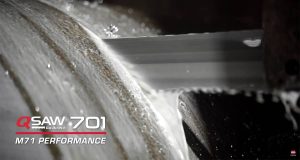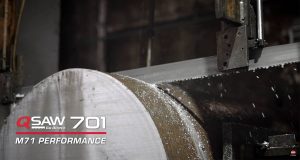
If you are cutting 300-series stainless, titanium alloys, or nickel-based superalloys and finding that your bi-metal blades dull within a fraction of their expected life, the problem likely stems from a mismatch between your blade’s heat tolerance and the material’s behavior under the saw. M71-class cobalt blades exist specifically for this situation, but they cost significantly more than standard bi-metal options. The question is not whether M71 blades perform better on difficult alloys they do but whether your particular cutting application generates the conditions that make that performance difference worth the price. Understanding what happens at the tooth-material interface will help you make that call here and recognize similar situations on alloys you have not cut before.
What Makes Stainless, Titanium, and Superalloys Different at the Saw
These materials share two properties that compound each other during sawing: they work-harden under mechanical stress, and they conduct heat poorly compared to carbon steels.
Work-hardening means the material gets harder as you deform it. Each tooth pass plastically deforms a thin layer of metal ahead of the cut. In carbon steel, that layer stays relatively soft and shears cleanly on the next pass. In austenitic stainless or titanium, that deformed layer becomes harder than the parent material. If the next tooth does not cut deep enough to get beneath that hardened skin, it rides on top of it, generating friction instead of chip formation.
Low thermal conductivity makes this worse. In carbon steel, cutting heat flows rapidly into the workpiece and chip, spreading the thermal load. In 304 stainless, thermal conductivity is roughly one-third that of plain carbon steel; in titanium alloys, it is even lower. Heat concentrates at the tooth tip instead of dissipating. A tooth that spends a fraction of a second in the cut might see localized temperatures high enough to affect the blade’s edge hardness if the blade cannot tolerate those temperatures.
Why Standard Bi-Metal Blades Fail on These Materials
Standard bi-metal blades use high-speed steel (HSS) teeth welded to a flexible alloy backing. HSS holds its hardness well at room temperature and moderate cutting heat, but it begins to soften as temperatures climb. The failure sequence on work-hardening alloys typically follows a recognizable pattern.
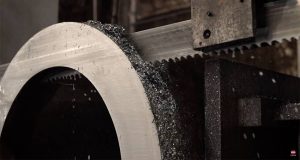
First, heat from concentrated friction softens the HSS edge. The tooth that entered the cut sharp enough to shear metal now has an edge that deforms slightly under pressure. That deformed edge cannot penetrate as deeply, so the next pass rides higher on the work-hardened surface layer. Rubbing replaces cutting. Rubbing generates more heat. Within a few inches of cut, the blade that started sharp is now polishing the work surface instead of removing material.
Visible symptoms help diagnose this failure mode. A glazed, burnished surface on the workpiece indicates rubbing rather than chip formation. Blue or straw-colored discoloration on the cut face shows the heat concentration that caused the problem. Teeth that appear rounded or worn far out of proportion to the length of cut confirm edge softening. If you see these signs early in a blade’s life on stainless or titanium, the blade’s heat tolerance is the limiting factor not its initial sharpness or tooth geometry.
How M71 Cobalt Composition Addresses Those Failure Modes
M71 blades use a high-cobalt HSS alloy for the tooth material. Cobalt additions to high-speed steel raise what metallurgists call red hardness: the ability to retain cutting hardness at elevated temperatures. Where standard M2 or M42 HSS begins to soften and lose cutting ability, an M71-class alloy continues to hold an edge.
The practical effect is that the blade tolerates more heat accumulation before entering the softening-rubbing-heating spiral described above. On 316 stainless or titanium alloys, this extended heat tolerance can mean the difference between completing a cut with acceptable blade life and burning through blades every few inches.
However, M71 is not a universal solution. Higher red hardness does not improve chip clearance, correct inadequate coolant delivery, or compensate for incorrect feed pressure. If your blade is failing because chips are packing in the gullets or because you are feeding too slowly and letting the teeth rub, M71 will fail for the same reasons just at a slightly higher temperature threshold. The cobalt advantage matters most when heat tolerance is the specific bottleneck.
Matching Blade Choice to Material: A Decision Framework
Rather than memorizing a list of which materials require M71, use a sequence of questions that transfers to unfamiliar alloys. The goal is to identify whether your cutting situation creates the heat-concentration conditions where M71’s cost provides a return.
1. Does the material work-harden significantly? Austenitic stainless steels (300-series), most titanium alloys, and nickel superalloys do. Ferritic and martensitic stainless, carbon steels, and aluminum generally do not.
2. How well does the material conduct heat away from the cut? Low conductivity means more heat stays at the tooth. Titanium and nickel alloys are notably poor conductors; copper and aluminum are good conductors.
3. How long is the cut, and what is the cross-section? A brief crosscut through thin-wall tubing may not generate enough sustained heat to matter. A long rip through thick plate gives heat time to accumulate.
4. Are you using coolant, and is it reaching the cut zone effectively? Flood coolant can remove enough heat to keep standard bi-metal blades viable on some stainless grades. Dry or mist cutting on titanium almost always requires the heat tolerance margin M71 provides.
If your material work-hardens, conducts heat poorly, and you are making sustained cuts—especially without effective flood coolant—M71 is likely to justify its cost through longer blade life and fewer failed cuts. If you are cutting carbon steel, mild stainless like 409, or non-ferrous metals that dissipate heat quickly, standard bi-metal blades will perform adequately and the M71 premium is wasted. For more background on blade selection across applications, Sawblade.com offers resources covering a range of band saw tooling.
Operating Factors That Support or Undermine Blade Performance
M71 metallurgy provides a higher ceiling for heat tolerance, but operating parameters determine whether you stay below that ceiling or hit it anyway. Three variables interact most directly with blade survival on work-hardening alloys.
Feed rate controls how deeply each tooth bites. On work-hardening materials, too light a feed lets the tooth ride on the hardened surface layer instead of cutting beneath it. The result is rubbing, friction, and exactly the heat buildup M71 is meant to tolerate. Adequate feed pressure ensures each tooth takes a chip rather than polishing the surface.
Coolant delivery removes heat from the cut zone and lubricates the tooth-chip interface. On titanium especially, dry cutting generates localized temperatures that can challenge even high-cobalt alloys. Flood coolant that actually reaches the cutting zone not just the blade body extends blade life dramatically. Mist systems help but may not be sufficient for heavy cross-sections.
Tooth pitch affects chip load per tooth. Finer pitches distribute the cutting work across more teeth, reducing heat per tooth but also reducing chip clearance. Coarser pitches take larger chips but put more thermal stress on each tooth. On work-hardening alloys, balancing these factors often means choosing the coarsest pitch that maintains adequate surface finish and does not overload individual teeth.
An M71 blade run at incorrect parameters will still fail. The difference is that it fails at conditions where a standard blade would have failed sooner. If you are already optimizing feed, coolant, and pitch and still losing blades prematurely, M71 offers headroom. If you are running dry at light feed, addressing those problems first may be more effective than upgrading blade metallurgy.
Improve Blade Selection for Mixed-Material Cutting Applications
Busy workshops often handle a wide range of materials, making it essential to choose bandsaw blades that balance cutting performance, durability, and operational efficiency. Switching between mild steel, stainless steel, aluminum, and harder alloys can introduce challenges related to tooth pitch, cutting speed, and blade wear. To develop a more practical approach to these decisions, explore our article, “Selecting Bandsaw Blades for Mixed-Material Cutting: Principles for Busy Shop Operators.“ Learn the fundamental principles behind effective blade selection, understand how different materials influence cutting requirements, and discover strategies to maintain consistent results while minimizing downtime and unnecessary blade changes.
Situations Where General Guidance Is Not Enough
The framework above applies well to common grades like 304, 316, and Ti-6Al-4V in straightforward solid sections. Several situations fall outside that scope and benefit from manufacturer-specific recommendations or application engineering consultation.
Exotic nickel superalloys such as Inconel 718 or Waspaloy push heat and work-hardening even further than standard titanium or stainless. Cutting parameters that work for 316 may be inadequate here, and even M71 blades may require more aggressive coolant strategies or reduced speed.
Thin-wall tubing and interrupted cuts create their own challenges. Thin walls dissipate heat poorly but also allow the blade to break through quickly, potentially reducing overall thermal exposure. Interrupted cuts bundles, structural shapes, irregular cross-sections subject teeth to repeated impact loads that interact with heat stress. Blade recommendations for these geometries often differ from solid-bar guidelines.
When cutting unfamiliar alloys or challenging geometries, consult the blade manufacturer’s technical resources or application support. If you are sourcing blades, the team at Sawblade.com can help identify appropriate products for specific applications. General principles explain why M71 helps; specific recommendations for your machine, material, and cross-section require data this article cannot supply.
Applying This Logic to New Materials
The value of understanding the mechanism rather than memorizing a material list is that you can extend the reasoning to alloys not mentioned here. When you encounter an unfamiliar grade, ask the same questions: Does it work-harden? Does it conduct heat poorly? How sustained is the cut? What cooling is available?
If a new material has the combination of low conductivity and high work-hardening tendency, expect standard bi-metal blades to struggle with heat-related failure. If it conducts heat well or does not work-harden significantly, standard blades will likely perform adequately. This diagnostic approach lets you make reasonable initial blade selections and interpret early results correctly.
M71-class blades are not always the answer they cost more, and that cost is wasted on materials that do not stress blade heat tolerance. But when you identify the conditions that actually require high red hardness, choosing M71 prevents the frustrating cycle of premature blade failure, damaged workpieces, and repeated tool changes. The goal is matching the blade’s capabilities to the specific demands of each cut, and that judgment transfers across any metal you are asked to saw.
For additional information on blade types and specifications, explore the band saw blade options at Sawblade.com.