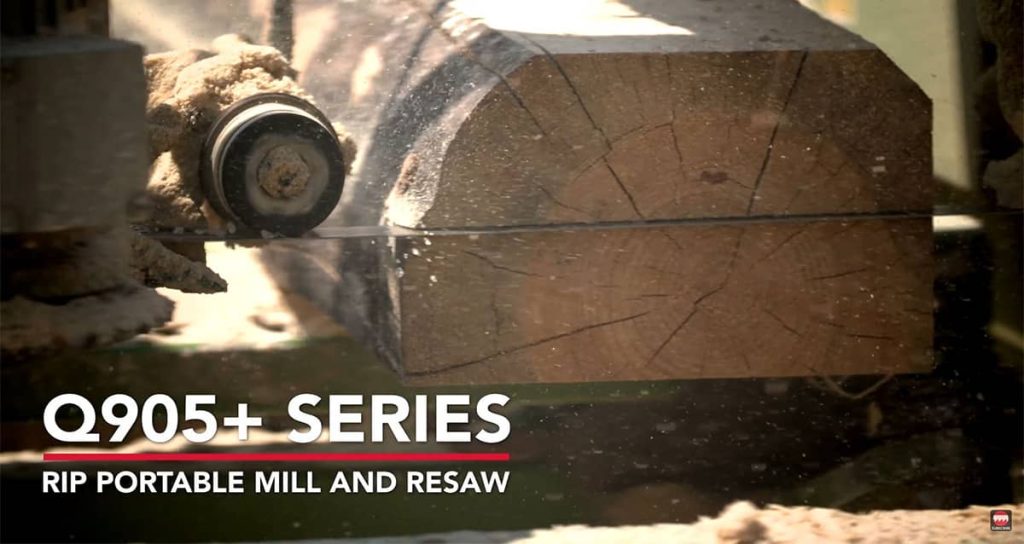
When a rip cut starts on the line and slowly walks away from it, the saw is not being random. Every crooked cut is the result of forces acting on a thin steel band: uneven cutting forces on each side of the teeth, a blade body that bends under feed pressure, and a band that is only as straight as its tension, guides, and wheels allow it to be. Once you understand those forces, fixing a rip cut that will not stay straight becomes a step by step process instead of guesswork.
What Blade Drift Means in a Rip Cut
Blade drift is the tendency of a bandsaw blade to cut at a slight angle to the fence instead of parallel to it. In a short crosscut, drift is barely noticeable. In a long rip cut, that small angle adds up over the length of the board, and the cut ends far from the line.
Drift is different from wander. Drift pulls the cut steadily to one side, always the same side, because something about the blade is not balanced. Wander moves the cut back and forth, because the blade is not supported or tensioned well enough to hold its path. The fix depends on which one you have, so the first step is always to watch the cut and name the symptom.
Key Factors That Control a Straight Rip Cut
Several things work together to keep a blade on its line:
- Tooth set balance: how evenly the teeth are bent out to the left and right side of the blade
- Tooth sharpness: whether both sides of the teeth cut with the same force
- Blade width: how stiff the blade is against bending from the front
- Blade tension: how much the band is stretched between the wheels
- Guide support: how close the guides and thrust bearings hold the blade to the cut
- Wheel alignment: whether the blade runs in a straight plane between the wheels
- Feed rate and chip load: how much wood each tooth has to remove and carry out of the cut
Quick Check
A rip cut always pulls to the left, no matter how carefully you feed the board. What is the most likely cause?
How Tooth Set Steers the Blade
Each tooth on a bandsaw blade is bent slightly to one side. This is called set, and it makes the kerf wider than the blade body so the blade does not rub in the cut. On a balanced blade, the left and right teeth remove the same amount of wood, and the side forces cancel out.
When the set is not balanced, the side forces no longer cancel. The side with more set takes a bigger bite and pushes the blade toward it. The same thing happens when the teeth on one side are dull. A blade that hit a nail, a staple, or a hard knot often loses the edge or set on one side only, and from that point it starts to drift.
You can often feel this. Run a finger lightly along both sides of the teeth, pulling toward the back of the blade. If one side feels smooth and the other side catches, the blade is out of balance.
What Happens When the Blade Bends in the Cut
Feed pressure pushes the wood into the front of the blade. The blade resists like a thin beam held at both ends by the guides. If the beam is too weak, it bends backward and twists, and the teeth stop cutting in a straight line. This is why thick stock shows a cut that bows in the middle, even when the cut starts and ends on the line.
Blade width has a big effect on this. The stiffness of a flat band against bending from the front grows with the cube of its width. A blade that is twice as wide is about eight times stiffer. That is why a 1/4 inch blade is fine for curves but struggles in a long rip, while a 3/4 inch blade holds a straight path through thick hardwood.
Important Setup Limits for Straight Rip Cuts
These are the settings that matter most. Always check your saw manual first, because wheel size and frame strength set the real limits.
| Setting | Typical Target | What Goes Wrong Outside the Target |
|---|---|---|
| Blade width for ripping | Widest blade the saw can tension well, often 1/2 to 3/4 in. on a 14 in. saw | Too narrow: the blade bends and wanders. Too wide for the saw: it cannot be tensioned and cuts worse. |
| Side guide position | Just behind the gullets, with a paper thin gap on each side | Too far: the blade moves side to side. On the teeth: the guides damage the set. |
| Thrust bearing gap | About 1/64 in. behind the blade back | Too far: the blade bends back before the bearing supports it. |
| Upper guide height | About 1/4 in. above the stock | Too high: a long unsupported span of blade bends and twists. |
| Teeth in the cut | Few teeth with deep gullets for thick rips, often 2 to 4 TPI | Too many TPI: gullets pack with sawdust, heat builds, and the blade pushes off line. |
Why Blade Tension Must Stay in the Elastic Range
Tension stretches the blade between the wheels so it acts like a stiff, straight band. Low tension is one of the most common reasons a rip cut wanders, especially in thick or hard wood. A simple way to find a working tension on a woodworking saw is the flutter test. Run the saw with the guides backed off, lower the tension until the blade flutters, then raise it until the flutter stops and add about a quarter turn.
More tension is not always better. A blade works in its elastic range, which means it returns to its original shape when the load comes off. If you push the tension past the yield strength of the blade back, the band stretches for good. It will not track the same way again, and it is more likely to crack at the weld or in the gullets. The same idea is covered in more detail in our lesson on elastic vs. plastic deformation and material limits.
A good habit for any saw: release the tension at the end of the day. This lets the blade rest, protects the tires from flat spots, and helps the blade keep its shape longer
Quick Check
The more tension you put on a bandsaw blade, the straighter it will cut, with no limit.
ALSO WORTH READING
Ductility Explained: How to Measure It and Why It Is Important
A bandsaw blade bends around the wheels thousands of times every hour. This lesson on ductility explains how metals handle repeated bending and why the right balance of strength and flexibility keeps a blade from cracking early.
How to Read a Crooked Rip Cut
The cut face and the way the board moves tell you where to look. Use these clues before you change any setting:
- The cut pulls to one side, always the same side: unbalanced tooth set or one side dull. Look at the blade first.
- The cut bows in the middle of thick stock: the blade is bending. Add tension or use a wider blade.
- The cut moves back and forth: the blade is not supported. Reset the guides and the thrust bearing.
- The blade moves forward or back on the wheel while cutting: tracking is off, or the tires are worn.
- The cut face is burned and the saw slows down: the blade is dull or the gullets are packing with sawdust.
Common Signs the Blade Is the Problem
- The cut drifts more after the blade hit a nail, staple, or hard knot
- You need more feed pressure than before for the same wood
- Tooth tips look rounded or shiny under a light
- One side of the teeth feels smooth and the other side catches
- The drift angle changes a lot from one blade to the next
- Small cracks show up in the gullets or near the weld
Carbon Steel and Bi-Metal Blades for Ripping
Most woodworking bandsaw blades are made of carbon steel. They are flexible, affordable, and cut well when sharp. The weak point for ripping is edge life. As carbon steel teeth wear, they rarely wear evenly, and uneven wear is exactly what makes a blade start to drift.
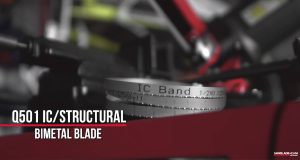
A bi-metal blade is built from two metals welded together. The teeth are high speed steel, which stays hard at the heat created in a long, heavy cut. The back is spring steel, which stays flexible as it bends around the wheels. The result is a blade that holds a sharp, even edge much longer, so it keeps cutting straight longer between blade changes.
For ripping and sawmill work in wood, the Qsaw 906 bi-metal blade for wood uses an M42 high speed steel edge on a spring steel back. It is made for ripping hardwood and softwood on portable mills, larger sawmills, and woodworking saws. Sawblade.com rates its life at up to 3 times that of a standard blade, with less vibration and quieter cutting. The price is higher than a carbon steel blade, but fewer blade changes and fewer crooked boards can make up the difference in a busy shop.
When Drift Is Normal and How to Work With It
Even a new, well tuned blade can have a small drift angle. This is normal, and it is not a reason to replace the blade. Instead, measure it and set the fence to match:
- Draw a straight line along a scrap board, about 1 inch from a straight edge.
- Without the fence, cut along the line by hand, turning the board until the blade follows the line with no side pressure.
- Stop halfway, turn off the saw, and hold the board still.
- Mark the angle of the board edge on the table, or set a sliding bevel to it.
- Set the fence parallel to that angle and make a test rip.
A small drift angle can be set and forgotten until the next blade change. A large drift angle is a sign that the blade itself is out of balance. Setting the fence to it only hides the problem until the blade gets worse.
Quick Check
If you double the width of a bandsaw blade, about how many times stiffer does it get against bending from the front? Drag to answer.
Frequently Asked Questions About Straight Rip Cuts
What is the difference between blade drift and blade wander?
Drift pulls the cut steadily to one side, always the same side, and usually comes from unbalanced tooth set or uneven sharpness. Wander moves the cut back and forth and usually comes from low tension, guides set too far from the blade, or a blade that is too narrow for the cut.
Why does a new blade sometimes drift?
Small differences in set are normal, even on a new blade, and the wheels and guides on every saw are a little different. A small drift angle is not a defect. Measure it and set the fence to match. A large drift on a new blade is worth checking with the seller.
Does a wider blade always cut straighter?
Only if the saw can tension it. A wide blade is much stiffer, but a wide blade that is too loose bends and wanders more than a narrower blade at the right tension. Use the widest blade your saw manual allows and tension it fully.
Can too much tension damage a bandsaw blade?
Yes. If the tension pushes the blade back past its yield strength, the band stretches for good. It may not track correctly again, and it is more likely to crack at the weld or in the gullets. Release the tension when the saw is not in use.
Is a bi-metal blade worth it for ripping wood?
For heavy ripping, resawing, and sawmill work, often yes. A bi-metal blade like the Qsaw 906 holds a sharp, even edge much longer than carbon steel. Since uneven wear is a main cause of drift, a longer lasting edge means more straight cuts between blade changes.
Test Your Understanding of Blade Drift
Before your next rip cut, go back through the three Quick Checks above. If you can name the cause from the symptom, tell drift from wander, and explain why width and tension matter, you have what you need to set up any bandsaw for straight rip cuts.
Applying This Knowledge to Your Next Rip Cut
A straight rip cut comes from a balanced blade working inside its limits. Start with the teeth: they must be sharp and evenly set. Then give the blade the support it needs with the right width, the right tension, and guides set close to the cut. Finally, measure the drift angle and set the fence to match.
When the cut still will not stay on the line, go back to the symptom and let it point you to the cause. And when edge life is the problem, a bi-metal blade such as the Qsaw 906 for wood keeps its edge even for longer, which keeps the cut straight for longer.