Getting Band Saw Blade Sizes Right From the Start
Choosing the correct band saw blade size sounds straightforward until you realize how many variables affect the decision. Length, width, thickness, and tooth pitch all play a role in whether your blade performs well or causes problems before the first cut is finished. The frustrating part is that using a blade even slightly off spec can lead to premature wear, poor cut quality, and unnecessary strain on your saw. Whether you run a portable unit in the field or a stationary machine in the shop, understanding band saw blade sizes saves time, money, and a lot of frustration. This guide breaks down the key measurements, explains what the numbers actually mean, and helps you move forward with confidence when ordering your next blade.
Common Band Saw Blade Lengths and Their Applications
Band saw blade sizes vary widely depending on the machine type and intended use. Here are some of the most frequently encountered blade lengths across different saw categories:
- 27-3/16 inches (691mm) for compact benchtop saws
- 44-7/8 inches (1140mm) for most portable band saws
- 56-1/8 inches (1425mm) for light-duty stationary saws
- 62 inches (1575mm) for mid-size floor standing models
- 72 inches (1829mm) for larger woodworking band saws
- 80-1/8 inches (2035mm) for heavy-duty industrial machines
- 93-1/2 inches (2375mm) for full-size production saws
- Custom lengths available for specialty equipment
Why Blade Length Is the First Measurement That Matters
Blade length determines whether the blade will even fit your machine, which makes it the logical starting point when shopping for replacements. Every band saw is designed around a specific blade circumference based on its wheel diameter and wheel spacing. Using a blade that is too short creates excessive tension and risks breakage, while a blade that is too long cannot achieve proper tension and will slip or wander during cuts. Most manufacturers list the recommended blade length in the owner’s manual, and sticking to that spec eliminates a whole category of potential problems. The 44-7/8 inch size dominates the portable band saw market, making it easy to find replacement blades, but always verify before ordering if you run a less common machine.
Quick Check
What happens if you use a band saw blade that is too long for your machine?
Understanding Blade Width and How It Affects Performance
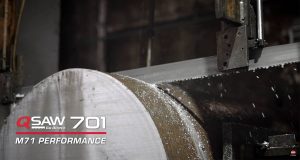
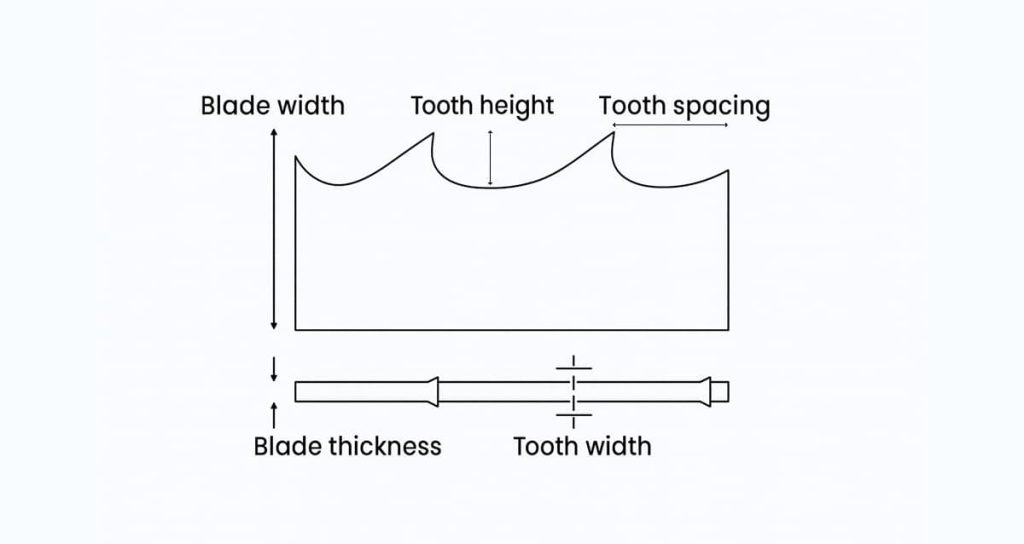
Blade width, measured from the back edge of the blade to the tip of the teeth, influences both cutting capacity and maneuverability. Wider blades provide more beam strength and resist deflection during straight cuts, making them the better choice for resawing thick stock or cutting structural steel. Narrower blades flex more easily and allow tighter radius cuts, which is why scroll work and contour cutting require blades on the thinner end of the spectrum. Most portable band saws use 1/2 inch wide blades as a balanced compromise, while stationary machines often accommodate widths from 1/8 inch up to 1 inch or more. Matching blade width to your cutting style prevents premature fatigue and keeps the blade tracking properly on the wheels.
Band Saw Blade Size Specifications at a Glance
| Specification | Common Range | What It Controls |
| Blade Length | 27″ to 144″+ | Machine compatibility and tension |
| Blade Width | 1/8″ to 1″+ | Cut radius and beam strength |
| Blade Thickness | .014″ to .035″ | Flexibility and fatigue resistance |
| Tooth Pitch (TPI) | 3 to 24 TPI | Cut speed and surface finish |
| Tooth Set | Raker, Alternate, Wavy | Chip clearance and cut efficiency |
| Tooth Form | Regular, Skip, Hook | Material suitability and feed rate |
Blade Thickness and Its Role in Durability
Blade thickness, sometimes called blade gauge, is measured across the body of the blade excluding the teeth. Thinner blades bend more easily around smaller wheels, which is why compact saws typically require .020 inch or thinner blades to prevent stress cracking. Thicker blades last longer on larger machines because they resist the repeated flexing that occurs as the blade travels around the wheel path. The standard thickness for most portable band saw blades is .020 inches, while heavy-duty industrial blades may run .025 inches or thicker. Choosing the right thickness for your wheel diameter extends blade life significantly and reduces the chance of sudden blade failure during a cut.
Tooth Pitch Options and When to Use Each
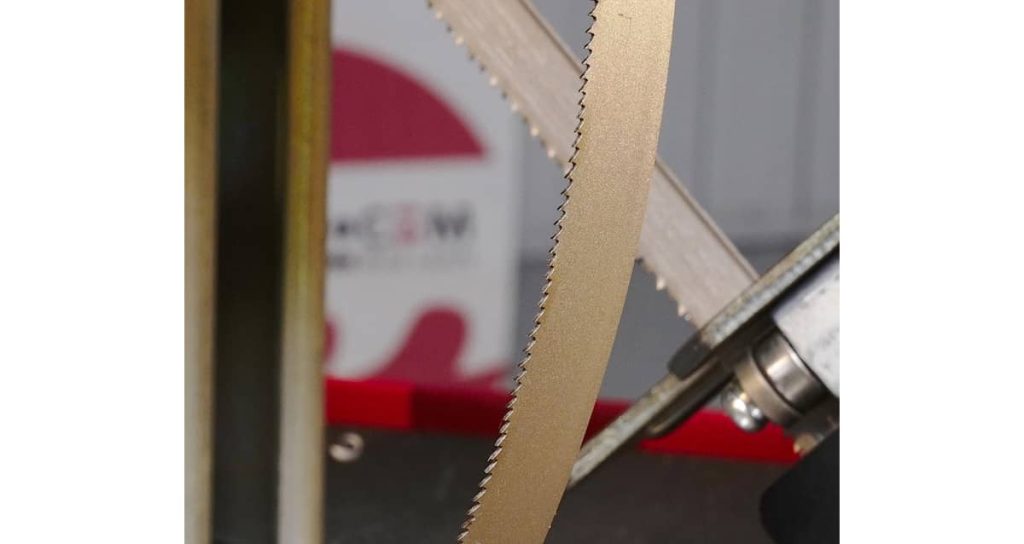
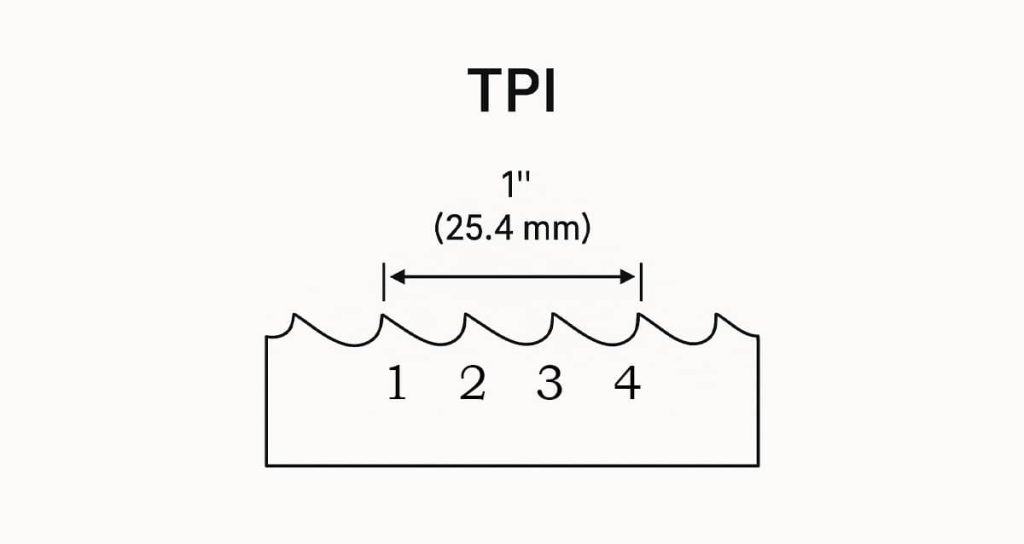
Tooth pitch, expressed as teeth per inch or TPI, determines how aggressively the blade removes material and how smooth the finished cut appears. Selecting the right pitch depends on the material type and thickness you cut most often:
- 3 to 6 TPI for thick softwood, plastic, and non-ferrous metals
- 8 to 10 TPI for general purpose cutting on mixed materials
- 10 to 14 TPI for thin-wall tubing and sheet metal
- 14 to 18 TPI for conduit, angle iron, and thin stock
- 18 to 24 TPI for very thin materials where a fine finish matters
- Variable pitch blades for reducing vibration on interrupted cuts
Quick Check
A thicker blade is always the better choice regardless of your saw’s wheel diameter.
How Tooth Set Patterns Influence Cutting Efficiency
The tooth set refers to how the teeth are bent alternately away from the blade body to create a kerf wider than the blade itself. Without adequate set, the blade binds in the cut and overheats. Raker set patterns alternate left, right, then straight teeth and work well for general purpose cutting on solid stock. Alternate set patterns position teeth in a simple left-right sequence and perform efficiently on softer materials. Wavy set patterns stagger groups of teeth in a wave-like arrangement and excel on thin materials and tubing where individual teeth might catch or strip. Understanding which set pattern your blade uses helps explain why certain blades feel smoother or cut faster on specific materials.
ALSO WORTH READING
Understanding the Material You’re Cutting
The type of iron you’re working with has a direct impact on tool selection, feed rates, and overall results. Ductile iron, in particular, behaves differently than gray iron or steel during machining operations. If you want to learn how its unique properties affect your cutting approach, take a look at our article on Ductile Iron Material: What It Means for Cutting Performance.
Materials Suited to Different Band Saw Blade Types
Not all band saw blades are built the same internally, and the blade material affects which workpieces it handles best:
- Carbon steel blades for wood, plastic, and light-duty metal cutting
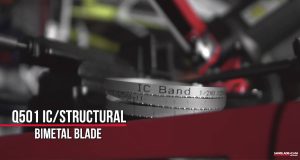
- Bi-metal blades with high-speed steel teeth for steel and stainless
- Carbide-tipped blades for abrasive materials and extended production runs
- Spring steel backing for flexibility on smaller wheel saws
- Cobalt-enhanced blades for high-temperature alloys and hardened steel
- Specialty blades for specific applications like meat processing or foam cutting
Matching Band Saw Blade Sizes to Your Specific Machine
Finding the correct band saw blade size for your machine requires checking three measurements at minimum: length, width, and thickness. Length must match exactly or within the narrow tolerance your saw’s tensioning system allows. Width should fall within the range your blade guides can accommodate, since running a blade wider than the guides support causes tracking issues. Thickness needs to suit your wheel diameter to prevent premature fatigue cracking. Most saw manufacturers publish these specifications clearly, and reputable blade suppliers cross-reference their products to specific machine models. When in doubt, measuring your current blade or contacting the manufacturer directly eliminates guesswork.
Steps to Take Before Ordering Your Next Blade
Knowing your band saw blade sizes is only part of the equation. Taking a few practical steps before ordering ensures you get exactly what your application requires:
- Verify the blade length printed in your saw’s manual or measure your existing blade
- Confirm the maximum blade width your guides and wheel crowns can handle
- Check whether your saw requires a specific blade thickness
- Identify the primary materials you cut to select the right TPI and tooth form
- Consider variable pitch blades if you frequently cut tubing or bundled stock
- Note whether your saw runs better with a specific brand or style based on past experience
- Keep a record of blade sizes for each machine in your shop to speed up future orders
Choosing the Right Band Saw Blade Sizes for Reliable Results
Getting band saw blade sizes right is one of those details that separates frustrating cutting sessions from productive ones. When the length, width, thickness, and tooth configuration all match your machine and your material, the blade tracks smoothly, cuts efficiently, and lasts as long as it should. The time you spend verifying specifications before ordering pays off in fewer wasted blades, cleaner cuts, and less downtime. Sawblade.com carries band saw blades sized for portable, benchtop, and industrial machines, with filtering options that help you find the exact fit for your equipment. If you have questions about which blade size works best for a specific saw or application, reaching out before you order saves time and gets you cutting sooner.