Why Cutting Case Hardened Steel Is a Different Challenge
Case hardened steel presents a problem that catches a lot of machinists and fabricators off guard the first time they encounter it. The outer shell, typically just a few millimeters thick, has been heat-treated to reach hardness levels that a standard bi-metal blade simply wasn’t built for. While the core of the material remains relatively ductile, that hardened surface layer is abrasive, wear-intensive, and generates significant heat during cutting. Most bandsaw blades start losing their edge fast, sometimes within a single cut, because the tooth geometry and backing material can’t handle the thermal and mechanical stress concentrated at that outer layer. Choosing the right bandsaw blade for case hardened steel isn’t just about selecting a harder tooth material. It’s about understanding how blade geometry, tooth design, and backing strength work together to survive a material specifically engineered to resist wear.
What Makes Case Hardened Steel Hard to Cut
Understanding what you’re cutting helps explain why blade selection matters so much. Case hardened steel is not uniformly hard throughout. The surface has been treated through processes like carburizing, nitriding, or induction hardening to create a wear-resistant shell, while the interior stays tough enough to absorb impact. This combination is used in gears, shafts, bearing races, and tooling components. The specific characteristics that create cutting difficulty include:
- A hardened outer layer with a Rockwell hardness that can exceed 60 HRC
- High abrasiveness at the surface that accelerates tooth wear
- Heat generation concentrated at the contact zone during cutting
- Irregular hardness transitions that can cause chatter or tooth loading
- Potential for work hardening if the blade slows down or dwells in the cut
- Shock loading when teeth enter and exit the hardened layer on round or hollow profiles
Why Carbide-Tipped Blades Are the Right Tool for the Job
When cutting materials with high surface hardness, carbide-tipped bandsaw blades offer a genuine mechanical advantage over standard high-speed steel or bi-metal alternatives. Carbide grades used in bandsaw teeth are micro-grained and engineered to hold a cutting edge at temperatures where M42 cobalt steel would begin to soften. The carbide inserts are brazed onto a fatigue-resistant steel backing, giving the blade both the cutting hardness it needs and the structural flexibility required to run continuously on a bandsaw wheel. The result is a blade that stays sharp longer, generates less heat through friction, and produces a cleaner cut even on materials that would destroy conventional blades within a few minutes of use. For case hardened steel specifically, the key is not just hardness at the tooth tip. It’s maintaining that hardness under sustained thermal load, which is exactly where carbide performs and where other blade materials fall short.
The Qsaw 1002 CT Triple Chip Carbide: Built for Hard and Exotic Materials
For case hardened steel and other demanding materials, the Qsaw 1002 CT Triple Chip Carbide Bandsaw Blade from Sawblade.com is the most capable option in the lineup. Designed for high-production environments and aerospace applications, this blade uses micro-grained carbide teeth combined with a precision-ground triple-chip grind and a positive rake angle. That combination delivers fast cutting speeds, excellent surface finish, and substantially longer blade life on materials that wear out bi-metal blades quickly. The blade is custom welded to order, meaning each one is built to fit your specific machine and application rather than pulled from a shelf and trimmed.
Comparing the Top Sawblade.com Blades for Case Hardened Steel
| Specification | Qsaw 1002 CT Triple Chip Carbide | Qsaw 701 M71 Bi-Metal | Qsaw 601 M42 Bi-Metal |
|---|---|---|---|
| Tooth Material | Micro-grained carbide (brazed tips) | M71 cobalt HSS, ground tooth | M42 cobalt HSS, ground tooth |
| Tooth Hardness | Carbide (~90 HRA) | HRC 70 | HRC 67-68 |
| Tooth Geometry | Triple-chip grind, positive rake | Variable height, aggressive rake | 5-7° positive rake |
| Primary Applications | Case hardened steel, titanium, Inconel, high-nickel alloys | Case hardened steel, D2, Inconel, Monel, stainless, nickel alloys | Carbon steel, chrome steel, die steel, tool steels, stainless |
| Best For (Shapes) | Round/square bar, tube, bundle cuts | Round/square/rectangle bar and tube | All shapes, horizontal and vertical saws |
| Key Benefits | Maximum blade life, fast cutting, clean finish | Faster than M42 on hard alloys, lower cost than carbide | All-purpose versatility, cost-effective |
| Production Type | Custom welded to order | Custom welded to order | Custom welded to order |
| Available At | Qsaw 1002 CT | Qsaw 701 M71 | Qsaw 601 M42 |
The Qsaw 701 M71: The High-Performance Middle Ground
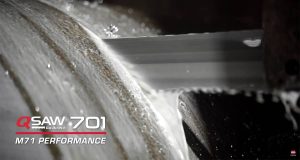
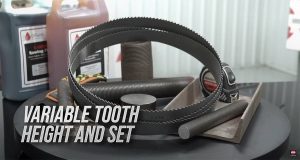
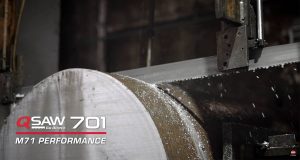
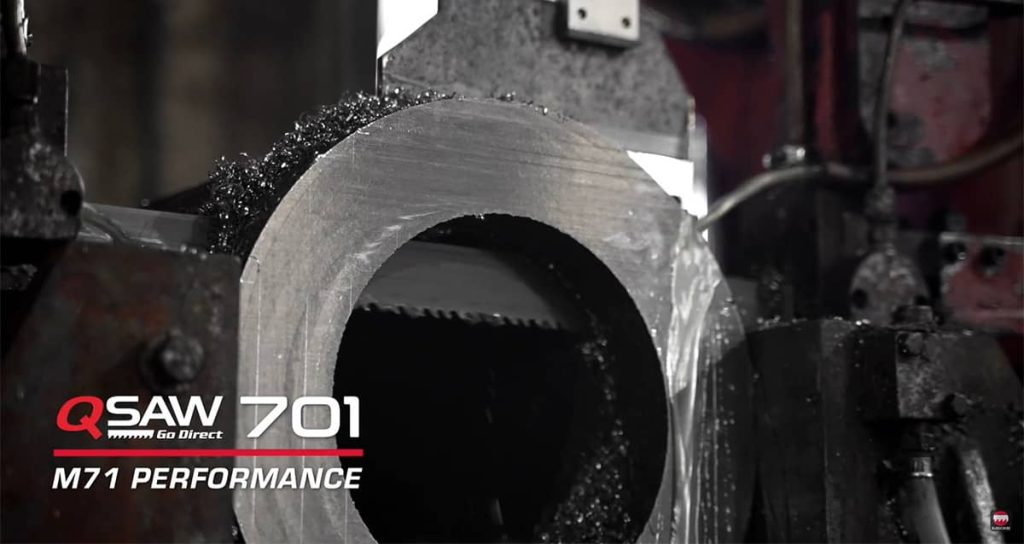
Between carbide and standard bi-metal sits a category that many shops overlook: the M71 grade bi-metal blade. The Qsaw 701 M71 Bandsaw Blade from Sawblade.com was specifically developed to fill that gap, offering performance significantly above M42 on hard alloys at a lower cost per cut than carbide. The M71 steel edge reaches a hardness of HRC 70, which is several points above what a standard M42 blade achieves, and the ground variable-height tooth design creates an aggressive pulsating cutting action that works particularly well on case hardened steel, D2 tool steel, Inconel, Monel, and nickel-base superalloys. For shops dealing with work-hardening steels or high-tensile nickel alloys where an M42 blade falls short but a full carbide upgrade feels like a bigger investment than the application justifies, the 701 is often the right answer. It cuts faster on difficult materials than any M42 blade in the lineup and handles large solid sections of exotic alloys with noticeably less wear.
When the Qsaw 601 M42 Bi-Metal Blade Is the Better Fit
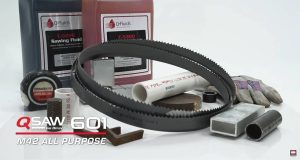
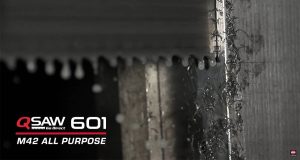
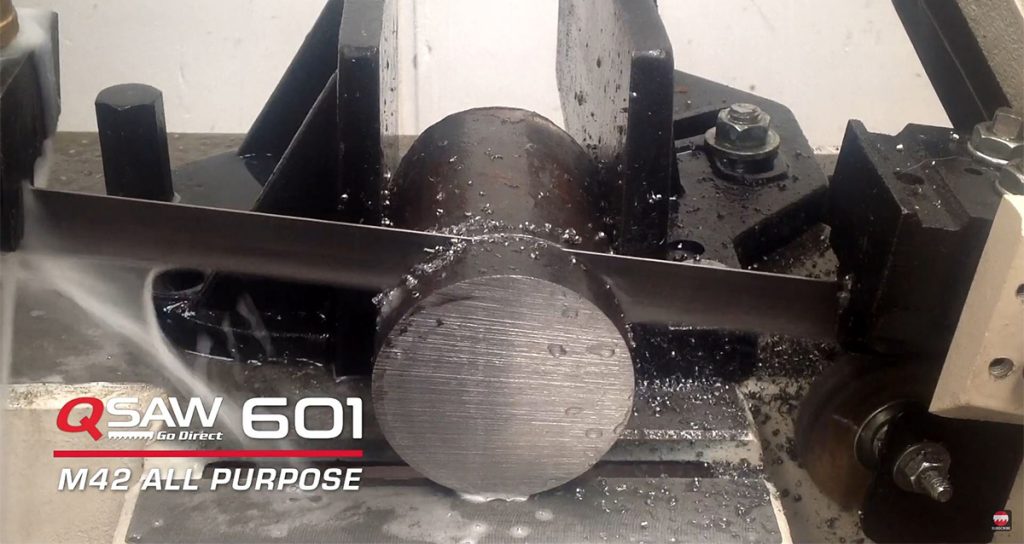
Not all case hardened applications require a carbide blade. If the surface hardness is moderate, the component dimensions are manageable, and you’re cutting lower volumes, the Qsaw 601 M42 Bi-Metal Bandsaw Blade from Sawblade.com is a reliable, cost-effective alternative worth considering. This blade is built with an M42 cobalt high-speed steel tooth edge and a 5-7 degree positive rake angle, which gives it good heat resistance and the ability to cut a wide range of alloys including chrome steel, die steel, tool steels, and stainless. It handles moderate-difficulty materials well, resists heat and abrasion better than standard bi-metal grades, and can be used on both horizontal and vertical bandsaw machines. If your shop cuts a variety of steels and case hardened parts represent only part of your workload, the 601 gives you a single blade that handles most of what comes through the door without requiring a blade change for every job.
What to Look for When Choosing a Bandsaw Blade for Case Hardened Steel
Selecting a blade for case hardened steel involves more than just picking carbide over bi-metal. The following characteristics should factor into your decision:
- Tooth material hardness at elevated temperatures, which determines whether the blade stays sharp through the cut
- Tooth geometry and rake angle, since a positive rake helps the tooth shear material rather than just scraping across it
- Backing material fatigue resistance, because bandsaw blades flex continuously around wheels and a weak backer will crack before the teeth wear out
- Vibration damping in the tooth pattern, which reduces chatter and extends both blade and machine life
- TPI (teeth per inch) selection relative to the cross-section being cut, since too few teeth means unstable cutting and too many causes chip packing and heat buildup
- Custom weld quality, which affects whether the blade runs smoothly or causes repeating vibration at the weld joint
How Tooth Geometry Affects Performance on Hard Materials
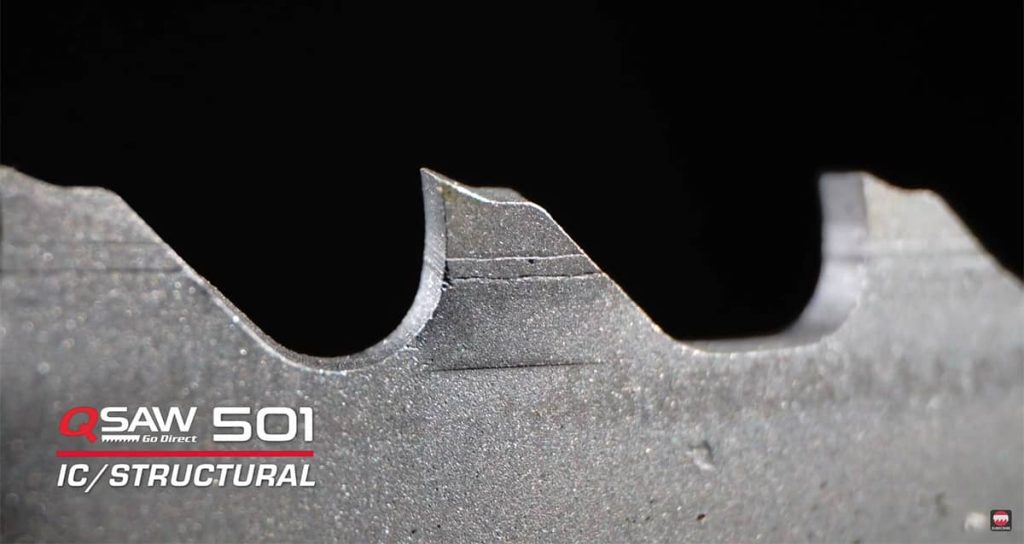
Tooth geometry has a direct impact on how a bandsaw blade behaves when cutting through a hardened surface layer. A positive rake angle means the tooth is leaning into the cut, which reduces cutting force and heat generation compared to a neutral or negative rake. For case hardened steel, this matters because excess heat at the tooth tip accelerates wear even on carbide. The triple-chip grind used on the Qsaw 1002 is specifically designed for abrasive and hard materials, where the alternating tooth heights and bevel angles allow the blade to break up chips effectively and prevent the buildup that causes heat spikes. The Qsaw 701 M71 takes a different but equally deliberate approach: its variable-height ground tooth design creates a pulsating cutting action that distributes the load unevenly across the tooth set, which is particularly effective at penetrating the hardened outer layer of case hardened steel without generating the concentrated heat that destroys standard alternating-set patterns. Standard tooth geometry used in general-purpose blades doesn’t manage chip load as well under these conditions, which is why blade geometry is one of the first things to evaluate when a blade is failing faster than expected on a difficult material.
Signs That You’re Using the Wrong Blade for Case Hardened Steel
If you’re already cutting case hardened steel and experiencing problems, these are the signs that the blade selection is contributing to the issue:
- Rapid tooth dulling or rounding within a short number of cuts
- Burn marks or discoloration on the cut surface, indicating excessive heat
- Blade deflection or bowing during the cut, suggesting the blade is struggling against the material
- Increased noise or chatter as the blade contacts the hardened outer layer
- Inconsistent surface finish between the hardened exterior and the softer core
- Frequent blade breakage at or near the weld joint under moderate cutting loads
How Sawblade.com Handles Custom Orders
One of the practical advantages of sourcing bandsaw blades through Sawblade.com is that every metal cutting blade is custom welded to the exact length, width, and TPI configuration you need. There’s no standard shelf stock that requires a compromise. If your machine takes a 13-foot 6-inch blade in 1-1/4 inch width, that’s what gets built. Orders placed before 2:30 PM CST ship the next business day, which keeps downtime short when a blade needs replacing mid-production. The team also has a background in machining and production environments, which means the support line can actually help with application questions, not just order processing.
Also Learn How Ductile Iron Affects Cutting
If you are comparing blade choices for case hardened steel, it can also help to understand how different materials behave during cutting. The article “Ductile Iron Material: What It Means for Cutting Performance” explains how ductile iron responds under a saw blade, why its structure matters, and what operators should watch for when selecting blades, speeds, and feeds. It is a useful next read for anyone who wants to better understand how material properties influence cut quality, blade wear, and overall sawing performance.
Recommended Sawblade.com Products for Cutting Case Hardened Steel
Based on the demands of case hardened steel cutting, the following products from Sawblade.com represent the most appropriate options depending on your application:
- Qsaw 1002 CT Triple Chip Carbide — best choice for high-hardness case hardened steel, production volumes, and difficult exotic materials; carbide-tipped with triple-chip geometry
- Qsaw 701 M71 Bi-Metal — ideal for shops cutting case hardened steel, D2, Inconel, and work-hardening alloys where an M42 blade underperforms but full carbide isn’t required; HRC 70 tooth hardness with variable-height ground tooth design
- Qsaw 601 M42 Bi-Metal — solid option for moderate-hardness applications, mixed-material shops, and lower production volumes where an all-purpose blade is practical
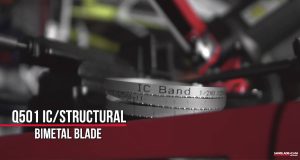
- Q501 IC M42 Wide Set Blade — suited for structural steel forms and bundle cutting where chip evacuation and tooth protection are priorities
- Cutting fluid from Sawblade.com — proper flood cooling significantly extends blade life on hard materials by reducing heat at the tooth tip
- Bandsaw blade brushes — keeping chips cleared from the blade between cuts prevents re-cutting and heat buildup, especially important with carbide blades
Getting the Most Out of Your Blade Investment
The right blade choice only gets you halfway. Even the best carbide-tipped blade for case hardened steel will underperform if the machine setup isn’t dialed in. Run the blade at the correct surface feet per minute for the material, since carbide blades typically run at lower speeds than bi-metal on hard materials, which counterintuitively helps them last longer by generating less heat. Apply cutting fluid consistently throughout the cut, not just at the start. Make sure the blade guides are properly adjusted to support the blade without causing friction. And when starting a new blade, avoid the instinct to push feed rate hard immediately, as letting the blade find its rhythm in the first few cuts prevents micro-chipping on the carbide teeth. The combination of a well-matched blade, proper machine setup, and consistent fluid application will dramatically reduce cost per cut and keep production moving without the frustration of frequent blade changes. For application-specific guidance or help selecting the right blade for your machine and material, Sawblade.com’s team can be reached directly at 800.754.6920 or through the contact page on their website.