
Introduction to Melting Point Nickel
The melting point nickel professionals most often use for pure nickel is 1455°C (2651°F), and that figure matters well beyond a simple material reference. It affects casting temperatures, welding decisions, heat treatment planning, furnace setup, and the way nickel is compared with other engineering metals. In real production settings, the melting point nickel value helps define process windows, supports material selection for hot environments, and explains why nickel and nickel-based alloys are so often chosen for turbine parts, chemical processing equipment, plating work, and other components that need to perform reliably under heat.
The Practical Significance of Nickel’s Melting Point
- It marks the temperature at which pure nickel changes from solid to liquid under standard conditions.
- It helps engineers assess whether nickel is a good fit for furnaces, hot-zone fixtures, and other high-heat service.
- It affects casting behavior, joining methods, and the choice of molds or crucibles.
- It offers a reference point for comparing pure nickel with nickel alloys, stainless steels, copper alloys, and zinc-based materials.
- It reminds buyers and machinists that even small changes in alloy composition can shift melting behavior.
- It supports safer thermal processing because surrounding equipment must withstand temperatures above the melting point of nickel.
Pure Nickel vs Nickel Alloys
One of the most common mistakes in materials work is assuming the melting point nickel value for pure nickel applies to every nickel-containing alloy. In practice, that is rarely true. Pure nickel has a specific melting point, while nickel alloys and nickel-based superalloys often melt across a temperature range instead of at a single fixed point. Once chromium, molybdenum, cobalt, copper, iron, or other elements are added, the thermal response changes. That is why exact material specifications matter so much. A shop handling commercially pure nickel, a nickel-copper alloy, and a nickel-chromium superalloy may be working with three materials that sound similar on paper but behave very differently once heat is involved.
Why Nickel Keeps Its Place in High-Temperature Service
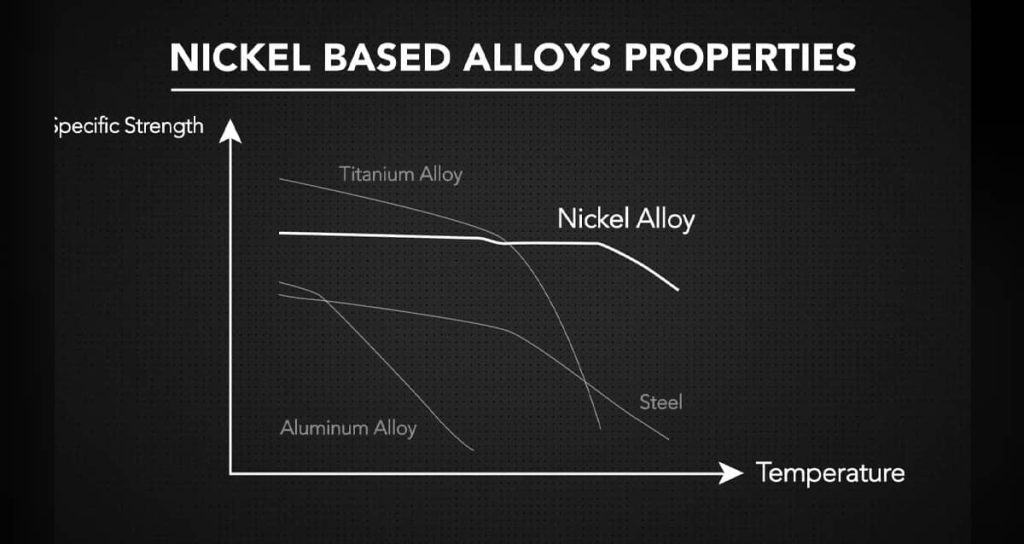
Nickel continues to hold an important place in high-temperature service because it combines a high melting point with strong corrosion resistance, useful strength, and stable behavior under heat. In many operating conditions, those traits matter just as much as the melting point itself. Components usually do not fail because they suddenly melt. More often, they soften, creep, oxidize, scale, crack, or lose dimensional stability first. Nickel-based materials are valued because they continue working at temperatures where many common metals begin to lose reliability. That is one reason nickel-based alloys are widely used in jet engine parts, reactor systems, heat exchangers, and processing equipment exposed to hot gases or aggressive chemicals.
Melting Point Nickel and Related Material Data
| Property or Material | Typical Value | Why It Matters |
|---|---|---|
| Pure nickel melting point | 1455°C / 2651°F | Baseline figure for design, processing, and material comparison |
| Nickel density | About 8.9 g/cm³ | Useful for weight calculations, casting yield, and part sizing |
| Pure nickel appearance | Silver-white metal | Helps with identification and finish expectations |
| Corrosion resistance | High | Supports use in chemical, marine, and plated applications |
| Nickel-copper alloy corrosion resistance | Very high in many environments | Often chosen for seawater or chemical exposure |
| Nickel-chromium alloy oxidation resistance | Strong at elevated temperature | Useful for hot-service parts and furnace environments |
| Nickel-chromium alloy machinability | Often difficult because of work hardening | Usually requires slower, firm cuts and durable tooling |
| Added molybdenum in nickel-chromium alloys | Improves ductility and chemical resistance in many grades | Can make the alloy more suitable for aggressive process conditions |
| Added cobalt in nickel-chromium alloys | Improves creep resistance and rupture strength | Helps parts maintain shape and strength during long heat exposure |
| Zinc melting point | About 419.5°C / 787°F | Shows how much lower zinc melts compared with nickel |
| Zinc use in die casting | Common | Lower melting temperature makes casting faster and easier |
| Nickel content in many superalloys | Often 40% or more | Explains why nickel strongly influences high-temperature performance |
Nickel-Based Superalloys and Their Heat Behavior
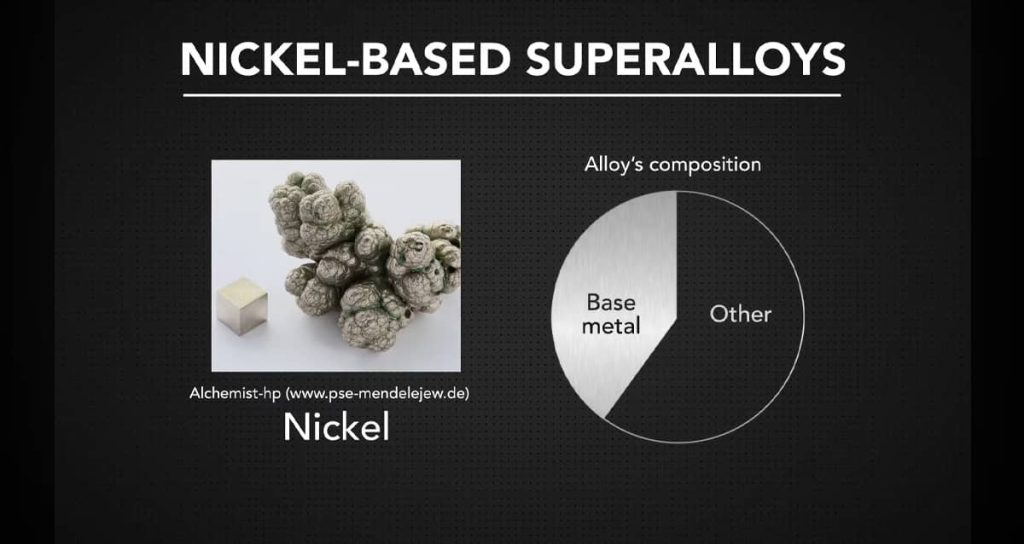
Nickel-based superalloys deserve separate attention because they are designed for service where both heat and stress are present. These alloys are not simply nickel alone but engineered blends that use nickel as the main base metal, often at 40% or more. Nickel-chromium-based superalloys are known for strong oxidation resistance in demanding environments and better creep strength than standard steel. Adding molybdenum can improve ductility and resistance to chemical attack, while cobalt can improve creep resistance and rupture strength. These alloys can also be difficult to machine because they work harden quickly, so experienced machinists often prefer a slower, forceful cut with a hard tool instead of light repeated passes that make each next cut more difficult.
Test Your Knowledge: Properties of Nickel-Based Superalloys Quiz
Want to check how much you picked up from this article? Head over to sawbladeuniversity.com and take our Properties of Nickel-Based Superalloys quiz. It is a simple way to review the main ideas, sharpen your understanding of heat resistance, corrosion resistance, and alloy behavior, and see how well you know the material properties that matter in real cutting and industrial applications.
Terms You Should Know When Reading About Melting Point Nickel
- Melting point: The temperature at which a pure metal changes from solid to liquid.
- Melting range: The temperature interval where many alloys begin to soften and finish melting.
- Creep: Slow deformation under load at elevated temperature.
- Oxidation resistance: A material’s ability to resist reacting with oxygen when heated.
- Corrosion resistance: A material’s ability to resist chemical or environmental attack.
- Work hardening: Surface or subsurface hardening caused by deformation during machining or forming.
- Rupture strength: The ability to resist breaking under long-term high-temperature stress.
- Superalloy: A heat-resistant alloy designed for strength and stability in severe service conditions.
How Melting Point Nickel Affects Fabrication Choices
In day-to-day fabrication, the melting point nickel value influences far more than furnace settings. It affects filler metal selection, preheat and post-heat choices, crucible compatibility, mold materials, shielding methods, and inspection planning. In welding and casting, the difference between pure nickel and a nickel alloy can change how fluid the melt becomes, how easily oxides form, and how the finished part cools. In machining after heat exposure, the challenge is often not just hardness but how the material responds to repeated cutting passes. Shops that work regularly with nickel-chromium grades learn quickly that steady parameters and rigid tooling matter, because work hardening can turn a routine operation into an expensive one.
Common Comparisons: Nickel, Zinc, Copper, and Steel
- Nickel melts at a much higher temperature than zinc, which is why zinc is often used in die casting while nickel is used where heat resistance matters more.
- Nickel shares some mechanical traits with iron and steel but usually offers better corrosion resistance.
- Nickel-copper alloys can be highly resistant to corrosion, especially in wet or chemically aggressive environments.
- Nickel-chromium alloys generally offer stronger oxidation resistance than many common structural metals at elevated temperatures.
- Steel is often easier and less expensive to process, but it can lose performance sooner in hot and corrosive service.
- Zinc is often used as a coating metal because its lower melting point and sacrificial behavior suit galvanizing applications.
Where Professionals Usually Use Melting Point Nickel Data
Material buyers, process engineers, welders, metallurgists, foundry teams, and maintenance planners all use melting point nickel data, although each group applies it differently. A buyer may use it to narrow down materials for hot-service equipment. A foundry may rely on it when confirming pouring conditions and mold requirements. A welding engineer may use it to avoid joining problems caused by heat input or filler mismatch. A maintenance team may use it to understand why a part distorted in service even though it never reached the published melting point. In real operations, thermal failure usually begins with loss of strength, oxidation, or creep before actual melting becomes the main issue.
Continue Reading: Rockwell Hardness Scale: What It Means for Cutting Performance
If you want to go one step further in understanding material behavior, our article on “Rockwell Hardness Scale: What It Means for Cutting Performance” is a useful follow-up. While melting point nickel helps explain how a material performs under heat, Rockwell hardness gives you a clearer view of how it responds during machining, wear, and cutting operations. Reading both together gives a more complete picture of material selection and real shop performance.
Practical Next Steps When You Are Working With Nickel
- Confirm whether the material is pure nickel or a nickel alloy before using any melting point nickel figure.
- Review the material data sheet for melting range, service temperature, oxidation behavior, and corrosion resistance.
- Check whether alloying elements such as chromium, molybdenum, cobalt, or copper change the expected performance.
- Match furnace, mold, refractory, and tooling choices to the exact grade, not just the word “nickel.”
- Plan machining methods around work hardening when using nickel-chromium or similar high-strength grades.
- Compare operating temperature with both melting data and long-term strength data, especially for loaded components.
- Ask suppliers for grade-specific thermal properties when the application involves casting, welding, or sustained heat.
Understanding the melting point nickel value is a useful starting point, but it is not the whole story. Pure nickel melts at a high temperature, yet real design and fabrication decisions depend on the exact grade, alloy additions, service conditions, and the way the material behaves before it ever becomes liquid. When that wider context is kept in view, melting point nickel data becomes far more useful. It stops being just a number in a chart and becomes part of a smarter material decision for plating work, heat-resistant components, chemical service equipment, and nickel-based superalloys built for long exposure to heat.