Understanding Cold Working and Its Role in Metal Fabrication
Cold working is a metal forming process that takes place at or near room temperature, typically following hot working operations. When steel comes out of hot working, it carries a rough scale on its surface and often lacks the precise dimensions required for finished products. Cold working addresses both issues by removing that scale while refining the metal’s shape to exact specifications. Beyond surface improvements, this process fundamentally changes the metal’s internal structure, increasing strength and improving machinability. The technique has become standard practice across manufacturing industries where precision and enhanced mechanical properties are essential. Whether you are sourcing materials for a project or simply want to understand why certain steel products cost more than others, knowing how cold working transforms metal helps you make better decisions.
Common Cold Working Methods Used in Industry
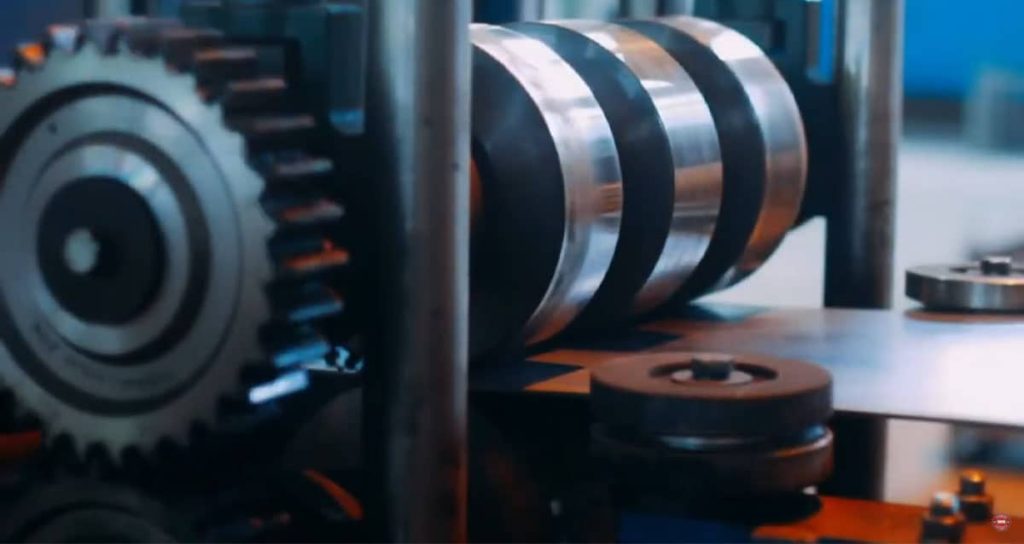
- Cold rolling passes metal through two rollers at room temperature to compress and shape it into sheets, strips, or plates with tight tolerances
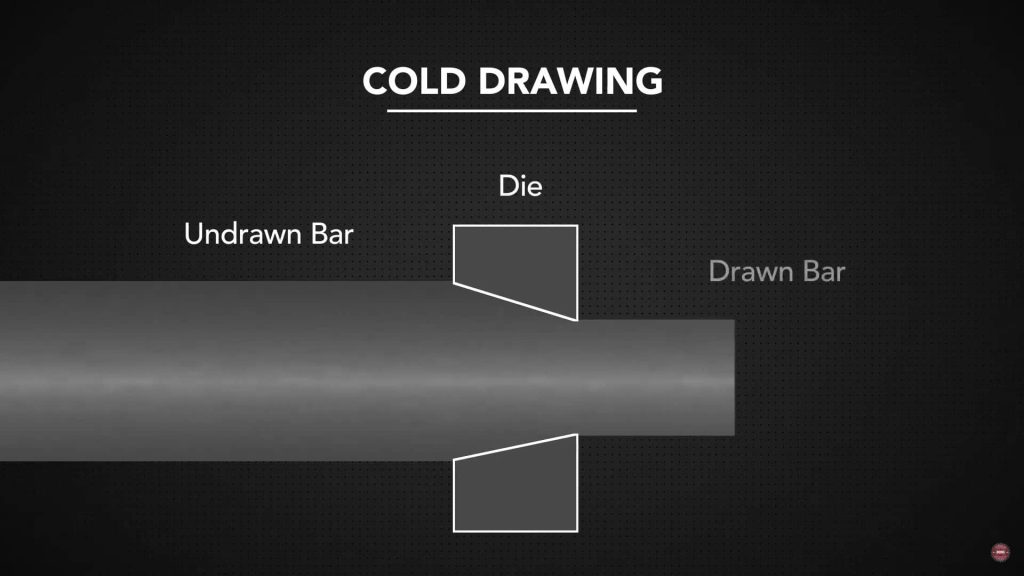
- Cold drawing pulls metal stock through a die to reduce its diameter while simultaneously improving surface finish and dimensional accuracy
- Cold extrusion forces metal through a die using compressive force to create complex shapes with excellent surface quality
- Cold heading shapes metal blanks into fasteners like bolts, screws, and rivets without removing material
- Cold forging applies localized compressive forces to shape metal into specific forms while maintaining material integrity
- Coining uses high pressure to create fine details and precise dimensions, commonly seen in currency and precision components
- Swaging reduces or changes the diameter of rods and tubes by forcing them into a confining die
How Cold Working Actually Hardens Metal
The hardening effect of cold working comes down to what happens at the atomic level inside the metal. When you deform metal at room temperature, you create and multiply dislocations within its crystal structure. These dislocations are essentially irregularities in the orderly arrangement of atoms. As more dislocations form and interact with each other, they begin to block each other’s movement, making it increasingly difficult for the metal to deform further. This phenomenon is called strain hardening or work hardening. The more you cold work a piece of metal, the harder and stronger it becomes, though this also makes it more brittle. In practical terms, a steel bar that has been cold drawn will resist deformation far better than the same steel in its hot worked state, which is exactly why manufacturers choose cold working for applications requiring higher strength.
Quick Check
What causes metal to harden during the cold working process?
The Science Behind Dislocation Density and Strength
Every metal consists of countless tiny crystal grains, each containing atoms arranged in specific patterns. During cold working, mechanical force causes atoms to slip along crystallographic planes, generating new dislocations with each pass through rollers or dies. Think of it like pushing through a crowded room where every step creates more obstacles. Research has shown that heavily cold worked metals can contain dislocation densities exceeding 10^12 per square centimeter, compared to roughly 10^6 in annealed metal. This dramatic increase in internal obstacles directly translates to higher yield strength and tensile strength. However, there is a limit to how much cold working any metal can withstand before it cracks. When ductility drops too low, manufacturers must perform intermediate annealing to restore some workability before continuing the cold working process.
Comparing Cold Worked Steel to Hot Worked Steel
| Property | Cold Worked Steel | Hot Worked Steel |
| Surface Finish | Smooth, scale-free, precise | Rough, scaled, less refined |
| Dimensional Tolerance | Tight, typically within 0.001 inches | Looser, may require secondary machining |
| Strength | Higher due to strain hardening | Lower, closer to base metal properties |
| Ductility | Reduced compared to annealed state | Higher, more formable |
| Internal Stress | Contains residual stresses | Minimal residual stress |
| Cost | More expensive due to processing | Less expensive |
| Hardness | Increased significantly | Relatively softer |
| Typical Applications | Precision shafts, fasteners, springs | Structural beams, rough stock |
Why Cold Worked Steel Costs More Than Hot Worked Steel
The price difference between cold worked and hot worked steel reflects the additional processing required and the equipment involved. Cold working demands machinery capable of exerting tremendous force on metal that resists deformation, unlike hot working where elevated temperatures make the metal pliable. These machines require higher initial investment, more frequent maintenance, and consume more energy per unit of material processed. Additionally, cold working is a slower process that often requires multiple passes to achieve the desired dimensions and properties. Manufacturers may also need to perform intermediate annealing steps, adding time and cost. The tighter tolerances achieved through cold working reduce or eliminate secondary machining operations, which can offset some of the higher material cost. When evaluating total project costs, the premium paid for cold worked steel often proves economical for precision applications.
Quick Check
Cold worked steel is always the better choice over hot worked steel regardless of the application.
Key Advantages of Cold Working in Manufacturing
- Produces superior surface finishes that often require no additional polishing or grinding
- Achieves dimensional tolerances as tight as 0.0005 inches for precision applications
- Increases tensile strength by 10 to 20 percent or more depending on the degree of working
- Improves machinability compared to hot worked stock of the same grade
- Eliminates surface scale and decarburization common in hot worked materials
- Creates consistent mechanical properties throughout production runs
- Enables net shape or near net shape manufacturing, reducing material waste
- Allows production of thin gauge materials that would be difficult to hot work
When Softer Metal Actually Works Better
While cold working increases hardness and strength, these properties are not always desirable. Some applications specifically require softer, more ductile metal that can absorb impact, bend without cracking, or be easily formed into complex shapes. Automotive body panels, for instance, need enough formability to be stamped into intricate curves without fracturing. Similarly, certain structural components benefit from ductility that allows them to deform under extreme loads rather than fail suddenly. Electrical conductors often perform better when softer because work hardening can reduce conductivity. In these situations, manufacturers either use hot worked steel directly or anneal cold worked material to restore ductility. Understanding when to specify cold worked versus hot worked or annealed steel prevents over-engineering and unnecessary expense while ensuring the material performs as needed.
ALSO WORTH READING
Learn More About M42 Blades
If you’re looking for a blade that handles daily production demands without frequent replacements, M42 blades are worth considering. Our related article explores why so many fabricators rely on M42 for their everyday cutting tasks, from their heat resistance to their ability to cut through tough materials. Check out “Why Fabricators Choose M42 Blades for Everyday Production Cutting” to see if they might be the right fit for your shop.
Industries That Rely Heavily on Cold Worked Materials
- Automotive manufacturing uses cold drawn steel for precision shafts, transmission components, and high strength fasteners
- Aerospace applications require cold worked alloys for landing gear parts, hydraulic fittings, and structural fasteners
- Medical device production depends on cold drawn stainless steel and titanium for surgical instruments and implants
- Electronics manufacturing utilizes cold rolled copper and aluminum for connectors, lead frames, and shielding
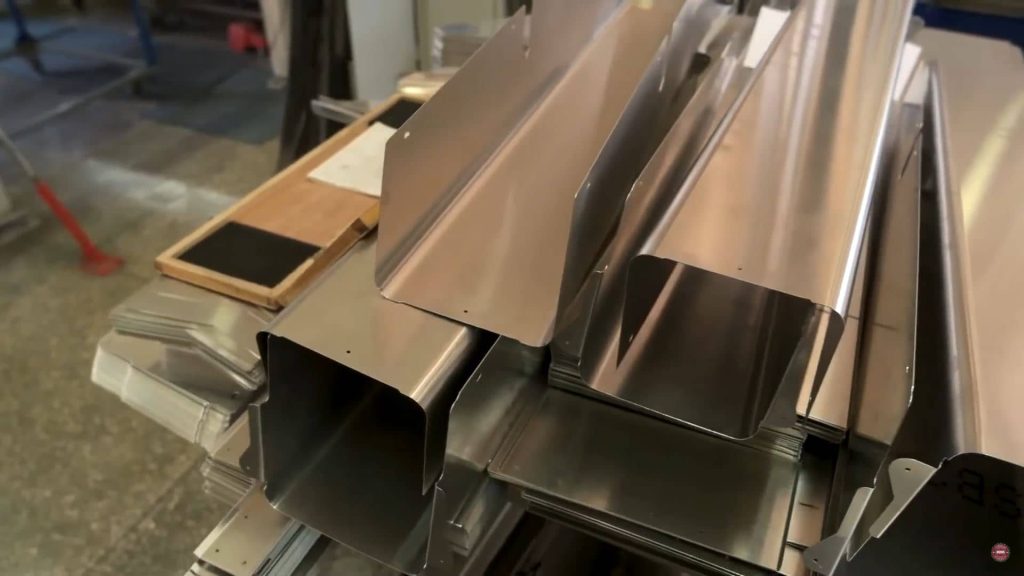
- Construction relies on cold formed steel for studs, joists, and structural framing members
- Oil and gas operations use cold drawn tubing for hydraulic lines and instrumentation
- Wire and cable production starts with cold drawn rod that becomes everything from electrical wire to bridge cables
Quick Check
By how much can cold working increase tensile strength? Drag to the minimum value.
Limitations and Challenges of Cold Working
Cold working is not without its drawbacks, and understanding these limitations helps prevent costly mistakes. The process introduces residual stresses into the metal that can cause warping or cracking during subsequent machining or heat treatment. These internal stresses may also contribute to stress corrosion cracking in certain environments. As metal hardens through cold working, it loses ductility, which means there is a practical limit to how much deformation can occur before the material fails. Intermediate annealing adds cost and time but becomes necessary for heavily worked components. Some metals, particularly those with limited slip systems in their crystal structure, do not respond well to cold working at all. Material selection must account for these factors, and engineers often need to balance the benefits of increased strength against reduced formability and the potential for cracking during service.
Best Practices for Specifying Cold Worked Steel
- Define the required mechanical properties clearly, including minimum tensile strength and hardness range
- Specify surface finish requirements using measurable standards like Ra values
- Include dimensional tolerances that reflect actual functional needs rather than defaulting to the tightest possible
- Consider whether annealing after cold working is necessary for subsequent forming operations
- Evaluate total cost including reduced machining time when comparing cold worked to hot worked options
- Request material certifications that verify the cold working process met specifications
- Account for residual stress effects if the part will undergo welding, heat treatment, or high stress service
- Consult with suppliers about available temper conditions and how they affect final properties
Making the Right Choice for Your Application
Selecting between cold worked and hot worked steel comes down to matching material properties with functional requirements and budget constraints. Cold working delivers precision, strength, and surface quality that hot working simply cannot achieve, making it the clear choice for applications demanding tight tolerances and enhanced mechanical performance. The higher cost per pound pays dividends when you factor in reduced machining, fewer rejected parts, and improved product performance. However, when flexibility, formability, or lower initial cost takes priority, hot worked or annealed materials may serve better. Taking time to understand exactly what cold working does to metal structure and properties allows you to specify materials confidently, communicate effectively with suppliers, and avoid the expense of over-engineered or underperforming components. Whether you are designing precision machinery or sourcing materials for general fabrication, this knowledge puts you in a stronger position to make decisions that balance performance with practicality.