Why the Grizzly 14″ Band Saw Still Stands Out
Among mid-range band saws, the Grizzly 14″ line has built a strong following thanks to its balance of price and capability. The G0555 and G0555LX in particular sit comfortably between entry-level hobby tools and full professional rigs, offering enough muscle and throat capacity to cover the vast majority of shop work. That said, as with most saws in this class, the factory setup is only the starting point. Once owners begin swapping in targeted upgrades, the saw’s true potential opens up. Whether the goal is resawing thick stock, tracing fine curves, or simply running quieter and smoother, thoughtful blade selection and a handful of key modifications can turn this saw into a machine that performs far above its price tag.
The Upgrades With the Biggest Payoff
Right out of the crate, a Grizzly 14″ band saw gets the job done, but a short list of well-chosen upgrades can noticeably sharpen its accuracy and everyday usability.
- Roller-bearing guide blocks in place of the factory guides
- Aftermarket rip fences with fine-tune adjustment
- Link-style drive belts to cut down on motor vibration
- Replacement tires for more reliable blade tracking
- Riser blocks to push resaw height toward 12 inches
- Rolling mobile bases for flexible shop layouts
- LED lighting positioned right at the cut line
What Blade Guide Conversion Kits Actually Change
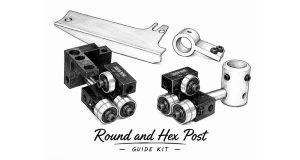
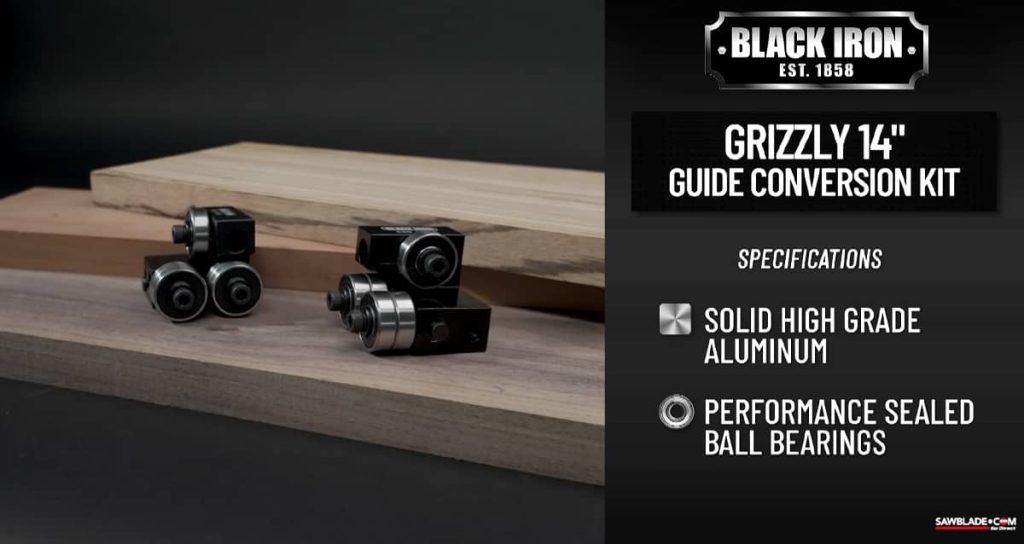
Swapping the stock guide blocks for a roller-bearing conversion kit is arguably the single upgrade that delivers the most noticeable improvement. Factory guides aren’t bad, but they demand constant re-adjustment and wear down faster than most owners expect. Conversion kits built for 7/8″ round-post saws, the kind sold through specialty suppliers such as GuideKits.com, typically accommodate blades from 3/16″ up to a full inch wide. By cutting friction against the blade body, these kits stretch out blade life and tighten up cut accuracy considerably. Depending on the type of work in the shop, some users also lean toward ceramic-bearing hybrid kits or guides built specifically for scroll-style cutting.
Quick Check
What’s a good all-purpose blade spec for most general woodworking tasks on a Grizzly 14″?
Picking the Right Blade Width for the Job
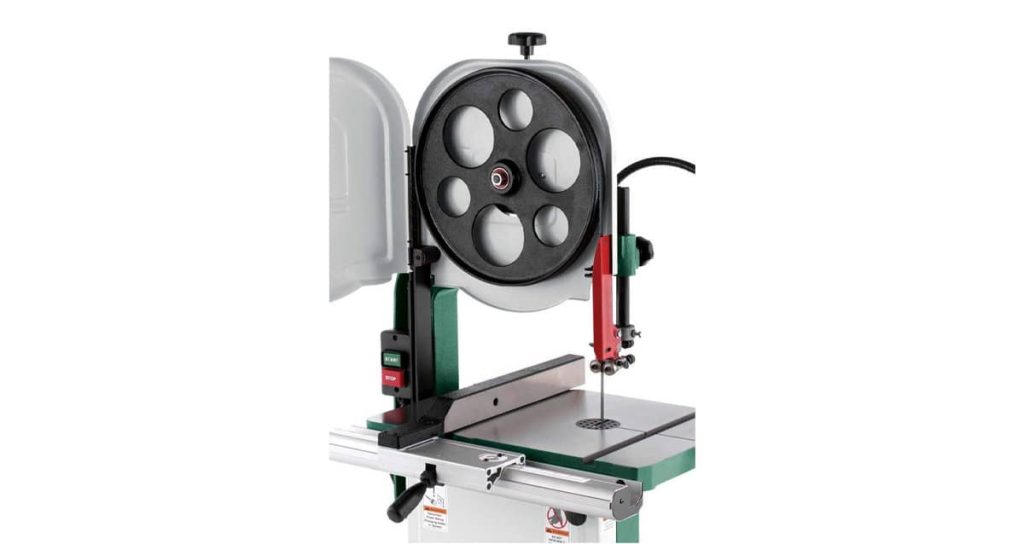
The blade width you mount on a Grizzly 14″ band saw should always follow the cut you’re planning, not the other way around. Thin, high-tooth-count blades in the 1/8″ to 1/4″ range are the right call for tight curves and detailed scroll-style patterns, since they resist binding and stay maneuverable through small-radius turns. At the opposite end, wider blades from 3/8″ up to 3/4″, paired with a lower tooth count, are built for resawing and long straight rips. For shops that don’t want to swap blades constantly, a 1/2″ blade at roughly 6 teeth per inch is a dependable all-rounder, capable of handling light curve work and medium-thickness stock without much compromise.
Comparing Blade Materials for the Grizzly 14″
| Blade Material | Best Use Case | Durability | Price Range | Notes |
| Flexible-Back Carbon | Curves and contour work | Moderate | Budget | Twists through tight turns easily |
| Hard-Back Carbon | Resawing and rip cuts | Good | Budget | Holds a straighter line under tension |
| Bi-Metal | Mixed work, denser woods | Excellent | Mid-range | Teeth hold an edge much longer |
| Carbide-Tipped | Abrasive materials, heavy resaw | Outstanding | Premium | Suited to production environments |
Flex-Back and Hard-Back Carbon: Which One When
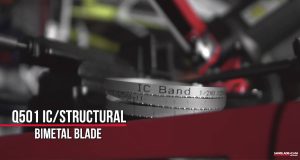
Shoppers looking at carbon blades for a Grizzly 14″ band saw will run into two core categories: flexible-back and hard-back. A flex-back option, such as the Qsaw 101, bends readily and springs back into shape, which makes it well suited to curved and contoured cuts where the blade needs to twist through the material as it goes. A hard-back blade, like the Qsaw 201, has a stiffer body that holds its line under heavier resaw loads and long straight cuts. Most experienced owners keep examples of both on hand. Blade changes take only a couple of minutes once the routine is familiar, and matching the blade to the task at hand pays off in cleaner results and less wasted time.
Quick Check
Burn marks appearing on the wood surface can be a sign your bandsaw blade needs replacing.
How to Tell a Blade Has Reached the End of Its Life
No blade lasts forever, even a good one. These are the warning signs that a Grizzly 14″ band saw blade is due for replacement.
- Stock feels harder to push through than it used to
- Scorch marks showing up on the cut surface
- The cut keeps drifting even with the fence properly set
- Teeth missing or cracks visible along the blade body
- Cut surfaces rough enough to need heavy sanding
- Noticeable vibration or noise while cutting
- Tracking won’t settle no matter how it’s adjusted
Dialing In Better Resaw Cuts
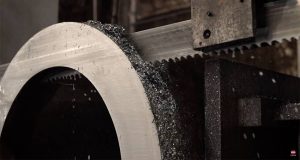
Resawing is arguably where a Grizzly 14″ band saw proves its worth. For clean, even slices, start with a sharp 1/2″ or 3/4″ blade running a low tooth count, around 3 to 4 TPI. Tension matters a great deal in this kind of cut, so it’s worth checking it before every resaw session rather than assuming it’s still where you left it. Feed the workpiece at a slow, steady pace and let the blade cut at its own rate instead of pushing it. A solid aftermarket fence helps too, since the stock fence on most Grizzly models isn’t quite precise enough for slicing thin, consistent veneer. Once the technique is dialed in, bookmatched panels and shop-cut veneer become realistic projects rather than a stretch.
ALSO WORTH READING
Copper Alloy Tubes: Types, Properties and Industrial Cutting Applications
Working with metal tubing brings a different set of considerations than wood, from alloy selection to the right cutting approach for the material. Our companion guide, Copper Alloy Tubes: Types, Properties and Industrial Cutting Applications, breaks down the most common copper alloys, their mechanical properties, and the cutting methods best suited to industrial tube work. It’s a useful read if your shop ever moves between wood and metal projects.
Maintenance Habits That Keep Performance Consistent
A Grizzly 14″ band saw stays reliable when a few routine checks become habit.
- Check and reset blade tension before each session
- Look over wheel tires for cracking, glazing, or trapped debris
- Clear sawdust out of the guides and bearings on a weekly basis
- Add lubrication to the tension mechanism and guide adjusters
- Confirm the table is sitting square to the blade
- Brush off pitch and resin buildup from the blade
- Swap out worn parts before they start affecting cut quality
Quick Check
A riser block kit can increase resaw capacity to roughly how many inches? Drag to answer.
Sourcing Blades and Upgrade Parts
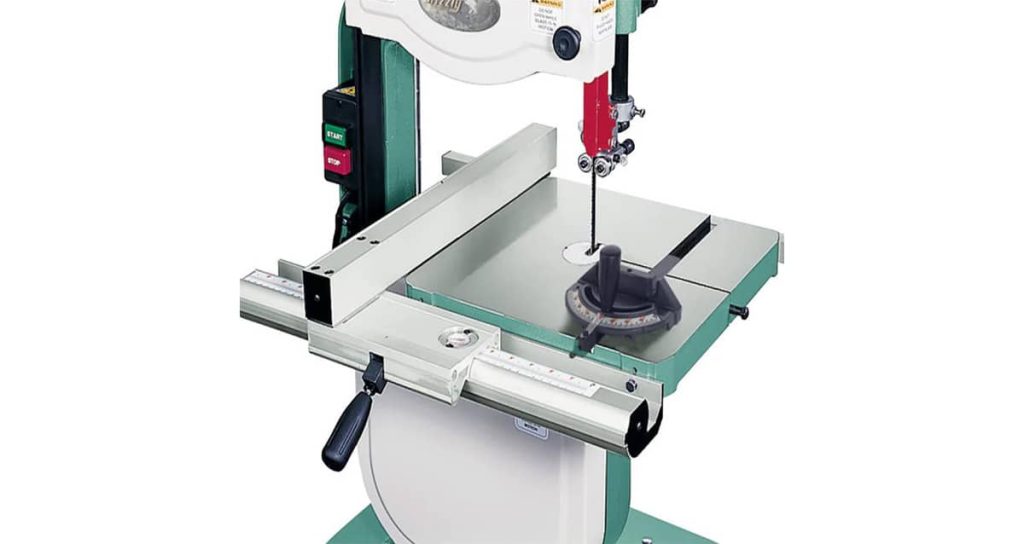
Tracking down dependable sources for blades and upgrade hardware makes owning a Grizzly 14″ band saw much less of a hassle. Specialty suppliers tend to stock a far wider range of blade widths and materials than general hardware retailers. Guide conversion kits from manufacturers who focus on band saw equipment also tend to fit more precisely to a given model. Video walkthroughs and online guides are useful for working through installation and fine-tuning. And building a relationship with a supplier who knows band saws well often means better guidance down the road, whether the question is about blade choice or troubleshooting a specific issue.
Mistakes Worth Avoiding
A handful of issues tend to show up repeatedly among new owners of the Grizzly 14″ band saw.
- Leaving blade tension too low, which invites drift and poor cuts
- Sticking with a dull blade well past when it should be swapped
- Letting the wheel tires go uncleaned, which hurts tracking
- Mounting a blade width that doesn’t fit the task
- Pushing stock through the cut instead of feeding it steadily
- Skipping fence alignment relative to the blade’s natural drift
- Brushing off odd noises or vibration that point to a developing problem
Turning Your Grizzly 14″ Into a Long-Term Shop Investment
The Grizzly 14″ band saw gives woodworkers at almost any skill level a solid base to build on. Pair it with precision guides and a blade lineup chosen for the work at hand, and it starts competing with saws that cost considerably more. Staying on top of maintenance keeps both the saw and its blades running longer, and time spent learning proper setup and experimenting with blade choice tends to pay off quickly. Treated well, a Grizzly 14″ band saw will keep delivering accurate, dependable cuts across a wide range of woodworking projects for years.