Why the Difference Between Elastic and Plastic Regions Matters
Anyone working with metal, structural parts, product design, or mechanical systems eventually reaches the same question: will the material spring back, or has it already changed for good? That is the real difference between elastic and plastic regions. The elastic region describes temporary shape change under load, while the plastic region begins when the material no longer returns fully to its original form. Knowing where that transition happens helps engineers, machinists, and designers choose materials, set load limits, and avoid unwanted bending, distortion, or failure.
What to Know First About Elastic and Plastic Regions
- Stress is the internal force acting through the material
- Strain is the amount of shape change caused by that force
- The elastic region is the range where deformation is reversible
- The plastic region is the range where deformation becomes permanent
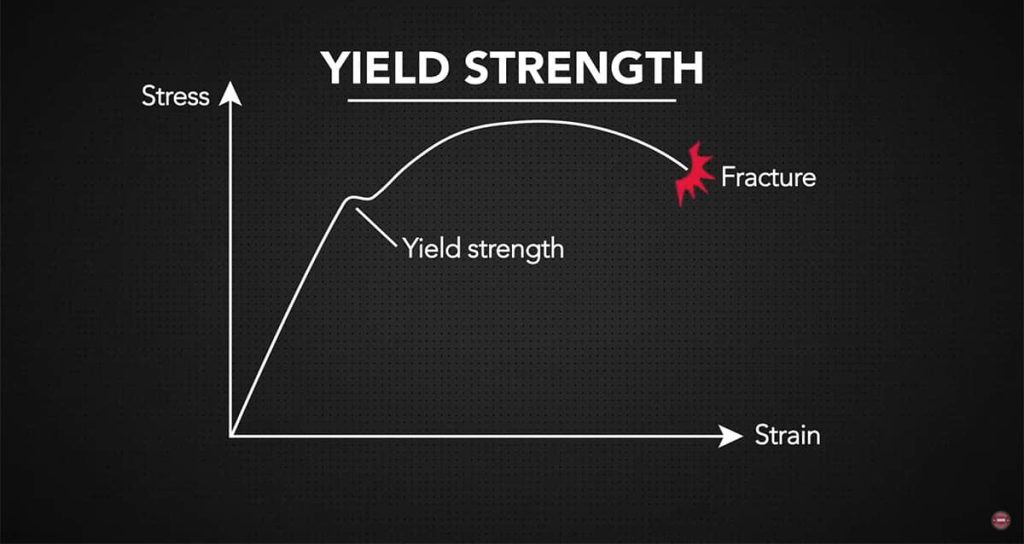
- Yield strength marks the transition into permanent deformation
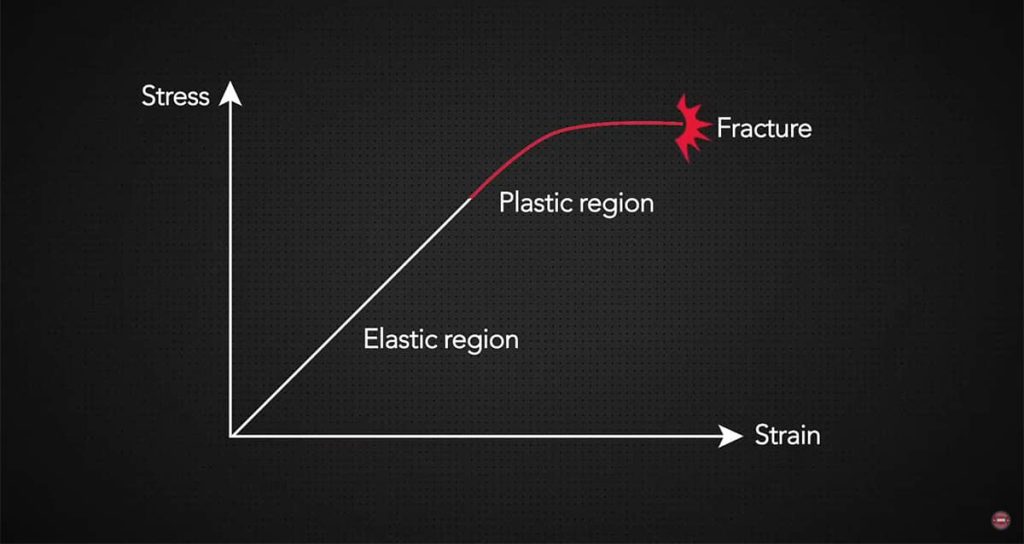
- A stress strain curve helps show where each stage begins and ends
The Elastic Region Describes Reversible Deformation
In the elastic region, a material changes shape under load but returns to its original dimensions after the load is removed. This is the part of material behavior designers rely on when a part needs to flex slightly without staying bent. In many common materials, stress and strain follow a mostly proportional relationship in this range, which is why Hooke’s Law is often used as a starting point when discussing elastic behavior. The slope of that early part of the stress strain curve is tied to the modulus of elasticity, which tells you how stiff the material is. A steeper slope usually means stronger resistance to deformation.
The Plastic Region Begins When the Material Stops Fully Recovering
Once stress moves past the elastic limit, the material enters the plastic region. At that point, the internal structure shifts enough that the material no longer returns completely to its previous shape when the force is removed. This is permanent deformation. In practical terms, that can mean a bracket that stays bent, a shaft that no longer runs true, or a sheet metal part that has been intentionally formed into a useful shape. The plastic region is not always a sign of failure. In many manufacturing operations, permanent deformation is exactly the goal. The important part is knowing when that change is controlled and when it is a problem.
Plastic and Elastic Regions at a Glance
| Feature | Elastic Region | Plastic Region |
|---|---|---|
| Deformation type | Temporary and reversible | Permanent and irreversible |
| Material response after load removal | Returns to original shape | Stays changed |
| Main reference point | Modulus of elasticity | Yield strength |
| Stress strain behavior | Often close to proportional at the start | No longer fully proportional |
| Typical design goal | Stay within this range for reusable parts | Use this range for forming or energy absorption |
| Common example | Loaded beam that springs back | Bent metal part that keeps its new shape |
Yield Strength Is the Point Engineers Watch Closely
Yield strength is one of the most important values on a stress strain curve because it marks the beginning of plastic deformation. Once that point is passed, the material starts taking on permanent change. For structural parts, machine elements, and load-bearing components, this number matters a great deal because it helps define a safe working range. For formed parts, yield strength also matters because it tells you how much force is needed before shaping begins. A material with a higher yield strength may resist bending better, but it may also require more force to form during manufacturing.
Test Your Understanding of the Elastic Region
If you want to check how well you understand the elastic region and the way materials respond before permanent deformation begins, head over to sawbladeuniversity.com and take our quiz on What is the Elastic Region? It is a simple way to review the core ideas, refresh the important terms, and see how confidently you can apply them outside of the article. It is a useful next step if you want to turn the theory into something easier to remember.
Terms That Help Explain Material Behavior More Clearly
- Modulus of elasticity describes stiffness in the early part of the curve
- Elastic limit is the highest stress that still allows full recovery
- Yield strength marks the start of permanent deformation
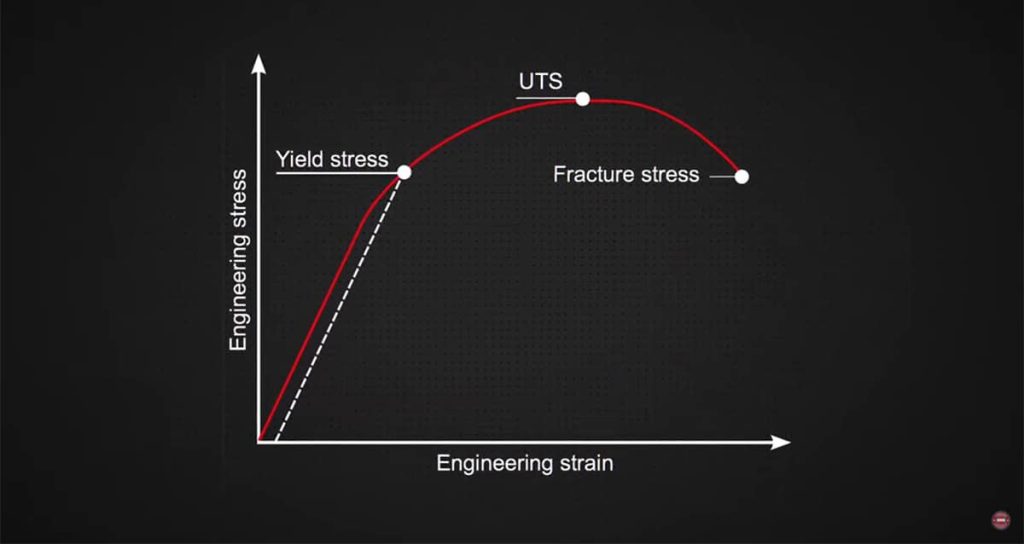
- Tensile strength is the highest stress reached before the load capacity drops
- Fracture point is where the material finally breaks
- Ductility describes how much plastic deformation a material can take before failure
Ductility Changes What the Plastic Region Looks Like
Not all materials behave the same way once they enter the plastic region. Some materials can stretch and deform a great deal before breaking, while others fail after much less visible change. That is where ductility becomes important. Ductile materials such as many structural steels, copper, and aluminum alloys can absorb more deformation before fracture, which is one reason they are often chosen for parts that need forming or controlled energy absorption. Less ductile materials may still perform very well, but they usually give less warning before failure. That difference affects both design decisions and safety margins.
How Engineers Use Elastic and Plastic Regions in Real Work
- To keep machine parts below yield during repeated service
- To choose metals that can be bent or stamped during forming operations
- To predict how a beam, shaft, or bracket will respond under load
- To estimate whether a part will spring back after forming
- To design components that absorb energy during impact
- To avoid permanent distortion in assemblies that must stay aligned
The Stress Strain Curve Is More Than a Classroom Diagram
The stress strain curve is useful because it makes material behavior visible and measurable. It shows the early elastic range, the yield point, the plastic flow region, the highest load point, and the fracture end. In real engineering work, that curve helps people compare materials that may look similar on paper but behave differently under actual load. Two materials may have similar strength values yet differ in stiffness, ductility, or how much warning they give before failure. That is why reading the whole curve is often more useful than focusing on one number by itself.
Common Mistakes When Thinking About Elastic and Plastic Regions
- Assuming strong materials are always stiff materials
- Treating yield strength and tensile strength as the same thing
- Forgetting that permanent deformation can be useful in forming operations
- Looking only at peak strength without considering ductility
- Assuming a part is safe just because it has not fractured
- Ignoring repeated loading that may push parts closer to permanent change over time
Why This Difference Still Matters in Everyday Engineering
The difference between elastic and plastic regions still matters because a part can survive a load and still be unacceptable if it has changed shape enough to affect alignment, fit, or performance. A bracket may not crack but still become unusable if it no longer holds position. A shaft may continue turning but introduce vibration if it has yielded slightly. On the other hand, permanent deformation can be useful when shaping parts or absorbing impact energy in a controlled way. The important point is knowing which result the design calls for before the load is applied.
Want a Better Look at Shop Support Roles Too?
If you also want to understand how tools, parts, and production support stay organized behind the scenes, our article on The Essential Role of a Tool Crib Technician in Manufacturing is worth reading next. It explains the daily responsibilities of tool crib technicians, why their work matters to production flow, and how they help keep equipment available, tracked, and ready for use. It is a helpful follow-up if you want a clearer view of the people and systems that support efficient manufacturing work.
A Better Understanding of Material Behavior Leads to Better Decisions
Once you understand the difference between elastic and plastic regions, many engineering decisions become easier to explain. You can choose materials more carefully, interpret test data more accurately, and make better judgments about whether a part should flex, hold shape, or deform in a controlled way. That is why this topic matters far beyond the classroom. It sits underneath everyday choices in design, manufacturing, maintenance, and failure prevention.